Get Full Government Meeting Transcripts, Videos, & Alerts Forever!
Get email alerts on the Strategic Plan topic
No spam. Unsubscribe anytime.
Pitkin County public health staff seek board input on 3-year strategic plan, debate DEI language
Summary
Pitkin County Public Health presented a draft three‑year strategic plan and sought Board of Health feedback on its ‘pillars of success,’ with equity, diversity and inclusion proposed as the plan’s foundation.
Pitkin County Public Health presented a draft three-year strategic plan and asked the Board of Health for feedback on its proposed pillars of success and monitoring approach, emphasizing equity, diversity and inclusion as the plan’s foundation.
The department’s consultant, Jeff, said staff want a concise, operational plan with measurable objectives and quarterly monitoring that will be reported to the board annually, and that staff hope to finalize the plan in January after incorporating board feedback. "We are looking really looking to share with you today some of the key components of our next 3 year strategic plan," Jeff said during the presentation.
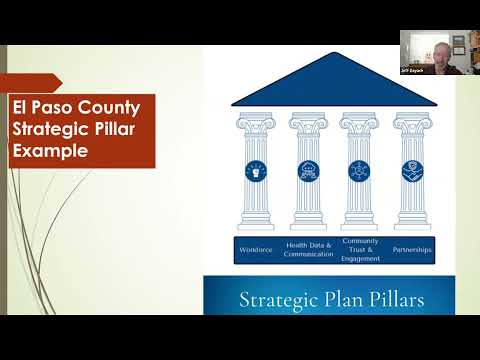
The plan uses a “house” metaphor: EDI as the foundation, pillars such as workforce, information technology and community engagement to support existing program “roof” work (for example, the behavioral health strategic plan and climate action plan). Jeff told the board the draft will include time‑bound, SMART objectives and quarterly internal tracking with an annual public report to create accountability.
Board members asked how the EDI language could affect future federal grant funding. A board member asked, "So the board has final approval of what is in the strategic plan, just so we're all clear." Jordana, a public‑health staffer, confirmed the board will have final approval when the plan returns for a formal vote in January. Several members urged caution in labeling — suggesting the department could keep the substance of EDI work while considering alternate phrasing to avoid jeopardizing federal grants; one board member said rewording could preserve intent while lowering perceived risk.
Staff replied that the department currently receives a blend of federal and state funding and that federal funding rules can change. Jeff and Jordana noted that staff would incorporate the board’s guidance on language and present a final draft in January with measurable objectives.
Discussion-only items included staff explanations of how program work (behavioral health, public health improvement plan, climate action) would map into the strategic plan and how monitoring and reporting would work; no formal policy changes or approvals of the plan occurred at this meeting.
The board directed staff to continue refining the plan and to consider board concerns about phrasing of EDI language while retaining the principles identified by staff. The department will return to the board with a draft for formal approval in January.
Ending: The board offered general support for the plan’s structure and monitoring approach while asking staff to weigh language choices on equity, diversity and inclusion against potential federal funding implications; staff will revise and return in January for formal approval.