Get Full Government Meeting Transcripts, Videos, & Alerts Forever!
Get email alerts on the Municipal Budget topic
No spam. Unsubscribe anytime.
Falls City reviews FY2024–25 budget; proposes 1% property tax request and prioritizes utility capital projects
Summary
City staff presented the proposed FY2024–25 budget at a special noon meeting, reporting a proposed 1% increase in the city—s property tax request, plans to push some capital spending into the next fiscal year, and a program of utility and infrastructure projects funded by grants, cash reserves and carryover bond money.
City of Falls City staff presented the proposed fiscal 2024–25 budget at a special noon meeting, saying the package would include a 1% increase in the city—s property tax request and prioritize utility and capital projects while relying on grants and existing cash reserves.
The presentation aimed to hold down direct tax increases while advancing major downtown, electric and water projects. "The kind of the goals of the budget are, obviously, is limit the tax burden on citizens," the staff member said, adding the budget seeks efficiency, new local revenue and a stable tax base.
The nut graf: The budget covers general government operations and an extensive capital program for utilities and streets. Staff reported about $13 million in projected city cash at year end with roughly $3.5 million planned to carry into the next fiscal cycle for projects; utility-side cash reserves and bond proceeds would fund large downtown and electric improvements. Several projects depend on outside grants and approvals, and staff warned the state legislative proposal known as LB 34 could reduce local sales-tax receipts and affect capital funding.
Staff outlined key fiscal and program items:
- Property tax and sales tax: Staff said the city—s property tax request is being increased by 1%, described in the presentation as a $9,090 change to the city—s request. Local sales-tax receipts were projected to exceed $1.5 million in the coming year.
- Cash, carryover and bond-funded projects: The presenter said the city expects roughly $13 million in cash at year end, with about $3.5 million of that planned for projects that will be carried into the next budget cycle. On the utility side, staff said much of the cash balance is bond money reserved for the downtown improvements project; staff cited roughly $3.3 million remaining for that work.
- Electric and downtown projects: Staff reported continuing the downtown electric improvements and pursuing an NDE grid resiliency grant that has been forwarded to DOE for final review. "That's an $850,000 project to remove the wood racking down at the power plant," the staff member said; final DOE approval could take four to six months and the work may span multiple fiscal years.
- Capacity payments and reinvestment: Staff said the city will begin receiving capacity payments in June, "around $45,000 a month," and planned to reinvest those payments into generation and distribution infrastructure.
- Water system work, SCADA and staffing changes: The budget includes funds to finish a SCADA installation for water, which staff said will centralize monitoring and allow water-certified staff to operate river water plants. The presenter said the change will allow the power-plant technicians to focus on power-plant maintenance and reduce overnight staffing: currently six staff at the plant will move to a two-shift (day/second) model before the third shift is eliminated later in the year, with expected natural attrition bringing the staff to five in the coming year.
- Lead service line inventory: Staff characterized the state requirement as an "unfunded mandate," saying the law requires a lead-service-line inventory of customer and city-side connections and that the city has three years to submit the data. The budget funds staff time to complete the inventory and annual reporting.
- Water, sewer and gas capital projects: Staff described planned water-distribution staffing additions (two positions moved from the electric line crew), office space conversion on Crook Street estimated at about $150,000, ongoing wastewater projects including a sewer force-main project awaiting EPA approval, and a cast-in-place pipe-lining (sewer rehab) grant request in the $430,000–$450,000 range.
- Street and parks work: The budget includes the first pavement-sealing program contract, equipment replacement leases (including a cap loader via municipal lease), and staggered replacement of park and cemetery mowers and trucks. Staff reported $15,000 additional funding for the sidewalk-improvement program and maintained a $50,000 allocation for the housing abatement/demolition program.
- Economic development and cultural projects: Staff said MOUs with Main Street Chamber and Edge are included with slight funding increases, and the city has an outdoor amphitheater proposal at 1506 Stone Street tied to a grant request; the presentation noted a hoped-for donation from the Walter Scott Foundation that did not materialize and left a potential funding gap.
- Grants and matches: Staff identified several grant dependencies: a roughly $850,000 grid resiliency project (NDE/DOE review), a $25,000 grant (with about $6,000 local match) for a public tree-maintenance project at Sands Lake, and outstanding GRAMA/GRANT awards being awaited for gas-main replacement phases.
- Operating cost pressures: The presentation flagged expected cost increases: an assumed 8% rise in health insurance and roughly an 18% rise in property insurance premiums. Staff also raised concerns about long lead times for critical electric transformers (from six months to more than two years) and potential further delays tied to national events (for example, dockworker strikes or hurricanes).
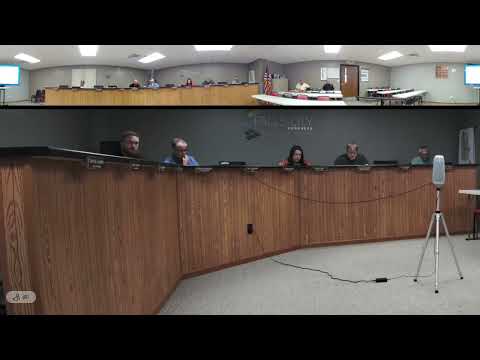
Quotes and record: All direct quotations in this article come from the meeting presentation by a staff member who led the budget review. The presiding official opened and closed the meeting and noted that the Open Meetings Act was posted.
The meeting record shows no formal vote on the budget at the session; staff described the packet as the material "that gets submitted to the state" and said changes to the originally published notice were being recorded and will be filed. The meeting closed with no public comments and was adjourned at about 12:35 p.m.
What—s next: Staff indicated pending grant decisions and state-level developments (including LB 34 and DOE/EPA grant approvals) will affect final funding and the timing of several projects. The city will carry over planned project disbursements into the FY2024–25 budget cycle and proceed with design, bidding and phased implementation where grant timing requires it.