Get Full Government Meeting Transcripts, Videos, & Alerts Forever!
Get email alerts on the Title25 Costs Treatment Courts topic
No spam. Unsubscribe anytime.
Task force debates Title 25 cost bill, approves treatment‑court amendments; hospitals and counties warn on costs
Summary
The task force discussed a draft bill to standardize county and state payments for initial involuntary hospitalization under Title 25 and heard extensive public comment from hospitals and county representatives; members then unanimously approved an amended package of treatment‑court and diversion recognition provisions and sent it to judiciary.
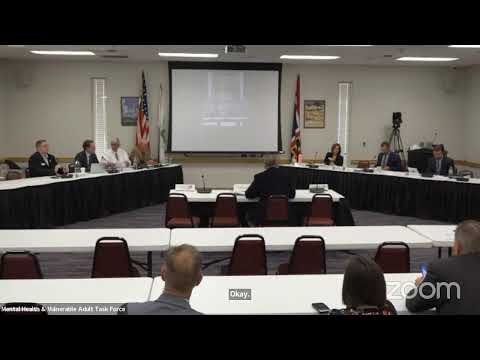
Task force members spent the August 22 meeting discussing two related sets of proposals: a draft bill to change how counties pay for the first hours of involuntary hospitalization under Title 25, and an amended treatment‑court bill that would expand court‑supervised treatment and formally recognize diversion programs.
On the Title 25 cost draft (LSO 0030), staff explained a recent amendment to allow counties to “opt in” or “opt out” of paying specified costs for the first 72 hours of involuntary hospitalization; the change was intended to reflect widely varying local arrangements. Anna (staff) summarized the redraft and said the county opt‑in/opt‑out language had been added to the bill. Jeremiah Grama, representing the Wyoming County Commissioners Association, reported that county officials generally supported the option to choose but wanted clarity on eligible costs: “opting in, is determined by the devil in the details,” he said, adding counties would evaluate the proposal if eligible costs and limits were defined.
Hospital leaders urged caution. Eric Boley, president of the Wyoming Hospital Association, said the draft raised concerns about inconsistent reimbursement and urged a broader, consistent approach across the state; he called the draft “a Band‑Aid on a a pretty difficult situation.” Mike McCafferty, CEO of Sheridan Memorial Hospital, and Matt Shahan, CEO of Campbell County Health, described local funding arrangements and said county stipends often fall far short of facility costs. Sheridan said it receives a roughly $300,000 annual payment from its county but has actual Title 25 costs that have ranged much higher; Campbell County Health described an individual high‑intensity case that cost more than $3,000 for a single day of care.
Hospitals, the county commissioners’ representative and providers urged the task force to (1) define allowable costs clearly in statute or rule, (2) consider a consistent statewide reimbursement method rather than an immediate opt‑out model that could preserve disparate local deals, and (3) examine whether the state should support a standardized billing or claims system for Title 25 claims. Department of Health staff and other members said the state’s Medicaid billing infrastructure could be adapted to process Title 25 claims and that the judicial branch and hospitals should coordinate on a longer-term funding approach.
On the treatment‑court draft (LSO 103), Ben Burningham of the Administrative Office of the Courts summarized three goals: (1) adopt earlier task force‑approved changes that permit greater collaboration among jurisdictions and allow public defenders to serve on treatment‑court teams; (2) give formal legislative recognition to diversion programs like the Campbell County pilot; and (3) allow courts to operate treatment courts on a pre‑adjudication basis as well as post‑adjudication.
Members debated language and made technical edits. The task force amended the bill to replace a reference to “misdemeanor” with broader language removing that restriction so local teams would have flexibility about which offenses they accept. Members also altered treatment‑court language to clarify that the public defender “may” represent participants rather than must serve both as a team member and as counsel in proceedings. The task force then voted by roll call to move the amended treatment‑court draft (LSO 103) to the Judiciary Committee. The chair’s clerk reported: nine ayes, one excused.
No final decision was taken on the Title 25 county payment draft during the meeting; task force members and public commenters urged further work to define eligible costs and whether the state should set a single reimbursement rate. Department of Health officials said they are willing to work with hospitals and counties to develop cost evidence and to consider how the state billing infrastructure might be used to implement a uniform claims process.
The task force paused its Title 25 conversation to hear public comment from providers and county representatives and agreed that more detailed costing data and a clearer appropriation strategy would be needed before moving the Title 25 draft to a standing committee.