Get Full Government Meeting Transcripts, Videos, & Alerts Forever!
Get email alerts on the Municipal Finance Bond topic
No spam. Unsubscribe anytime.
Lauderhill commissioners put $65 million general obligation bond on March 10, 2026 ballot after outreach; vote 4–1
Summary
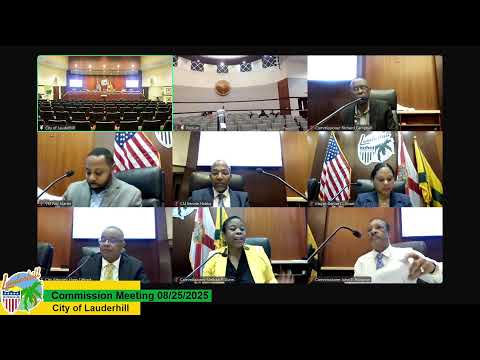
The Lauderhill City Commission on Aug. 25 approved a resolution to place a proposed $65 million general‑obligation bond on the March 10, 2026 special‑election ballot, voting 4–1 to let residents decide.
The Lauderhill City Commission voted on Aug. 25 to place a general obligation (G.O.) bond referendum on the March 10, 2026 special election ballot, authorizing the supervisor of elections agreement and related steps. The measurable authorization is to let voters decide whether to approve up to $65 million in general obligation bonds; the commission’s resolution does not itself issue the bonds. The roll call was 4–1: Commissioner Campbell — yes; Commissioner Dunn — no; Commissioner Hodgson — yes; Vice Mayor Saray Martin — yes; Mayor Denise DeGrant — yes.
City Manager Kenny Hobbs told commissioners the administration had engaged the community through at least 16 meetings since November and that attendees and HOA boards “show support” for moving forward. “At least 80% based on our on the numbers that we've seen when we've been out in the public,” Hobbs said when asked for a support estimate. He named proposed uses including park and community‑center improvements (notably improvements in Saint George including a pool, field renovations, lighting and parking), street repairs and public‑safety equipment such as license‑plate readers.
Commissioner Barbara Dunn (identified in public remarks as Commissioner Dunn) opposed moving the question to voters at this time, citing economic uncertainty and resident hardship. Dunn said she supported the idea previously but was now concerned about adding debt while households face economic stress: “Families are struggling. Now is not the time to have additional debt,” she said during the roll call.
City officials clarified that placing the question on a March special election would not raise additional supervisor of elections costs compared with including it on a November ballot; the city clerk provided written confirmation that the cost to place questions on a ballot is the same whether the question appears in March or November.
Hobbs said that, if voters approve a G.O. bond, the city would use the proceeds to accelerate capital projects in multiple neighborhoods and that prior Lauderhill GO bonds funded cameras, license‑plate readers and other public‑safety and facility upgrades. Commissioners emphasized additional community outreach and that specific project questions and ballot language would be returned to the commission for final approval before March.
Outcome: The commission approved the resolution to place the bond question on the March 10, 2026 ballot by a 4–1 vote. No bond funds were issued at the meeting; voters will decide the measure if placed on the ballot.