
New Mexico court program offers free foreclosure mediation, now serving eight judicial districts
Get AI-powered insights, summaries, and transcripts
Subscribe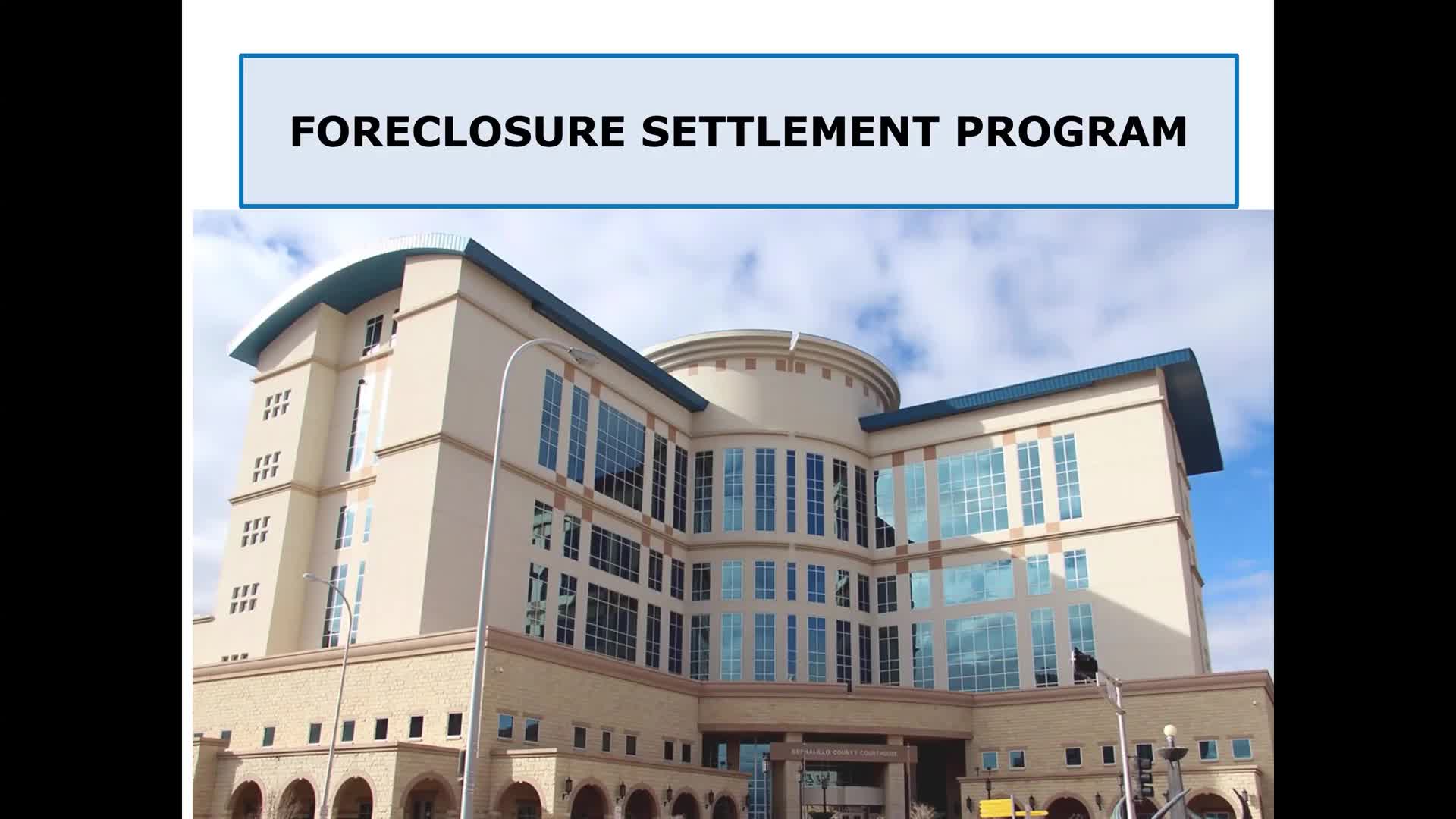
Summary
The Second Judicial District Court’s Foreclosure Settlement Program, or FSP, provides no-cost settlement facilitation for residential mortgage foreclosure cases and has expanded to serve eight of New Mexico’s 13 judicial districts.
The Second Judicial District Court’s Foreclosure Settlement Program, or FSP, provides no-cost settlement facilitation for residential mortgage foreclosure cases and has expanded to serve eight of New Mexico’s 13 judicial districts, presenters told an online New Mexico Courts webinar.
Marisol, supervisor of the Foreclosure Settlement Program, Second Judicial District Court, said the effort originated in 2014 as the Mortgage Alternatives Program (MAP) and was reorganized in 2016 into the FSP to operate “in a more efficient and effective manner.” She cautioned, “there's nothing in our presentation that should be considered legal advice.”
The program places litigation on hold while parties participate. Amy Mykoper Center, a settlement facilitator with the FSP, said, “the litigation is placed on pause,” explaining that while a case is in the program the bank cannot sell the property and no one can be evicted. That pause begins after the FSP files a notice or order of referral in a newly filed residential foreclosure case.
Why it matters: the FSP provides a neutral, confidential forum for homeowners, heirs and mortgage companies to discuss options including reinstatement, payoff, loan modification, repayment plans, short sales or deeds in lieu of foreclosure. Presenters said the process can level the information gap for homeowners who participate pro se by ensuring a single point of contact on the plaintiff’s side and access to interpreters and other supports.
How the program works: cases are referred when the foreclosure complaint concerns an owner-occupied residential mortgage for four units or fewer. The FSP runs lists of new filings — weekly in Bernalillo County, and monthly in most other participating districts — and files a notice referral (in most districts) or an order referral (Dona Ana County) that is mailed to the property address.
Homeowners or heirs must watch an orientation video and complete a homeowner information form within the program’s deadline — presenters said that deadline is typically about six weeks. The form collects contact information, whether an interpreter is needed and whether the participant intends to pursue retention or non-retention options. If those requirements are not completed by the deadline, the case is removed from the FSP; participants may file a motion to request re-referral.
Retention options: plaintiffs provide reinstatement and payoff figures to the FSP. Presenters defined reinstatement as the amount required to bring an account current and payoff as the amount to satisfy the loan in full. If those amounts are not feasible, homeowners may submit loss mitigation applications that are reviewed under federal rules and, for some loans, investor guidelines. Possible outcomes from that review include loan modifications, payment deferrals or trial payment plans, depending on loan type and program rules.
Non-retention options: when retention is not possible, the FSP allows homeowners to pursue options such as short sales, deeds in lieu of foreclosure, stipulations to judgment with negotiated concessions, requests for relocation assistance or extended move-out dates. Presenters emphasized that mortgage companies must approve applications for short sales or deeds in lieu and that facilitators cannot force a lender to accept an option.
Access and supports: presenters said the program provides translation services (noting a large Spanish-speaking participation), will assist elderly or incarcerated homeowners to complete the orientation and form, and that public-access computers at the Bernalillo County courthouse can be used. A resource list of housing counseling and legal assistance providers is distributed to every participant and posted on the courts’ website.
Scope and timing: the FSP now operates in the Second, Fifth (Chaves, Eddy, Lea), Sixth (Luna, Grant, Hidalgo), Seventh (Sierra, Catron, Socorro, Torrance), Eighth (Taos, Colfax, Union), Ninth (Curry, Roosevelt) and Twelfth (Lincoln, Otero) judicial districts, presenters said. Expansion began in 2021 with Dona Ana County and continued between September and December 2023. The length of individual cases varies; presenters said some matters can be resolved in about three months while others can take a year or longer depending on applications, approvals and whether the homeowner pursues a sale or other non-retention route.
Eligibility and limits: there is no income requirement to participate. Participants should be homeowners, borrowers or heirs; presenters said tenants have participated in limited circumstances but generally when homeowners also participate. Presenters noted that residential mortgages in the program may include conventional loans, FHA, VA, Fannie Mae and Freddie Mac loans, second mortgages, home equity loans and reverse mortgages. They reiterated that settlement facilitators are neutral and do not provide legal advice.
Questions and next steps: presenters said monthly referral volumes outside Bernalillo vary widely (roughly two to 30 cases per month depending on district), while in the Second Judicial District they refer about six to 25 cases weekly. The webinar recording and the presentation slides will be posted to the New Mexico Courts YouTube channel and distributed to registrants; additional legal fairs and clinics were announced.
The program’s purpose, presenters said, is to give homeowners and servicers a structured, confidential setting to explore options and avoid unnecessary litigation where possible.