
Farmers Branch trains board members on harassment, hostile work environment and reporting procedures
Get AI-powered insights, summaries, and transcripts
Subscribe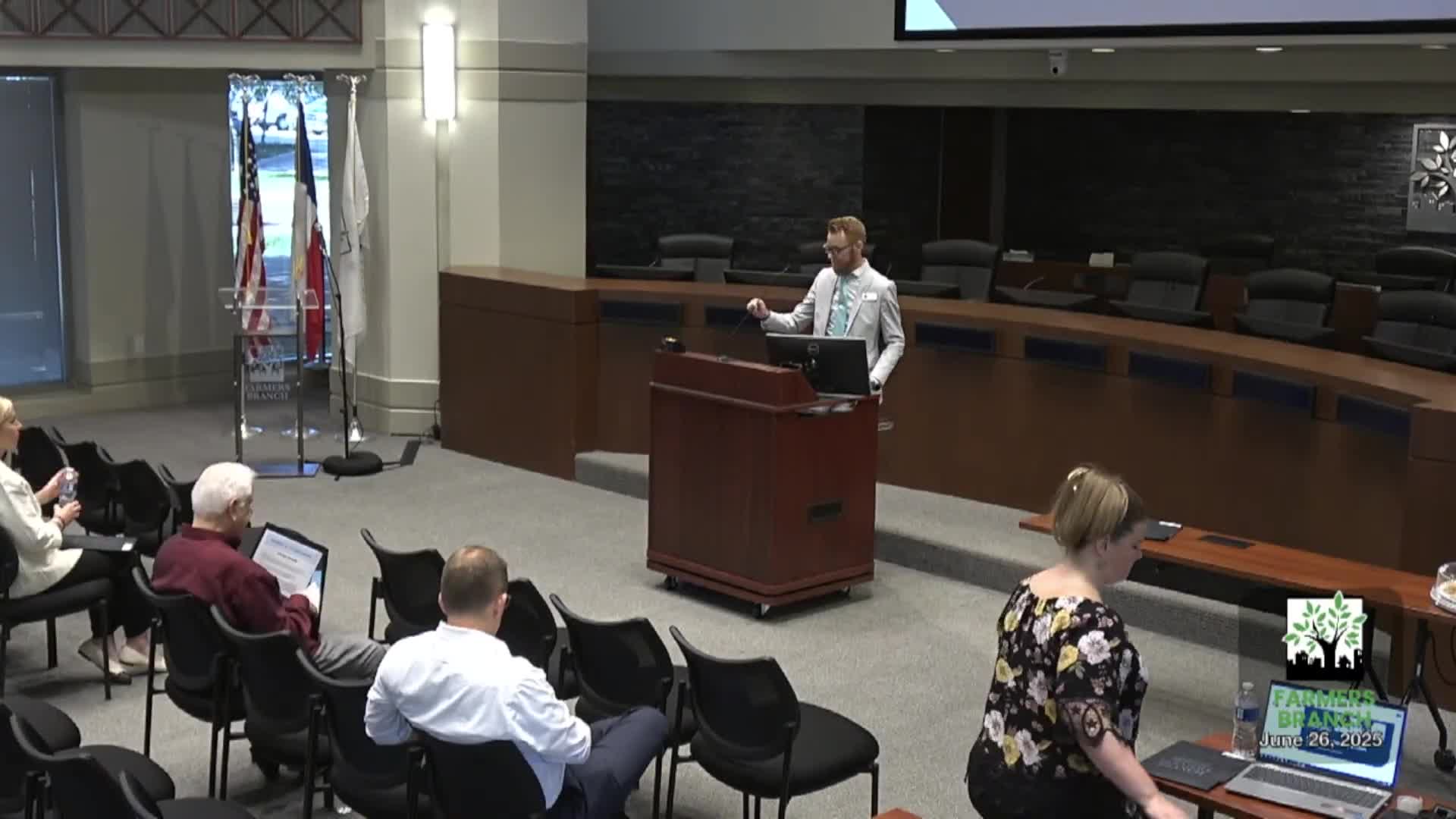
Summary
Jeffrey Ross, director of human resources for the City of Farmers Branch, told board and commission members during orientation that the city requires harassment-awareness training and explained how to recognize and report harassment, including sexual harassment and hostile work-environment behavior.
Jeffrey Ross, director of human resources for the City of Farmers Branch, told board and commission members during orientation that the city requires harassment-awareness training and explained how to recognize and report harassment, including sexual harassment and hostile work-environment behavior.
The training matters because board and commission members represent the city in public settings and may encounter or witness conduct that creates legal or safety risks. Ross reviewed types of harassment, consent standards, examples of prohibited behavior and the city’s reporting channels.
Ross said harassment includes unwelcome sexual advances, requests for sexual favors and other verbal or physical conduct of a sexual nature and that there are two primary legal categories: quid pro quo and hostile work environment. "Quid pro quo is Latin for this for that, and occurs really when any aspect of business or a position is made conditional with the expectation of receiving an inappropriate favor in return," Ross said. He added that hostile work environment consists of "unwanted or unwelcome sexualized speech, conduct, imagery, or any other behavior that is extreme or pervasive enough to create an uncomfortable, abusive, or hostile environment."
Ross gave examples board members should watch for: nonconsensual physical contact such as unwanted touching or shoulder massages; nonverbal conduct such as suggestive gestures or taking pictures without consent; virtual harassment including inappropriate texts, emails or social-media tagging; and verbal behaviors including repeated requests for dates, suggestive jokes or persistent lingering that makes a person uncomfortable. He warned that previously consensual material cannot be used coercively later (commonly referred to as revenge material) and emphasized that "consent must always be expressly given and clearly and freely communicated."
Ross told members the city’s usual reporting path is to the city secretary and said the city will investigate reports. He noted Texas law gives 300 days to file certain charges with state or federal agencies, and he encouraged prompt reporting and documentation. Ross also said potential consequences can include removal from a board, civil liability and, for severe conduct, criminal charges; he pointed attendees to the Farmers Branch code of ethics and to required online harassment-certification training referenced in the orientation materials.
During Q&A a member asked whether board members are employees; Ross replied they are not employees but are "an agent of the city or representative of the city," and repeated that training and reporting apply because members act on behalf of the city in their duties.
Ross closed by encouraging prevention through awareness, reporting incidents to the city secretary and contacting human resources or the city attorney’s office for assistance.