Get Full Government Meeting Transcripts, Videos, & Alerts Forever!
Get email alerts on the Municipal Budget Staffing Records It topic
No spam. Unsubscribe anytime.
Council hears budget pitch for IT specialist and records administrator as open-records requests surge
Summary
City Administrator Chris Engel presented two proposed full-time positions -- an IT technology specialist already included in the draft budget and a records administrator proposed to address a sharp rise in open-records requests. Council discussed fee options, potential cost offsets and operational impacts but took no immediate vote.
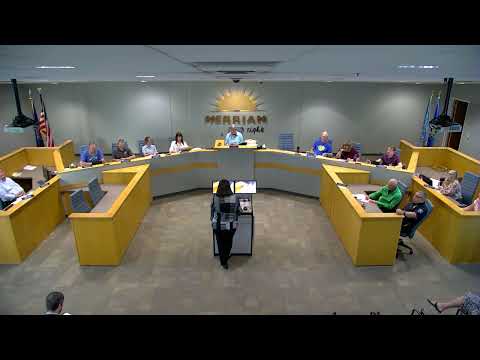
MERRIAM, Kan.
City Administrator Chris Engel told the Merriam City Council the proposed 2026 budget includes a technology specialist in information technology and that staff are seeking direction on a records-administrator position to handle a significant increase in open-records requests. Engel said the IT post is already built into the draft budget; the records position is not yet included and remains under consideration.
Engel said the IT position would be embedded in the IT department (pay grade K) with a salary range of roughly $60,200 to $88,500 and a total compensation estimate of about $97,500. He said the position would handle routine help-desk work, daily user support and training, and provide continuity so the city is not dependent on one long-tenured IT employee. "This position would allow most of the daily internal maintenance of our IT to fall to this particular position," Engel said, adding that contracted support has been expensive and the city is currently paying about $3,040,000 annually for some contracted IT services in the budget.
Engel said the second proposed position, a records administrator in the administrative department (pay grade H), would have a salary range of approximately $51,600 to $72,200 and a total compensation estimate of roughly $85,500. The role would maintain, index, retrieve, archive and destroy records according to state law and provide a custodian for Open Records Act (KORA) requests.
The records proposal is driven in part by a heavy pattern of open-ended requests from a single resident that staff say has required disproportionate staff time. Engel told the council that an IT server search covering the last 60 months returned 1,722 occurrences of a unique search term in 62 city email accounts, totaling about 2.5 gigabytes of data on the server. Staff estimated those instances represent roughly 143.5 hours of staff time if each occurrence required five minutes to review. Engel said staff have responded informally and tried to narrow requests, and presented three options for council consideration: hire a records administrator (option 1); charge requesters for staff time under KORA (option 2); or do nothing and accept reduced service levels for other city tasks (option 3).
Council members pressed staff on practical and legal details: how quickly the city must respond under state open-records law, how costs may be recovered, and who must search potentially privileged or sensitive records. The city attorney noted a statutory amendment effective July 1 permits charging the actual staff time of the least expensive qualified employee needed to fulfill the request but cautioned that using higher-paid staff requires justification. Council members expressed concern about the budget impact if the records administrator is added and said that adding salary costs could affect the mill rate or cause service reductions elsewhere. One council member observed the records problem may be idiosyncratic to a single requester and urged staff to return with a formal fee schedule and narrower options before committing to a new FTE.
No formal motion or vote was taken. Engel said staff will prepare a recommended roadmap including a fee schedule, thresholds for charging requesters, and a clearer cost-offset analysis linking any hire to expected reductions in contracted IT expenses.
Clarifying figures provided during the meeting: Engel said IT help-desk volume is high (about 1,200 help-desk tickets noted), end-user devices have grown from an estimated 80 to about 200 over 10 years, software platforms increased from about 12 to more than 40, and remote access users are now roughly 40. For records requests, staff cited examples of individual requests that consumed many hours of staff time and noted that the city currently charges $25 per hour for research on records but that rate often under-recovers the actual hourly cost of senior staff or professional services.
Why it matters: adding positions would increase recurring personnel costs and could affect the city—s mill rate or require trimming other services; not adding staff would leave current workloads with existing staff and contractors and could reduce other service levels. Council asked staff to return with a structured proposal and costing options.