Get Full Government Meeting Transcripts, Videos, & Alerts Forever!
Get email alerts on the Zoning Use Determination topic
No spam. Unsubscribe anytime.
Lapeer ZBA classifies Michigan DHHS site at 1022 West Genesee as permitted office use
Summary
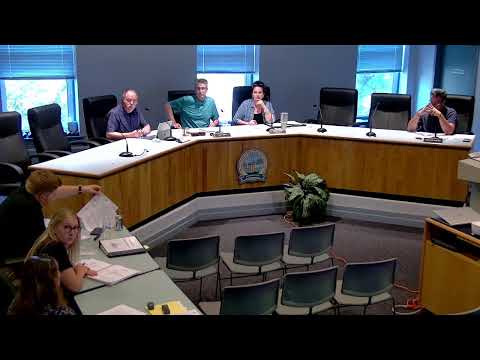
The Lapeer Zoning Board of Appeals unanimously voted June 23 to classify the proposed Michigan Department of Health and Human Services facility at 1022 West Genesee Street as an administrative/professional office use, clearing a zoning step required for the state's planned service center.
On June 23, 2025, the Lapeer Zoning Board of Appeals unanimously voted to classify the proposed Michigan Department of Health and Human Services (MDHHS) facility at 1022 West Genesee Street as an office building use permitted in the B-1 zoning district, based on applicant letters and a city attorney memorandum.
The classification is the formal zoning finding the planning commission had requested; the planning commission had already approved a site plan and granted a special land use to allow the existing drive-through to continue operating at the former Rite Aid site. The zoning board’s decision was tied explicitly to two letters from the applicant (dated March 24 and June 2) and a June 13 memorandum from the city attorney that described the proposed activities as administrative rather than medical.
Ben Keller, planning consultant for ROE, presented the request and summarized the applicant’s written statements and the attorney memo. Keller read from the applicant’s description that the MDHHS office “will be staffed with approximately 25 employees” and that staff will perform “routine desk work, such as processing benefit applications, verifying eligibility, and issuing benefits.” He repeated the applicant’s assurance that “no medical care of any kind will be administered at this location” and that the facility would primarily provide administrative services including food assistance, cash assistance, childcare assistance, medical assistance eligibility processing, child welfare and protective services casework, and adult services.
Board members questioned traffic, security and the scope of services. One member asked whether the office would provide migrant and refugee assistance and was told it would mainly be information and referrals in multiple languages. Concerns about traffic included the lack of a left-turn signal onto M-24 (Genesee) and whether clients would create conflicts near the nearby neighborhood; planners responded that site-specific trip information supplied by the applicant estimated “20 to 40 or 50 clients in a day” during Monday–Friday business hours and that trip generation would be materially lower than the Rite Aid peak, which had been about 561 cars per day. The drive-through was described by staff and the applicant letters as primarily for handicapped or mobility-limited clients, with “less than 5 minutes per transaction.”
Board members also confirmed ancillary details recorded in the planning packet: the building will retain an existing mezzanine used as an electrical/mechanical room (not client space); the current building has a security person on site; and the site plan includes a landscaping plan and a maintenance agreement that requires replacement of plantings that fail within one year. The board noted the applicant’s stated operational deadline pressure from the state and that the applicant had sought to restore operations by Oct. 1.
After discussion, ZBA member Bridal Gutierrez moved “based on the information provided to classify the proposed use of land at 1022 West Genesee Street as an office building for executive, administrative, professional, accounting, writing, clerical, stenographic, drafting and sales uses” (referencing the zoning use table); the motion was seconded by Melissa Petrie. Roll call votes were recorded as Ryan — yes; Jeff — yes; Melissa Petrie — yes; Dwayne — yes. The motion carried unanimously; because only four members were present, the chair had earlier noted that any decision would require unanimity.
The board’s decision classifies the use under the city’s zoning categories and documents the board’s reliance on the applicant letters and the city attorney’s memorandum. If future operations deviate from the uses described in those documents (for example, if medical treatment were proposed), the city’s planning department said it would require a zoning permit and, depending on changes, additional review.
The board discussed, but did not require at this hearing, additional traffic analysis or other conditions beyond tying the classification to the applicant’s written statements and the attorney memo. The planning commission’s site-plan approval and the special land-use approval for the drive-through remain in effect as related approvals.