Get Full Government Meeting Transcripts, Videos, & Alerts Forever!
Get email alerts on the Special Assessments topic
No spam. Unsubscribe anytime.
Lapeer commissioners signal support to lower special-assessment rates, cap yearly charge at $365
Summary
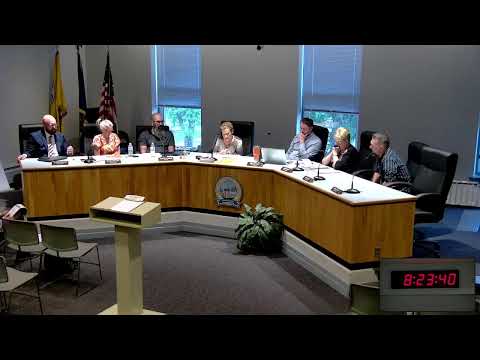
After extended debate, the Lapeer City Commission gave staff direction to draft changes to the city’s special-assessment policy that would lower assessment percentages, allocate $100,000 annually from marijuana revenue for local streets and cap owner payments at $365 per year for up to 10 years.
The Lapeer City Commission directed staff to draft revisions to the city’s special-assessment policy on Monday, signaling support for lower assessment rates, a $365-per-year cap and an annual $100,000 draw from marijuana revenue to offset residents’ bills.
Commissioners spent more than an hour discussing how to balance aggressive street projects already in the capital improvement plan with the public opposition that can accompany special assessments. “I’d recommend that we impose a maximum of a $365 a year, special assessment,” City Manager Mike Womack said, presenting a starting proposal and asking for direction.
The proposal presented by Womack would cut the city’s current local-street assessment from 30% to 15% and reduce major-street assessments from 15% to 7.5%, while directing $100,000 a year from marijuana excise and licensing fees to the local-street fund to offset the first $100,000 of each project’s assessment. Womack also reminded commissioners that special assessments are typically billed for 10 years.
Commissioner Brady argued for parity between local and major streets, suggesting 15% for both categories at one point, while Commissioner Glisman and others repeatedly raised concerns about fairness where properties have residential uses within commercial zoning. “We have places in town where you’ve got a residential use in what’s otherwise a commercial zoning district,” Womack said; he warned that the current policy’s use-vs.-zone framing can produce inequitable bills.
Several commissioners said the cap and the marijuana-money set-aside were the most important elements to reduce the financial burden on households. “$365 a year, which is a buck a day, is a reasonable charge for fixing the road in front of your house,” Womack said in explaining the cap proposal. Commissioners also discussed operational impacts: Womack noted the city’s finance staff would have added workload to prepare special-assessment rolls and warned against imposing assessments whose administrative cost would exceed the revenue they generate.
No ordinance was adopted at the meeting. Instead the commission reached a working consensus to return a formal draft amendment for review with clarified legal language from the city attorney and with a 10-year assessment term and administrative details (billing on tax roll rather than a separate bill) to be included. Womack said staff will bring an updated policy back to a future meeting after the attorney’s review and after incorporating the commission’s direction.
The discussion comes as the city moves ahead on multiple street projects already in its CIP, including First and Second Street and Park Street. Commissioners repeatedly said they want to continue the current project pace but stress the need to make the assessment policy less burdensome for lower-income households.
What happens next: staff will draft formal ordinance/policy language reflecting the lowered rates, the $100,000 marijuana allocation, the $365 annual cap, and the 10-year assessment schedule, and will return with legal review and cost estimates for commission approval.