
Senate committee advances bill creating new deed-fraud offenses, requires photo ID for in-person filings
Get AI-powered insights, summaries, and transcripts
Subscribe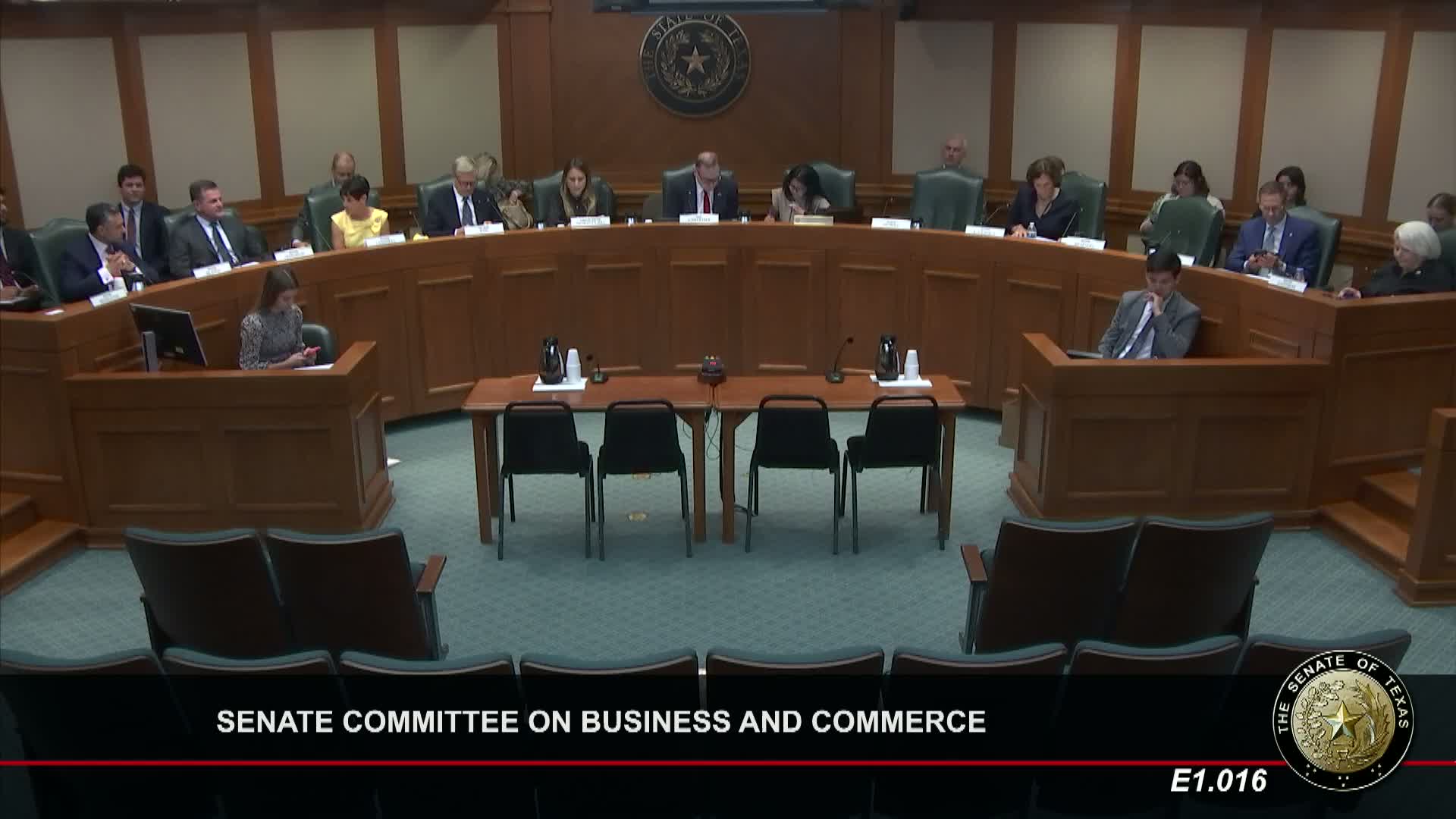
Summary
The Senate Committee on Business and Commerce on Wednesday voted to report a committee substitute for Senate Bill 15 to the full Senate, advancing a package of changes that would create new criminal offenses for real‑property fraud and require county clerks to collect and log photo identification for in‑person property filings.
The Senate Committee on Business and Commerce on Wednesday voted to report a committee substitute for Senate Bill 15 to the full Senate, advancing a package of changes that would create new criminal offenses for real‑property fraud and require county clerks to collect and log photo identification for in‑person property filings.
Senator West, the bill sponsor, said the substitute combines the civil and criminal deed‑fraud measures the Legislature had considered earlier and “the requirement that all over the counter in person filers of property transaction documents at a county clerk's office must present a photo ID.” The committee adopted the substitute and reported it favorably to the Senate by a 10–0 tally.
The bill would require county clerks to record the identity information shown on a presented ID and make that logged information available to district attorneys when a filing is later flagged as fraudulent. The substitute also creates offenses labeled in the hearing as real property theft and real property fraud, establishes a 10‑year statute of limitations from the date of the transaction, and sets out a restitution ladder with penalty enhancements for crimes committed against people over 65, people with disabilities, or against homesteads.
Prosecutors and industry groups testified the measure would give law enforcement a clearer criminal framework for pursuing deed fraud. Philip Clark, an assistant district attorney with the Dallas County DA's Office, said, “This is going to put front and center in the penal code that this is a crime and not just a crime. It establishes a new, punishment range by collapsing the value ladder in the theft statute.” Rodney Anderson, legislative chairman for the Texas Land Title Association, told the committee that “this bill as it's presented, is a really important first step in prosecuting and creating a a a a a a method to be able to prosecute these crimes.”
Victims urged action. Robert Brown, chairman of the board of the First Christian Church in Lancaster, described a multi‑year fight to recover church property after fraudulent quitclaim deeds were filed: “It was an absolute nightmare, an absolute shock to get letters from the Dallas County appraisal district asking us what we sold our property for because we didn't sell it.” Judge Shepherd (a name, the witness clarified, not a judicial title), a policy analyst for the Texas Public Policy Foundation, cited several widely reported schemes and said the measure is “about protecting Texas private property rights and making deed for auto state jail felony.”
County clerks told the committee the bill clarifies what clerks should do when someone attempts an in‑person filing. Heidi Easley, Victoria County clerk, said the bill changes a discretionary practice into a requirement: “It's not a may anymore, it would be a shall and that's very important.” Kenneth Cleveland, recording division manager in the Dallas County Clerk's office, said county offices have been “statutorily tied” in helping restore ownership and welcomed criminal definitions that could deter future fraud.
Committee members discussed related enforcement issues, including prosecutions of notaries and organized rings. Senator King recounted a family experience involving multiple fraudulent filings and litigation that reached the Texas Supreme Court, and asked whether notaries have been prosecuted; witnesses responded that notaries can be charged depending on facts and awareness. Clark said prosecuting notaries is “pretty rare because it you have to really know their awareness of what's going on,” and Senator West noted earlier legislation from the regular session addressed some notary concerns.
Committee work on the bill will continue before a Senate floor consideration; sponsors said they expect and are negotiating a floor amendment proposed by county clerks that would remove a training requirement now in the draft. The committee chair called the question, clerked a roll call and announced the committee substitute for SB 15 was favorably reported to the full Senate by a 10–0 vote.
The committee meeting concluded and the committee stood recessed subject to the call of the chair.