Texas committee hears testimony on youth-camp safety bill, leaves House Bill 265 pending
Summary
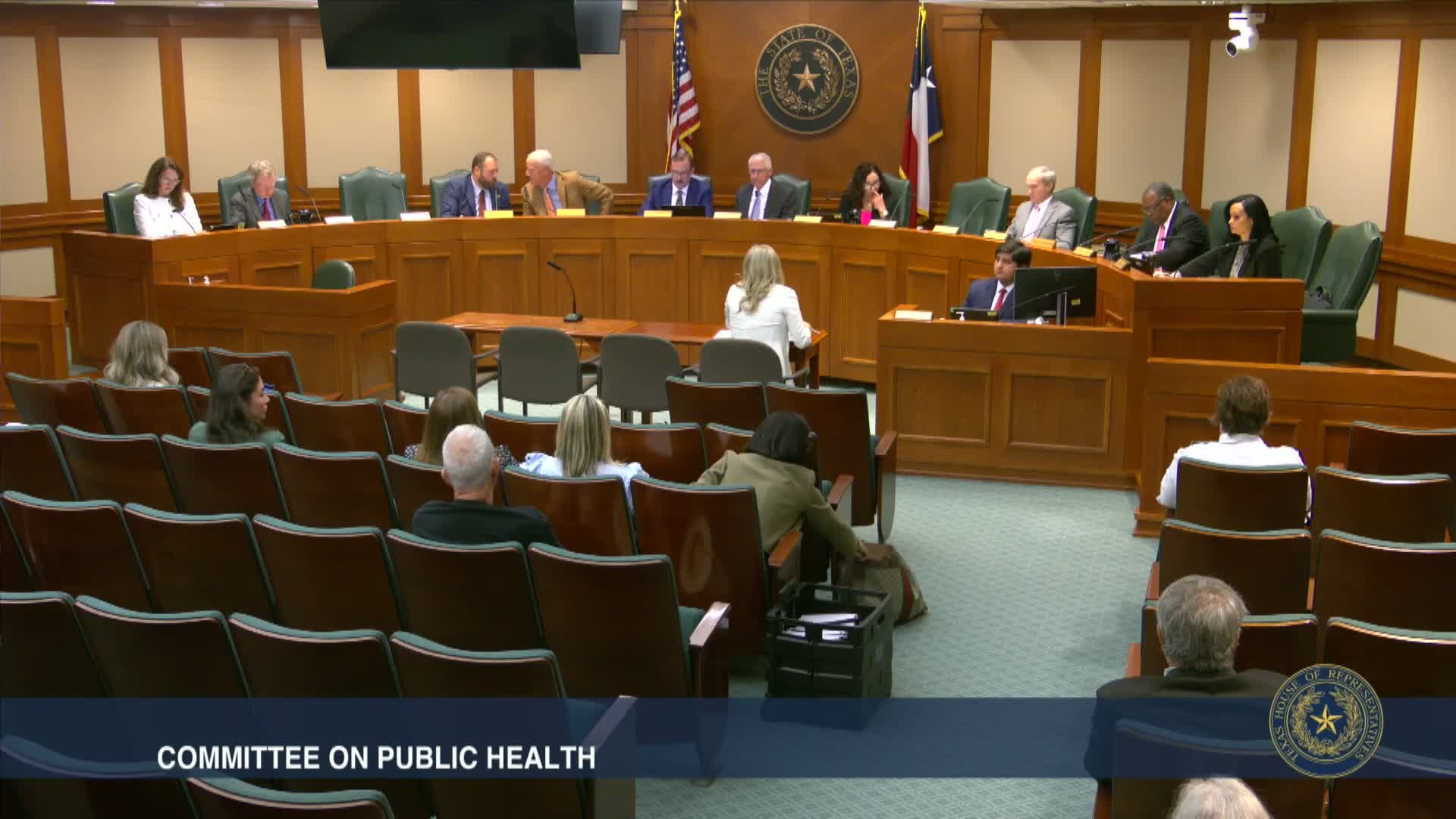
Texas House lawmakers on the Committee on Public Health left House Bill 265 pending after hours of testimony about safety at youth camps and whether state oversight is adequate.
Texas House lawmakers on the Committee on Public Health left House Bill 265 pending after hours of testimony about safety at youth camps and whether state oversight is adequate.
Representative Carrie Hall, author of HB 265, told the Committee the bill “is focused on youth camp safety reform” and said it would restructure the youth camp advisory committee, require additional staff first-aid and CPR training, move background-check requirements from rules into statute, and remove a statutory waiver for certain camps. She said the bill would also allow the Department of State Health Services to issue violations during inspections and remove a statutory cap on fines so “repeat grievous violations can be penalized.”
Why it matters: Supporters said the current advisory committee is dominated by camp operators, leaving safety recommendations vulnerable to conflicts of interest. They argued the bill would speed a comprehensive review of camp rules before the next camp season and add water-safety and child-safety expertise to the panel. Opponents and some members of the committee pressed for clarity on definitions, enforcement, and how the bill would interact with disaster- and evacuation-focused legislation already under consideration.
Most important facts - HB 265 would restructure the youth camp advisory committee currently statutorily composed of seven camp operators and two public members; the bill proposes a broader membership that includes emergency-management, law enforcement and child-safety professionals, a pediatrician (or NP/PA), a child-psychologist and parents or guardians of campers. Representative Hall said floor changes would add another camp operator and a water-safety expert. (Rep. Carrie Hall) - The bill moves some matters from rule to statute: it would codify background-check requirements now in DSHS rules, add a requirement for first-aid/CPR training (the language discussed in committee specified “1 hour of first-aid/CPR training by an accredited training organization or licensed health-care professional”), and remove a statutory prohibition that currently prevents DSHS from issuing violations during routine inspections, replacing it with authority to issue violations for repeat or grievous offenders. - The bill would repeal a narrow statutory waiver (cited at statute section 141.0025 during the hearing) that had allowed certain camps to seek an exemption; DSHS told the bill author no one has applied for that waiver and the bill would remove it as a precedent. (Rep. Carrie Hall) - The committee heard substantial public testimony from parents and safety advocates calling for stronger, enforceable protections. Corey de la Pena of the Texas Water Safety Coalition testified about water-safety gaps and urged adding a water-safety advocate to the advisory committee: “This is why I strongly urge you to pass HB 265… without this expertise at the table, water safety still remains dangerously underrepresented in the summer camp policy discussions.” (Corey de la Pena) - Witnesses including Nicole Kristoff of Crime Stoppers of Houston and Rania Mancarious said prior legislative and rule changes had been watered down and that camps have in some cases operated with inadequate oversight; Kristoff called the current setup “the prisoners running the prison” and urged ending conflicts of interest in the advisory body. (Nicole Kristoff, Rania Mancarious)
Substantive discussion and open questions - Definition and scope: Several members (including Rep. Frank and Rep. Alcott) asked whether HB 265 changes the statutory definition of a “youth camp.” Rep. Hall said the bill does not change the legal definition; she and witnesses noted that many activities that call themselves “camp” now fall outside Chapter 141 and therefore outside DSHS youth-camp licensing (chapter language discussed in the hearing says a youth camp generally “accommodates at least five minors who attend or temporarily reside at the camp for all or part of at least four days,” and includes day, resident and travel camps). Committee witnesses recommended the definition be revisited in a future session so more activities that market themselves as “camp” are captured. - Emergency planning: Committee members asked how HB 265 interacts with disaster/emergency bills (HB 1 and companion SB 1). Rep. Hall and witnesses said HB 1 and SB 1 handle evacuation and disaster-planning requirements; HB 265 was framed as complementary and focused on non‑disaster safety gaps such as life‑jacket policy, lifeguard training, background checks and advisory‑committee makeup. - Reporting and enforcement: Testimony noted a statutory/administrative gap — inspectors can record deficiencies but DSHS historically has used a cure period rather than issuing violations; HB 265 would allow violations to be issued for repeated or severe infractions and remove the statutory cap on fines so rules could set higher penalties. Committee members pressed whether duties to report abuse are statutory or only in rule; DSHS staff and the author said reporting obligations exist in multiple places in statute and rule (including family-code reporting obligations and DSHS rules) and the author said portions of rule could be codified in statute for clarity. - Advisory committee process: Current DSHS practice is to hold public advisory meetings (twice per year on average), accept public comment, and route proposals into formal rulemaking. Several witnesses said the committee has at times been dominated by camp operators; proponents urged codifying open-meeting requirements and clarifying conflicts‑of‑interest language.
Quotes from the hearing (attributed to witnesses who spoke in committee) - “This bill is focused on youth camp safety reform.” — Representative Carrie Hall, bill author (opening testimony) - “Without this expertise at the table, water safety still remains dangerously underrepresented in the summer camp policy discussions.” — Corey de la Pena, Texas Water Safety Coalition - “Until now, the committee has been dominated by camp owners and vendors… this conflict of interest must end.” — Rania Mancarious, Crime Stoppers of Houston - “There must be 0 ability to cut corners. There must be 0 ability to self govern and self regulate.” — Rania Mancarious
Action and next steps - Outcome: House Bill 265 was left pending by the Committee on Public Health (the chair announced “left pending” at the end of the hearing). No final vote was taken on the bill in committee. - Follow-up: Supporters said they intend to offer a floor substitute to add a camp operator and a water-safety expert to the advisory committee and to codify some rule requirements in statute. Several members asked staff and the author to consider statutory language clarifying reporting duties and specifying implementation details, including the scope of required training and how fines would be set by rule.
Ending - The hearing combined written and emotional testimony from parents, safety advocates and the regulated community. HB 265 would change the advisory panel’s composition and make several safety and enforcement items statutory; committee members signaled interest in clarifying definitions and implementation details before advancing the measure. The bill remains pending in the Committee on Public Health.