
House Committee advances Harris County bill to preserve county contract deputy program
Get AI-powered insights, summaries, and transcripts
Subscribe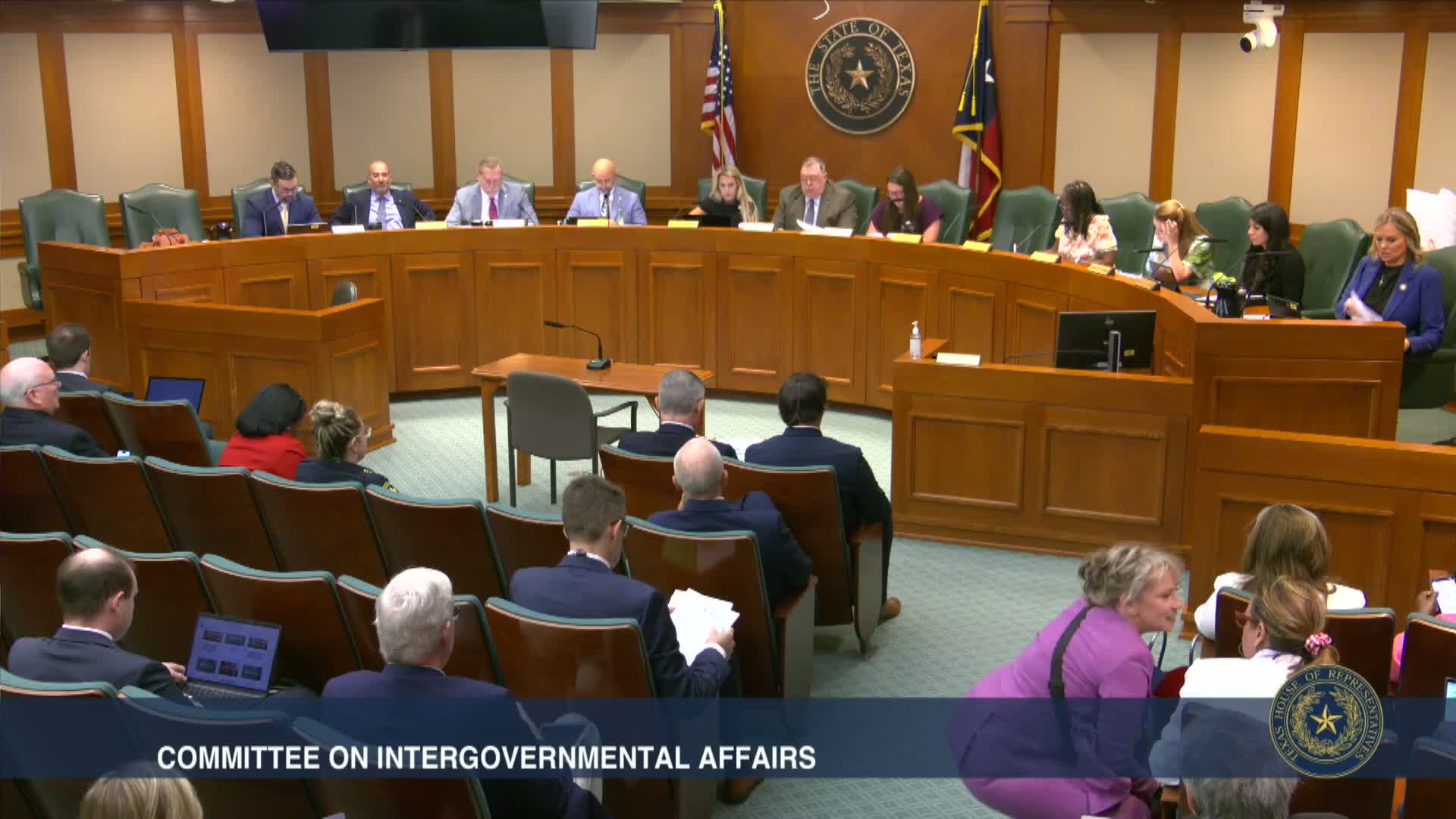
Summary
The House Intergovernmental Affairs Committee adopted a substitute to House Bill 26 and voted to report the bill to the full House after testimony that Harris County’s contract deputy program is strained by rising costs and disputes between constables and the commissioners court.
The House Intergovernmental Affairs Committee on Tuesday adopted a committee substitute to House Bill 26 and voted to report the measure to the full House with a recommendation that it pass, after testimony describing a dispute in Harris County over how the county handles so‑called contract deputy agreements.
Representative Oliverson laid out the bill, which he said is bracketed to Harris County and aims to let local law enforcement — constables and the sheriff’s office — negotiate and enter direct contracts with communities, school districts and business owners to fund additional patrols.
Supporters said the program is central to policing in unincorporated Harris County. “The contract deputy program makes up over half the patrols in all of Harris County in the unincorporated area,” Harris County Commissioner Tom Ramsey told the committee, adding that the program contributes about $75,000,000 of roughly a $110,000,000 program. Constable Mark Herman said county bureaucrats have raised contract costs and made contract renewal more difficult. “Without this legislation, Harris County law enforcement’s in big trouble,” Herman said.
Proponents described how the contracts work: a community, school district or property owner pays a share of a deputy’s salary to subsidize extra patrol hours. Alan Rosen, Harris County Constable Precinct 1, told the committee many communities rely on the program and some neighborhoods — including some low‑income areas — are priced out when contract costs rise.
Committee members pressed supporters on local control and fiscal risk. Representative Rosenthal asked whether the contracts obligate the county; committee testimony said when a department signs a contract that leaves a remaining shortfall to be paid from county funds. Rep. Rosenthal also asked whether other Texas counties use the model; supporters said they do not believe so and described Harris County’s arrangement as unique.
Representative Oliverson and testifying constables said commissioners’ court and county administrators had recently increased contract pricing and curtailed use of agency rollover funds, which local law enforcement historically used for equipment and capital purchases. The bill would prohibit counties from seizing those rollover monies and would limit county interference in negotiating contract terms, supporters said.
Committee action: the chair moved that the substitute for House Bill 26 be adopted; there was no recorded objection and the substitute was adopted. The committee then moved that House Bill 26 as substituted be reported to the full House with the recommendation that it do pass and be printed. The roll call produced 7 ayes and 2 nays; the motion carried.
Why it matters: committee supporters framed HB26 as protecting an established local program that officials and some school districts rely on for patrol coverage. Opponents and some members asked how the bill changes local fiscal obligations and whether it would require counties to cover shortfalls without having been parties to the underlying contract. The committee’s favorable report sends the dispute — between Harris County commissioners’ court and locally elected constables — to the full House.
What’s next: the bill proceeds to the House for further consideration and possible floor debate.