
House passes HB 18, limits fundraising and imposes penalties for members who break quorum by leaving Texas
Get AI-powered insights, summaries, and transcripts
Subscribe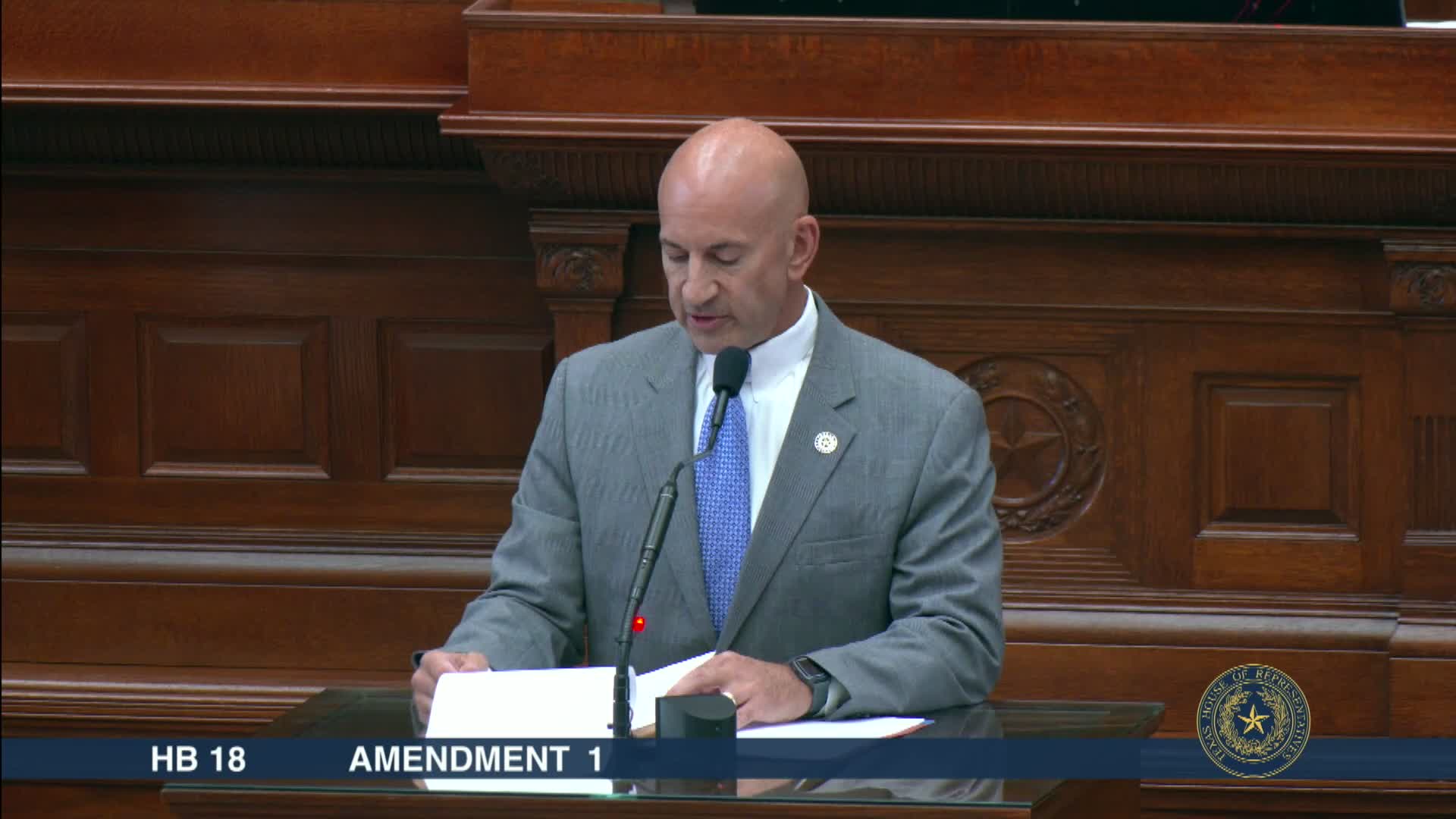
Summary
The Texas House passed HB 18 after extended debate and multiple amendments. The bill bars certain campaign contributions and travel expenditures for members the chamber deems absent for the purpose of breaking quorum, authorizes civil penalties up to $5,000 per violation, and sets procedures for enforcement.
The Texas House on Wednesday passed House Bill 18, a measure restricting fundraising and certain campaign expenditures by lawmakers the chamber determines were absent from the state to impede proceedings and authorizing civil penalties of up to $5,000 per violation.
Supporters say the bill removes a financial incentive for quorum-breaking absences and preserves the legislature's ability to carry out its constitutional duties. "HB 18 establishes penalties for lawmakers who intentionally break quorum for the purpose of bringing the Texas legislature to a halt," Representative Shaheen, the bill's author, told members on the floor.
Opponents said the bill chills a constitutionally rooted tactic used by legislative minorities and could punish ordinary constituents who donate small amounts to support lawmakers. "The right to peacefully dissent is a founding principle of our nation," Representative Howard said in floor remarks opposing the bill and urging colleagues to consider the effect on constituent representation.
The bill’s key provisions (as explained on the floor) bar contributions to members identified as engaging in an "impeding absence" above an amount equal to the daily legislative per diem and prohibit use of campaign funds for travel-related expenses connected to such absences. The floor substitute defined "impeding absence" to require that the chamber has (1) ordered the return of members, (2) ordered the sergeant-at-arms to arrest absent members, and (3) issued civil warrants for absent members; those steps trigger the statute’s restrictions and any follow-on enforcement.
Debate on the floor ran for hours and included multiple amendments. Lawmakers pressed on constitutional and First Amendment grounds, citing Article 3, sections 10 and 11, of the Texas Constitution and past federal campaign-finance decisions during colloquies. Representative Busey and others raised the amount used as a cap, noting the bill ties the limit to the daily per diem (discussed on the floor as $221), and several members proposed and rejected amendments that would change the cap or expand penalties to false accusations.
The House adopted HB 18 as amended on a recorded vote. The final tally on passage was 86 ayes and 46 nays. The bill as passed assigns initial enforcement to the respective chamber’s internal procedures and authorizes civil actions (with exclusive appellate jurisdiction noted in the floor substitute).
Supporters framed the measure as a narrow tool aimed at stopping financial benefit tied to efforts that halt the legislative process; opponents said it risks curbing dissent and could disproportionally restrict ordinary Texans’ ability to assist lawmakers during a political dispute.
The bill takes effect as provided in the text; procedural details for imposing penalties and processing challenges were left to the chamber rules and the courts, as described during floor debate.
Less central floor activity included amendments addressing application to political committees and caucuses and multiple procedural record votes. Lawmakers said they expect legal challenges and that some mechanics (for example, exact implementation and due-process steps) may be tested in court or further clarified in subsequent rules and opinions.
Ending: With HB 18 passed by the House, supporters signaled enforcement will be handled under the chamber’s procedures and, if challenged, through the courts. Opponents said they will press constitutional and First Amendment concerns as the bill moves forward.