Senate passes House Bill 15 to standardize law-enforcement personnel file structure statewide
Summary
The Senate approved House Bill 15 to require law-enforcement agencies to keep two-part employee records—one public personnel file and one nonpublic department file—matching a model policy used by many Texas cities. Supporters said the change protects officers’ privacy; opponents warned it could shield misconduct and limit transparency for victims.
The Senate passed House Bill 15, a measure requiring Texas law-enforcement agencies to maintain two records for each officer: a public personnel file that includes substantiated misconduct and disciplinary actions and a nonpublic department file that holds unsubstantiated complaints, coaching notes and personal background material.
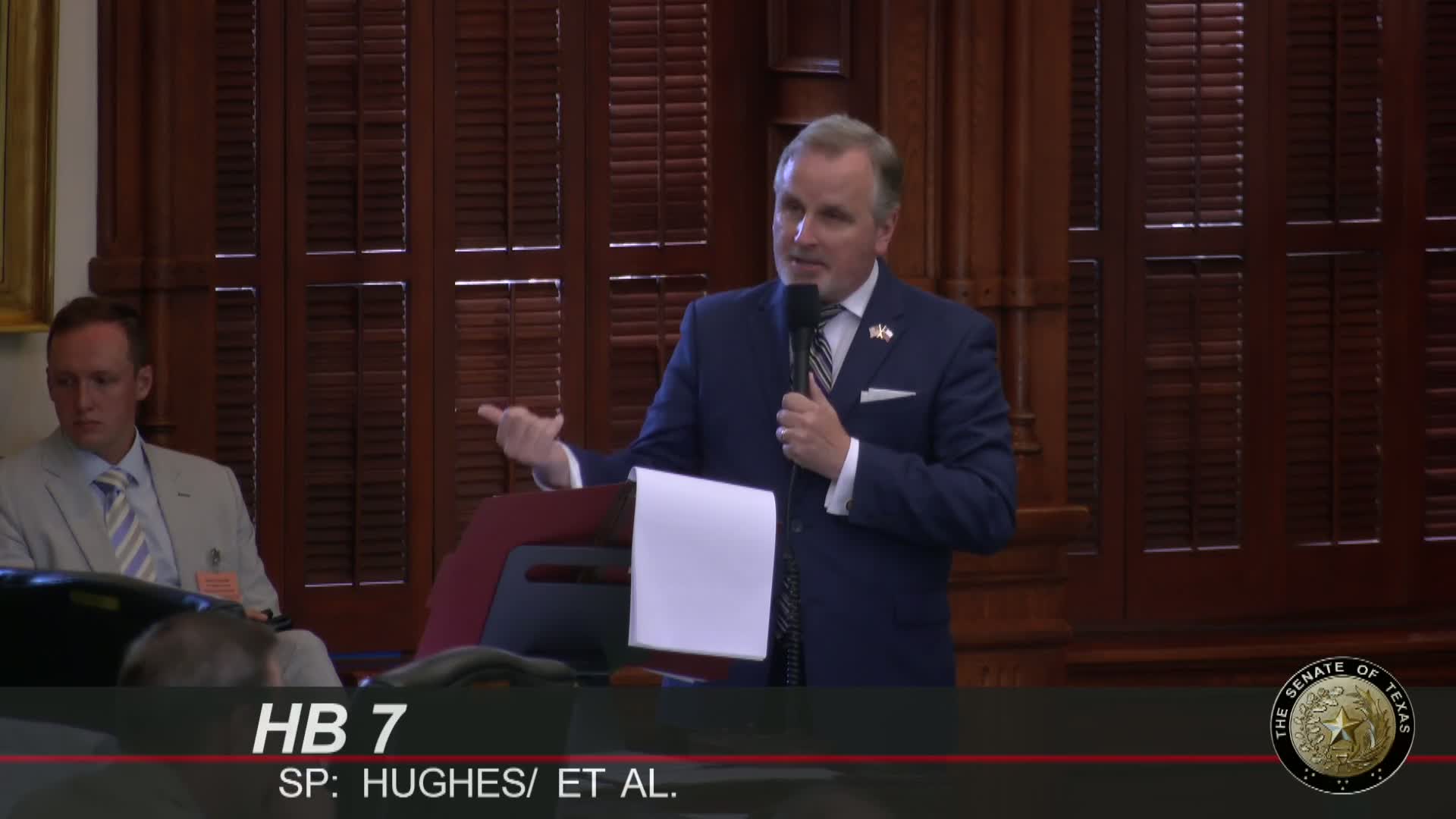
Senator King, speaking for the bill, said the measure codifies a model policy recommended by the Texas Commission on Law Enforcement’s (TCOLE) committee and already in use in many Texas cities. “We are adopting it statewide,” King said on the floor, noting departments such as Houston, Fort Worth and Austin already use similar systems.
Supporters argued the change creates consistency across roughly 1,700 Texas law-enforcement agencies and protects officers — and their families — from doxxing and reputational harm when complaints are unsubstantiated. King said the personnel file will include disciplinary actions and commendations and be available under public‑records law, while the department file will not be publicly released.
Opponents urged greater transparency. A senator speaking in opposition warned families of victims and the public that the bill could “enshrine secrecy in statute” and said documents related to serious incidents — including Uvalde‑era records — could remain sealed from public view. That senator emphasized victims’ advocates’ repeated difficulty obtaining records and said the public interest in accountability outweighs privacy concerns for unsubstantiated items.
Senators debated specific House amendments that had been removed from the bill, including proposals described on the House floor as expanding victim access to records (sometimes referred to as the McLaughlin or “Uvalde” amendment). Senator King said that amendment’s language was unclear and that, as drafted, it could effectively terminate the bill by requiring disclosure of otherwise protected material statewide.
On procedural votes the Senate suspended the printing rule and moved the bill through second and third reading; recorded floor tallies show the bill passed the Senate and, on a later recorded vote, cleared final passage on the Senate floor after earlier conference negotiations. Supporters said current law (Local Government Code Sec. 143) would continue to govern meet-and-confer agreements in civil service cities and that the statute does not supersede existing collective-bargaining arrangements.
The bill’s supporters said prosecutions and criminal‑investigation evidence remain accessible to prosecutors and defense counsel; they stressed the measure applies to open‑records requests from media and the public and does not prevent disclosure during active criminal prosecutions or civil‑litigation discovery.
Opponents warned the statutory protections for nonpublic department files could limit public oversight of officer conduct and complicate transparency after major incidents. Senators also questioned whether the bill’s exemptions and definitions are sufficiently narrow to prevent misuse.
The Senate approved the measure on final passage during continuing floor action; the bill’s backers said it provides a uniform statewide standard for recordkeeping while critics argued it tips the balance toward institutional secrecy rather than public accountability.