
House approves HB 7 to bar manufacturing/distribution of abortion pills into Texas and create private enforcement
Get AI-powered insights, summaries, and transcripts
Subscribe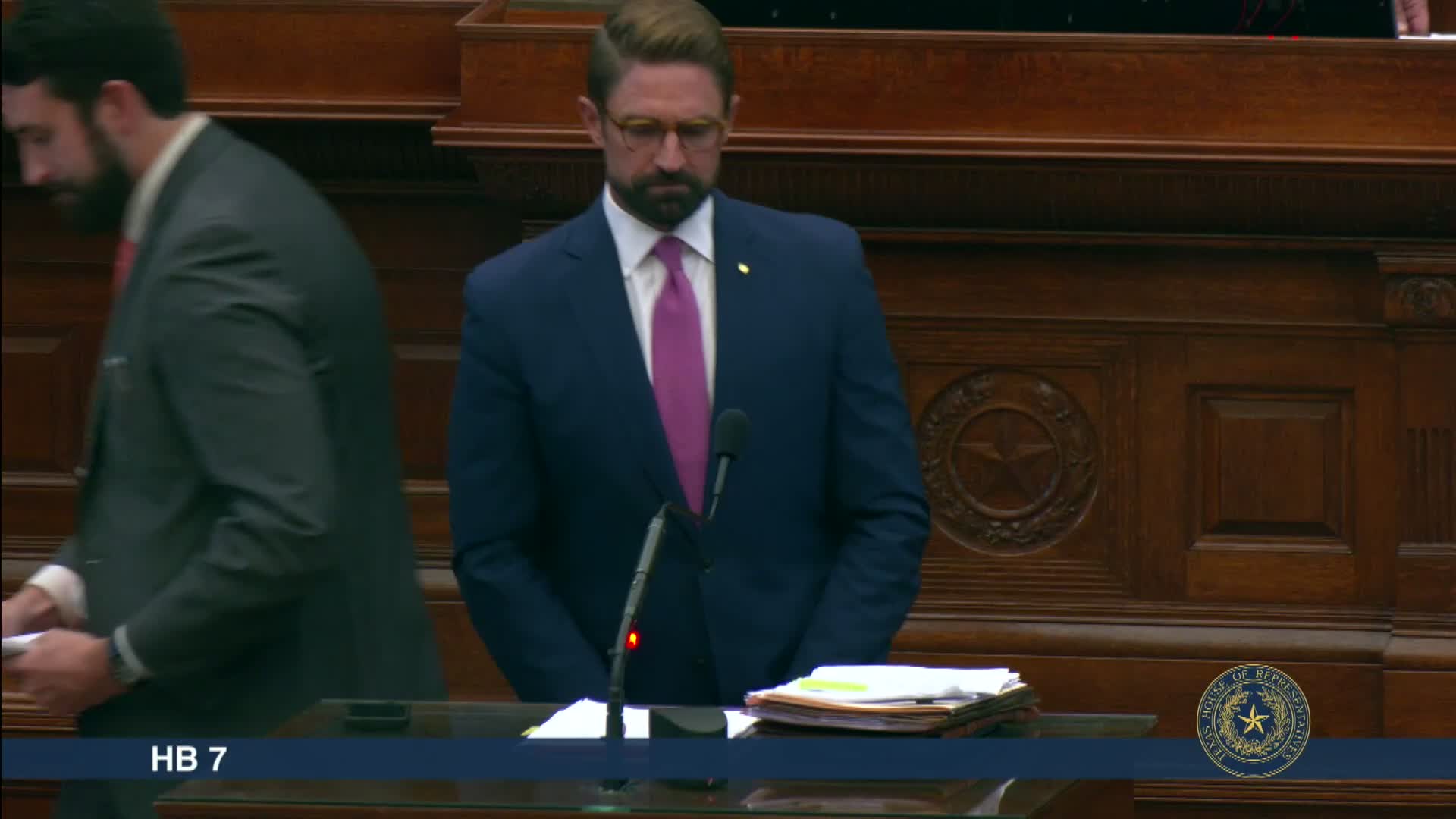
Summary
The Texas House approved House Bill 7, which prohibits manufacture, distribution and provision of abortion-inducing drugs into Texas and establishes private and Attorney General enforcement mechanisms, amid sharply divided floor debate over medical exceptions, civil remedies and constitutional risks.
The Texas House approved House Bill 7 on final passage after a contentious floor debate, adopting legislation that bars manufacture, distribution and provision of abortion-inducing drugs into Texas and creates an enforcement structure that includes private qui tam suits and Attorney General remedies.
House Bill 7’s supporters described the measure as targeting commercial operations that market and ship abortion-inducing medications to Texans. Representative Leach, who carried the bill, told the chamber that state law already bans the distribution of those drugs and that HB 7 provides additional enforcement tools for when out-of-state prescribers and distributors send pills into Texas. “This bill protects innocent unborn life and protects their mothers,” he said during his layout.
Opponents said the bill replaces ordinary law-enforcement channels with private enforcement and carries broad civil-liability provisions that could chill medical practice, create “bounty-hunter” incentives, and invite interstate legal conflict. Representative Garcia Hernandez urged colleagues to reject fee-shifting and venue-restriction provisions that she said would block Texans’ access to courts and threaten civil liberties; Representative Howard said provisions in the draft risked constitutional overreach.
Key provisions discussed on the floor include: a ban on manufacturing, distributing or providing abortion-inducing drugs in the state; an exception that protects treatment for medical emergencies, ectopic pregnancy, miscarriage management and other lawful medical uses; a qui tam private enforcement path that permits private relators to file suit on behalf of the state (with a percentage of penalties going to a designated charity); and fee-shifting provisions that, depending on outcome, can require an unsuccessful challenger or his attorney to pay legal fees to the prevailing side.
Floor debate focused heavily on the enforcement design. Critics pointed to federalism and constitutional concerns and cited prior litigation involving similar private-enforcement constructs; supporters said the qui tam mechanism is a necessary tool when other enforcement is inadequate. Representative Moody asked whether the House was certain these private-enforcement provisions would survive judicial scrutiny; Representative Leach said he was confident in the bill’s constitutionality and that the purpose was to induce compliance with Texas law.
The House recorded final passage, 82 ayes to 48 nays. Supporters hailed the measure as closing an enforcement gap in state law; detractors said the bill will chill medical practice and create legal instability for Texas families and providers.
HB 7 also contains carve-outs to protect Texas-licensed physicians providing lawful care while located in Texas and an explicit medical-exception clause for emergencies and pregnancy complications. However, opponents raised specific concerns about the reach of the private-enforcement provisions, the risk of fee-shifting that could dissuade attorneys from bringing constitutional claims, and whether venue and jurisdiction clauses in the text would effectively shield the statute from timely judicial review in state courts.
Lawmakers opposing the bill urged colleagues to focus on maternal health improvements, access to care, and other measures that, they said, would actually reduce harms. Supporters said HB 7 is designed to stop out-of-state actors that target Texas women and deliver illegal medication shipments into Texas. The bill now moves forward as passed by the House.