
Texas House passes SB 8, a bill requiring single-sex policies in public multi-occupancy spaces
Get AI-powered insights, summaries, and transcripts
Subscribe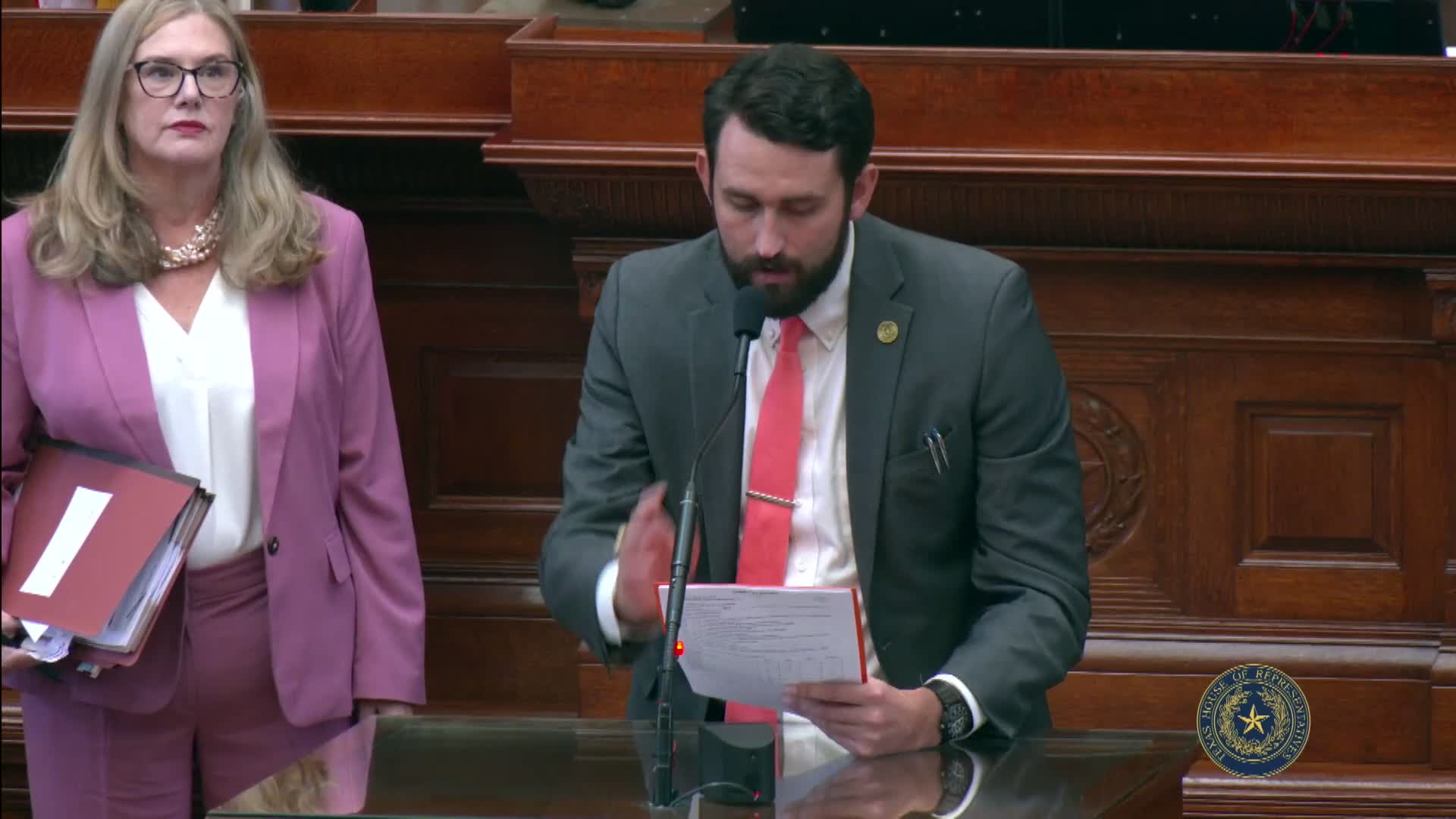
Summary
The Texas House passed Senate Bill 8 on final reading after an extended floor debate that stretched into the evening, approving a measure that requires state agencies and political subdivisions to adopt and enforce policies limiting use of multi-occupancy private spaces — such as restrooms, locker rooms and changing areas — to people the facility designates by biological sex.
The Texas House passed Senate Bill 8 on final reading after an extended floor debate that stretched into the evening, approving a measure that requires state agencies and political subdivisions to adopt and enforce policies limiting use of multi-occupancy private spaces — such as restrooms, locker rooms and changing areas — to people the facility designates by biological sex.
Supporters said the bill protects privacy and safety in public facilities. Representative Orr, who laid out the bill on the floor, said the measure “protects the privacy and safety of women and children in multi occupancy private spaces,” and described a process that starts with a written notice to a facility, a three-day cure period, and eventual Attorney General investigation and penalties if a facility fails to remedy a violation.
Opponents said the bill targets transgender Texans, risks vigilante enforcement, and could subject local governments and institutions to new litigation and costs. Representative Anchia called the measure “a perversion” and argued it would harm women, while Representative Rosenthal and others urged protections for intersex people and cautioned the bill would create legal uncertainty. Representative Jones offered and led an amendment to bar invasive searches and prohibit use of medical records or birth certificates as proof of sex; that amendment was debated and ultimately tabled in the series of votes recorded on the floor.
SB 8 requires a covered facility to publish and enforce a policy limiting use of multi-occupancy private spaces to people designated for the space’s sex; the bill provides a process in which a person who believes a policy is not being enforced may notify the facility in writing, the facility has three business days to cure, and the Attorney General may investigate if cure is not provided. The bill’s enforcement provisions include a private cause of action that multiple speakers on the floor described as permitting both Texas residents and certain nonresidents to bring claims; critics argued that language invites lawsuits and “potty policing.” Supporters said the private enforcement mechanism helps induce compliance where agencies fail to act.
Members repeatedly questioned how the legislation would be enforced in practice — whether agencies would be required to visually inspect people or to demand documents — and many amendments sought to limit or qualify those enforcement mechanisms. Representative Goodwin proposed an amendment to retain local option for municipalities and school districts; Representative McLaughlin won an amendment to preserve limited access for grieving families to certain records in the wake of the Uvalde school shooting. Several privacy- and process-focused amendments were tabled after roll-call votes.
The House recorded final passage at the end of the day: 86 ayes, 45 nays. Supporters hailed the vote as a protection for women and girls in state facilities; opponents warned the law will generate litigation and create safety and civil-rights concerns for transgender, intersex and gender-nonconforming Texans.
The bill’s text and discussion note short cure windows and an Attorney General enforcement role; it also creates a private enforcement pathway that critics said could be used by nonresidents and by opportunistic litigants. The bill does not change criminal penalties for sex offenses, nor does it create new criminal penalties against individuals for using a particular facility. How local governments, school districts and public universities implement the “every reasonable step” standard set out in the bill remains open to interpretation and, according to many members on the floor, likely to be litigated.
Lawmakers and witnesses on both sides repeatedly pointed to business and law-enforcement concerns: several members read statements from business coalitions and law enforcement leaders who oppose broad restrictions and warned of costs and harms. Supporters said large employers had not asked for this measure but argued it was necessary to provide certainty and protection in state-funded facilities.
The House debate produced sustained floor amendments, multiple failed motions to table, and public exchanges about earlier committee hearings. The bill now goes to the Senate for concurrence with House changes or to the governor depending on the next steps of the legislative process.
How facilities will translate the bill’s “every reasonable step” standard into operational practices — and whether courts will be asked to resolve that question — will be immediate matters for local officials and attorneys as the law becomes effective.