
Committee advances duress‑defense bill for trafficking survivors to allow jury evidence of coercion
Get AI-powered insights, summaries, and transcripts
Subscribe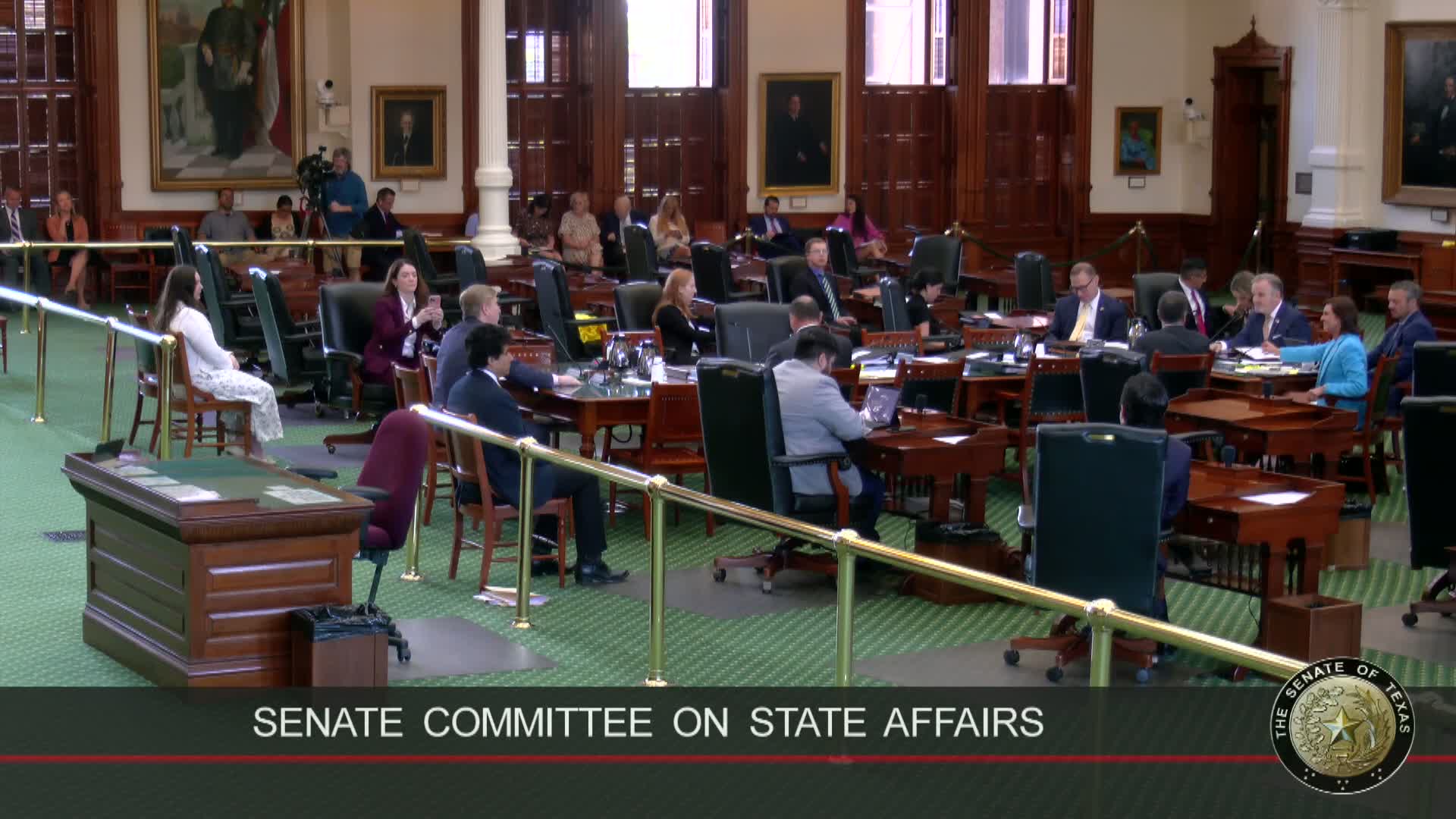
Summary
Senate Bill 10 would create an affirmative defense for people convicted of certain offenses if they can show the conduct was the direct result of force, fraud or coercion by traffickers; the committee heard survivor advocacy and law‑enforcement testimony and voted to report the bill to the full Senate.
The Senate State Affairs Committee reported Senate Bill 10 to the full Senate after a hearing that focused on expanding a duress defense for survivors of human trafficking. The bill’s sponsor, Sen. Cedric Parker, said trafficking victims are often prosecuted for crimes they were compelled to commit and that the current legal definition of duress — limited to immediate risk of death or serious bodily injury — does not capture the prolonged psychological and coercive control traffickers use.
Under the version the committee considered, SB 10 would establish an affirmative defense allowing a defendant to present evidence that the alleged conduct was the “direct result” of force, fraud or coercion by a trafficker. The defense would not require that the trafficker be charged or convicted; the defendant must show the offense resulted from coercion. The bill explicitly excludes application to certain “3 g offenses” (described in testimony as the most violent offenses) so that the statutory change would not apply to the most serious violent crimes.
Witnesses included retired law‑enforcement trainers and survivor advocates. Joseph Scaramucci, director of law‑enforcement training and operations for an anti‑trafficking nonprofit and a 20‑year law‑enforcement veteran, described arresting a woman years earlier who was later revealed to be a trafficking victim and said prosecutors and officers can unintentionally criminalize victims. “Even the most well intentioned law enforcement officers and prosecutors can and do unintentionally criminalize the very people we're trying to save,” Scaramucci testified. Survivors who testified described how arrests and convictions carried long consequences for housing, employment and family life.
Committee members asked whether prior changes to background‑check and interagency‑hiring rules require agencies to review prior employment files and whether investigations that continued after a resignation are covered; the author and witnesses explained those processes and clarified that body‑camera footage and investigative reports are governed by separate records laws and were not altered by the bill’s language.
SB 10 was moved out of committee on a unanimous recorded vote (committee recorded 8 ayes, 0 nays) and will proceed to the full Senate. Supporters said the bill seeks to align legal standards with trafficking survivors’ lived experience and give juries access to evidence of coercion that is often psychological or financial rather than immediate physical threats.