
House advances and passes SB 10 to lower voter-approval threshold for larger cities, counties
Get AI-powered insights, summaries, and transcripts
Subscribe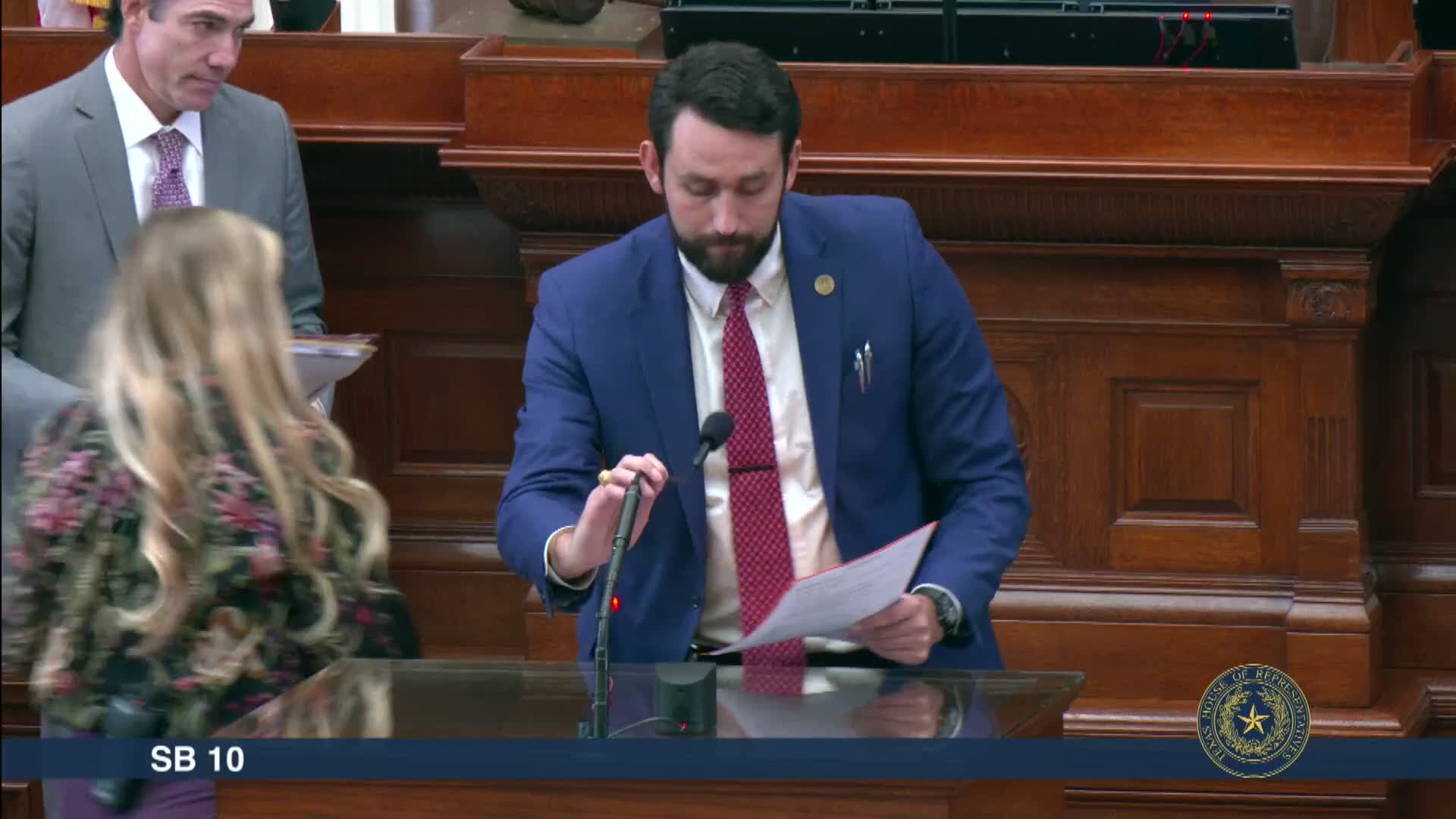
Summary
The Texas House debated and passed Senate Bill 10, which reduces the voter approval tax-rate multiplier from 3.5% to 2.5% for counties and municipalities with populations over 75,000. Supporters called it taxpayer relief and a trigger for voter engagement; opponents warned of added election costs and public-safety funding risks for localities.
The Texas House debated and ultimately passed Senate Bill 10 during floor action in the second called special session. The bill reduces the voter approval tax-rate multiplier for counties and municipalities with populations above 75,000 from 3.5% to 2.5%, meaning those localities must obtain voter approval to raise tax revenue beyond a lower threshold.
Sponsor Representative Meyer said the change is intended to “protect taxpayers, preserve affordability, and continue the work we started in 2019.” He repeatedly described the policy as a mechanism to require voter involvement before local governments raise revenue beyond a smaller percentage: “This is not a cap. This is a trigger,” Meyer told colleagues when questioned about public-safety exceptions and budgeting.
Floor debate focused on two main issues: (1) the population carve-out that excludes the majority of Texas cities because it applies only to municipalities with more than 75,000 residents, and (2) the practical effects on local budgets if cities must hold elections to exceed the 2.5% trigger. One lawmaker cited testimony that roughly 55 cities would be directly affected while most municipalities would remain at the 3.5% level. Representatives from cities expressed concern that the extra election costs and the 2.5% threshold could force cuts to core services unless local governments plan differently.
Members offered and considered several amendments to the bill while it was on the floor. An amendment adopting a 1% cap but exempting public-safety spending was adopted in committee and was on the floor; other proposed changes — including one to extend the 2.5% threshold to all municipalities regardless of size — were considered and either tabled or withdrawn during floor action. Recorded votes were held for contested amendments and for final passage.
Final passage of SB 10 was recorded on the floor; the roll indicated the bill passed (final recorded vote in the transcript: 78 ayes, 52 nays). Proponents described the measure as a tool to force local officials to justify increases directly to voters. Opponents, including several municipal representatives, warned it could increase election costs and complicate funding for police and fire, which often constitute a large share of municipal budgets.
Discussion vs formal action: the transcript shows extended questioning and multiple amendments; the formal action recorded in the transcript was the final passage vote and several amendment votes described on the floor.
The bill will become part of the legislative record after House passage and proceed in the normal legislative process.