
Committee hears testimony on SB 14 to standardize confidential law‑enforcement department files; supporters cite model policy, opponents warn of reduced public‑
Get AI-powered insights, summaries, and transcripts
Subscribe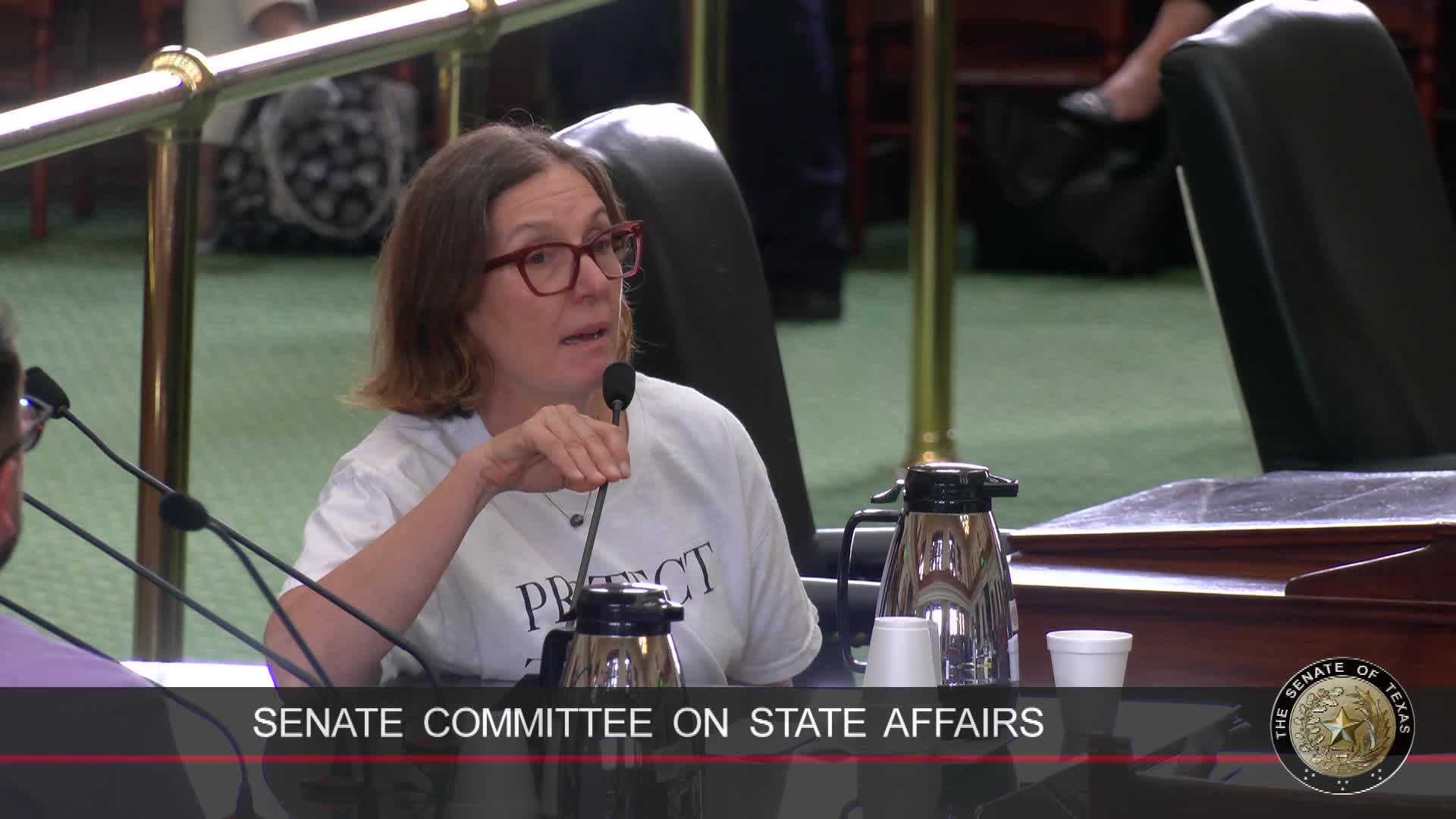
Summary
The committee heard testimony on SB 14, which would standardize and make confidential a departmental file for investigatory material not part of an officer’s public personnel record; law‑enforcement groups supported codification of a TCOLE model policy, while civil‑rights witnesses warned of reduced transparency.
The Senate State Affairs Committee opened testimony on Senate Bill 14, a measure to establish a standardized departmental file for law‑enforcement records that are not part of an officer’s formal personnel file and to clarify which records remain confidential under state law.
Senator Paxton introduced the bill on behalf of the author and explained that Texas law enforcement agencies currently follow a patchwork of local policies when determining which non‑personnel documents are confidential. The bill would codify model policies developed through the Texas Commission on Law Enforcement (TCOLE) sunset review process and require that certain investigatory summaries and internal reports be stored in a confidential departmental file rather than released in response to public information requests. The text, the sponsor said, preserves disclosure when misconduct has been substantiated and lists statutory exceptions (including the Michael Morton Act and the Sandra Bland Act).
Supporters: CLEAT (the Combined Law Enforcement Associations of Texas) Deputy Executive Director Jennifer Symansky testified in favor and described the TCOLE stakeholder process that produced a model policy. CLEAT and law enforcement supporters said the rule change matches protections already enjoyed by many civil‑service agencies and protects preliminary investigatory material that could unfairly taint reputations and impede personnel investigations. Lieutenant Jonathan Blanchard of the Dallas Police Department said a confidential departmental file would help build an early‑warning system and allow departments to use attendance and performance reports as part of internal interventions while preserving privacy for unproven allegations.
Opponents: Civil‑rights and transparency witnesses urged caution. Attorney CJ Grisham, who represents civil plaintiffs in police‑misconduct cases, said the bill would reduce the public’s ability to spot patterns of officer behavior and could impede civil discovery and accountability. Several witnesses described real‑world cases in which public access to records or body‑worn camera footage had revealed patterns or provided essential evidence to pursue remedies. Public commenters argued that prior to recent policy changes some agencies were able to “pass the trash” by allowing officers who faced allegations to resign and avoid full investigation; opponents urged strong safeguards to prevent gaps in disclosure.
Resource witness Gretchen Grigsby of TCOLE explained the sunset process that produced the model policy and the changes that took effect in June and September. She said the post‑sunset administrative rules already require a law‑enforcement agency to complete misconduct investigations and submit summary reports to TCOLE when an officer separates from an agency; SB 14 would place certain investigatory material in a confidential departmental file but would not remove records of substantiated misconduct from public personnel files. Several senators used the hearing to examine whether the post‑sunset changes fully address “passing the trash” and whether the bill would reduce public access to substantiated findings.
Discussion vs. decision: The committee recorded invited testimony and public comment on SB 14 but did not take a committee final action during this sitting. Senators asked detailed questions of TCOLE and law‑enforcement witnesses about the handling of unsubstantiated allegations, the differences between personnel files and departmental files, and how discovery would operate in civil litigation. Witnesses described the practical difference between a personnel file (which records substantiated disciplinary history) and investigatory material that agencies use internally while cases are pending. TCOLE staff said recent administrative changes require agencies to complete investigations and forward summary reports to the state commission within 30 days of separation.
Why it matters: SB 14 aims to standardize the handling of investigatory records and create a single place for documents that are not currently part of a public personnel file. Law‑enforcement groups say the change will protect officers from premature public disclosure of unverified allegations and allow the use of administrative data in early‑warning systems; transparency advocates say the change could make it harder for victims, journalists and civil‑rights attorneys to detect patterns of misconduct and hold agencies accountable.
Next steps: No committee vote was recorded in this hearing. Sponsors, TCOLE representatives and stakeholders will likely continue working on language clarifying which records remain public, how quickly summary reports must be completed, and the interplay between state FOIA law and the proposed departmental file rules. Observers should expect follow‑up amendments and additional committee questioning before the bill is scheduled for a vote.