
House approves law letting local governments offer impact‑fee credits for water‑conserving development
Get AI-powered insights, summaries, and transcripts
Subscribe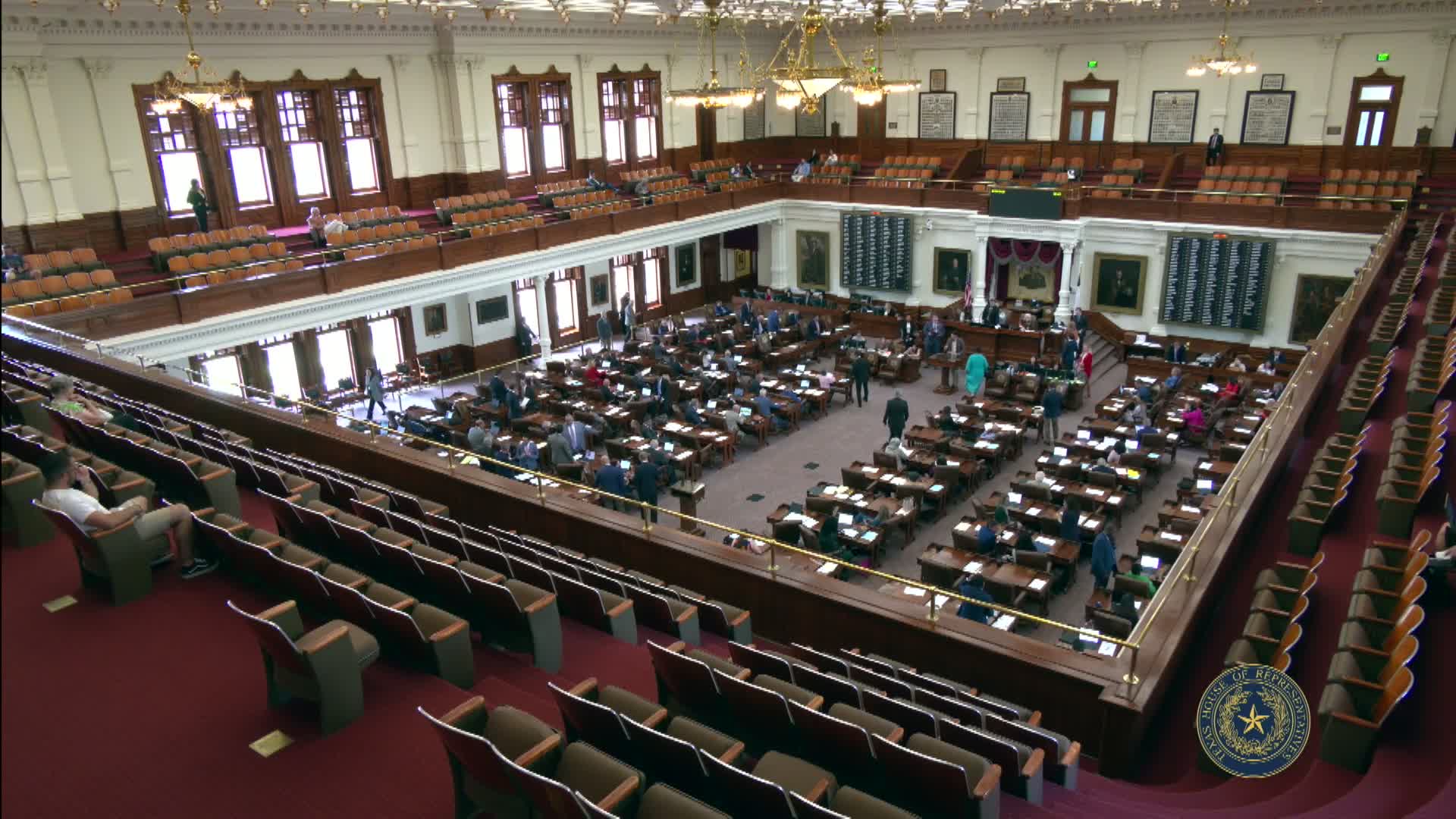
Summary
Senate Bill 14 directs political subdivisions to create optional credits against impact fees for developers that install water‑conserving or water‑reuse infrastructure; the measure passed the House after sponsors emphasized incentives for efficient new housing while leaving credit specifics to local governments.
The Texas House approved Senate Bill 14, which allows political subdivisions that charge developer impact fees for water/wastewater infrastructure to offer credits to builders and developers who install qualifying water‑conservation or reuse systems. The bill passed the House following floor debate and is intended to incentivize more efficient water use in new developments.
Key points
- Optional local credits: SB 14 does not mandate a single statewide credit amount. Instead, it authorizes counties, municipalities and other political subdivisions that collect impact fees to adopt a local credit program — described in the bill as a ‘‘fair and reasonable’’ process — so builders who reduce water demand may receive offsets against impact fees.
- Local control: The bill leaves technical detail to each subdivision which must work with developers to design local credit formulas, fixture counts, meter sizing and other measures that would qualify for credits.
- Legislative history: Sponsors noted the bill passed the House previously in the regular session but was vetoed because of an amendment; the current language removed that problematic amendment and the House adopted it again. On final passage during the floor session the vote was recorded as 133 ayes and 6 nays.
Why it matters
Advocates say credits lower the cost of housing by encouraging investments in efficient water systems and reduce pressure on existing water and wastewater infrastructure. Local governments can tailor credits to their systems and water‑resource priorities.
What’s next
SB 14 allows local jurisdictions to create credit programs; implementation will depend on each political subdivision’s adopted rules and the cooperation of developers.
Ending
The measure advances to enrolment and the governor; sponsors urged local engagement to design credit policies that are fair to both jurisdictions and builders.