
House approves grant program, statewide oversight for flood‑warning sirens in flood‑prone areas
Get AI-powered insights, summaries, and transcripts
Subscribe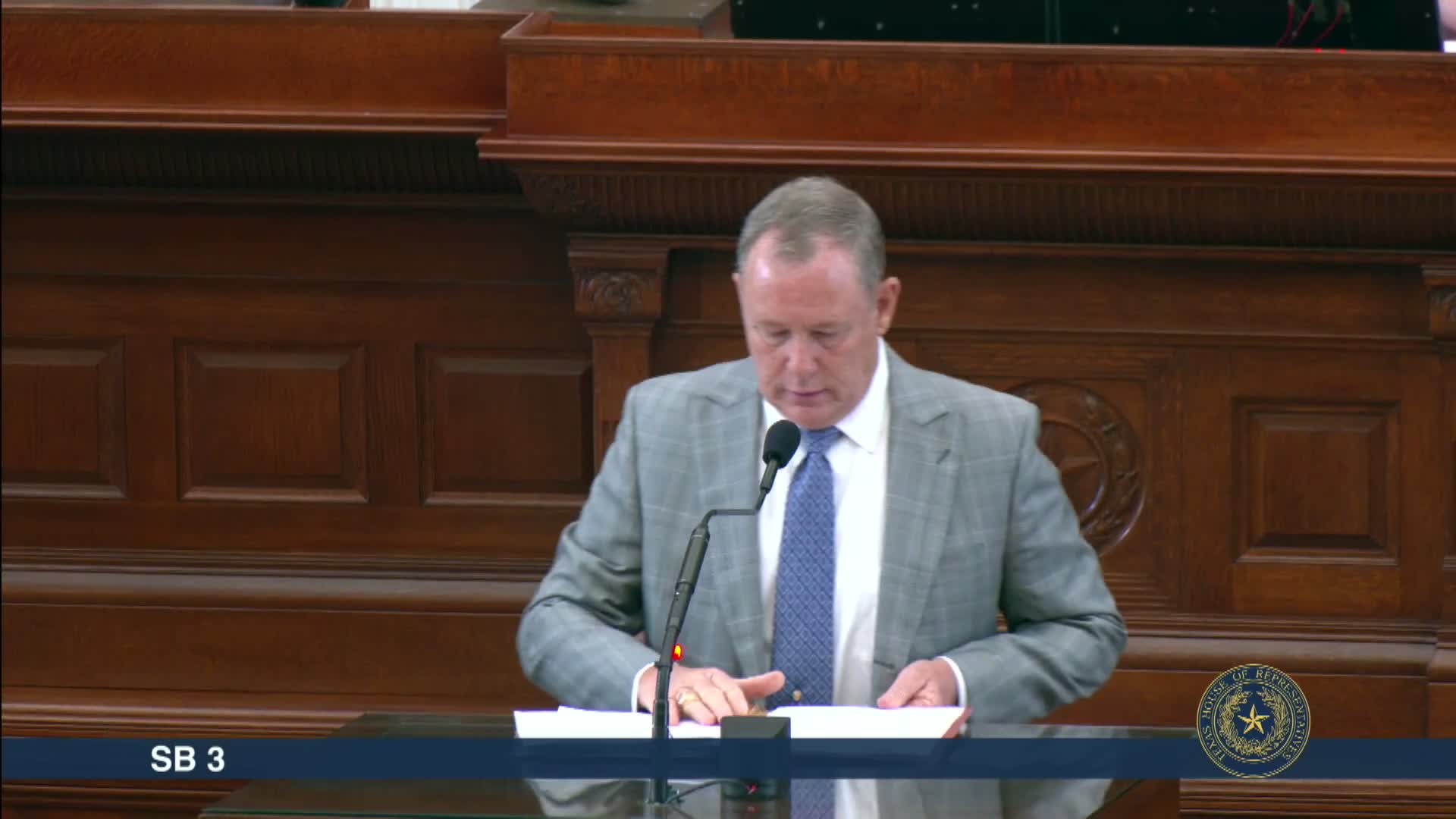
Summary
The Texas House approved Senate Bill 3, directing the Texas Water Development Board to identify flood‑prone areas and administer grants for outdoor warning sirens to communities at risk, after accepting an amendment that clarified grant administration.
The Texas House voted to pass Senate Bill 3, legislation that directs the Texas Water Development Board (TWDB) to identify areas with a history of severe flooding and to administer grants for outdoor warning sirens in those areas. The bill passed on final passage with 136 yeas and 0 nays in the late‑morning roll call during the House session.
Sponsor remarks and grant amount
Sen. Paul Bettencourt was listed as the Senate sponsor of SB 3; on the House floor the measure was described by members explaining its purpose to expand early‑warning capacity in rural flood‑prone communities where cell coverage is limited and where youth camps, RV parks, and other gathering places put residents at risk.
During floor questioning members clarified that the bill creates three primary functions for the TWDB: identify flood‑prone areas with documented histories of severe flooding or loss of life; adopt rules and technical standards for outdoor warning systems (including operation, testing and backup power); and administer grants to municipalities and counties to install, operate and maintain sirens. Floor discussion identified an approximate $50,000,000 grant pool over two years as the program size discussed in committee testimony and on the floor.
Amendment and administration
On the floor Rep. Wilson offered a successful amendment accepted by the author clarifying the grant administration details and ensuring jurisdictions that were not strictly compliant with every statutory requirement would still remain eligible for grants to install warning systems. Members clarified that TWDB will develop specifications including placement distances and maintenance standards, and that the grant program will provide implementation and maintenance funding focused on municipalities and counties.
Why it matters
Supporters argued sirens are a proven, low‑tech safety tool especially suited to Flood Alley and other rural areas where cell networks and other warning channels may be unreliable. The bill creates a state funding mechanism to accelerate deployment where gaps exist and pairs state technical guidance with local responsibility for long‑term maintenance.
Votes and next steps
- Final House roll call recorded 136 ayes, 0 nays; SB 3 passed third reading and will proceed to enrolment and the governor’s consideration.
Ending
With SB 3 approved, TWDB will be assigned rulemaking and program responsibilities; sponsors expect grant awards to follow rulemaking and the board’s identification of priority areas.