
Committee advances study and state guidance on outdoor sirens and alert fatigue after Hill Country floods
Get AI-powered insights, summaries, and transcripts
Subscribe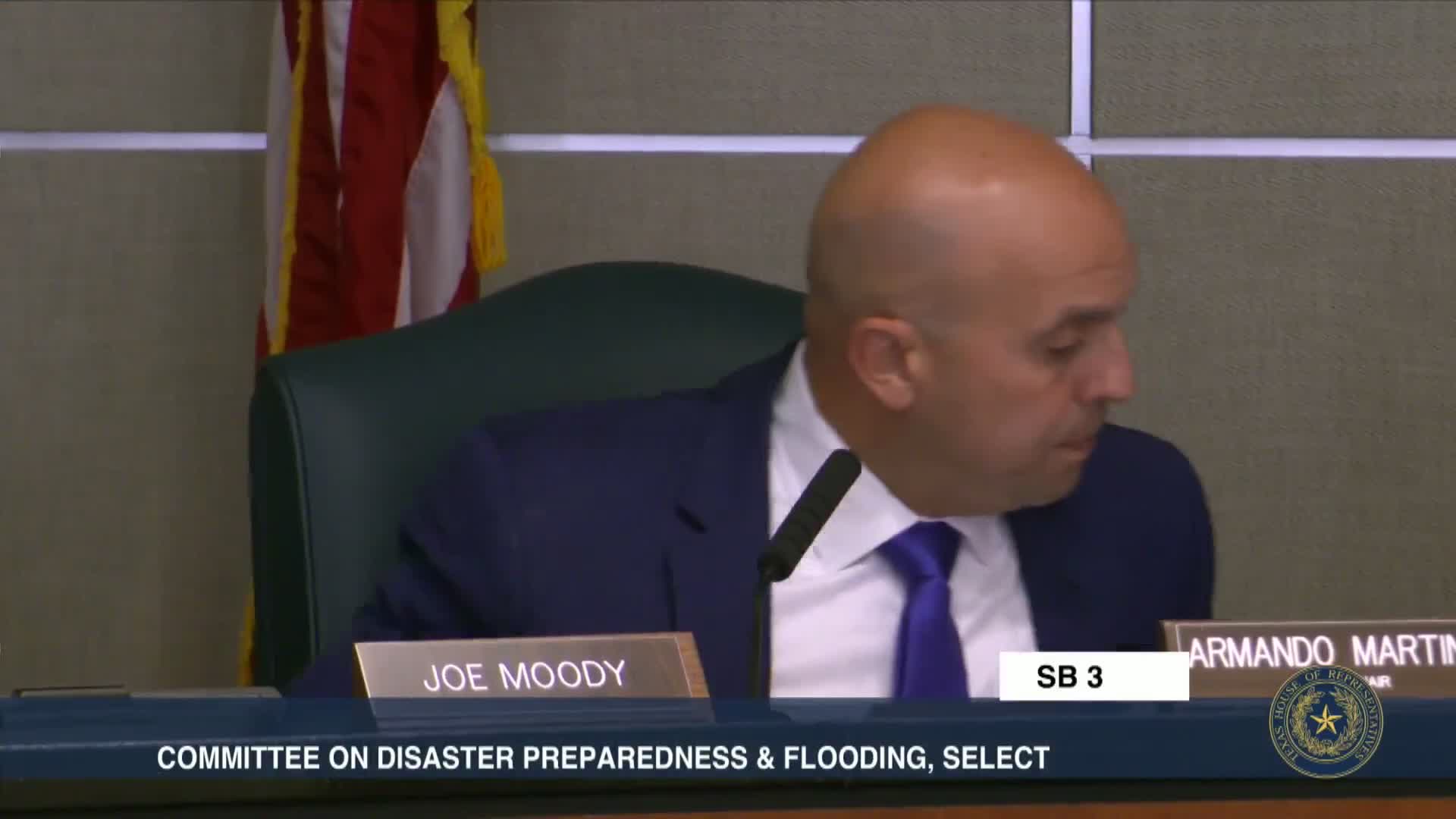
Summary
Lawmakers advanced two related measures to improve flood early warning: one would require the Water Development Board to identify flood-prone areas needing outdoor sirens and provide grants; the other creates a limited working group to study alert effectiveness and coordination.
Two related proposals on alerting and early warning drew substantial support and technical questions from the committee after the July Hill Country floods.
Representative Charles Wilson presented Senate Bill 3, which would direct the Texas Water Development Board to identify flood-prone areas where outdoor warning sirens are warranted and require the responsible municipality or county to install, maintain and operate sirens to standards set by the board. The measure pairs the requirement with a state grant program administered by the Office of the Governor to help jurisdictions fund siren installation and backup power, and allows the Water Development Board to withhold certain funding for noncompliant jurisdictions.
Representative Chris Darby laid out House Bill 48, which would create a nine-member working group within the Texas Division of Emergency Management (TDEM) to study alert effectiveness, coordination and notification fatigue and deliver recommendations by December 1, 2026. Darby said the working group’s study will be time-limited and focused on “actionable solutions” to streamline alert operations.
Supporters said outdoor sirens and better coordination would have saved lives in the Kerrville event and are an important layer where cell coverage is unreliable. Shane Som, Lago Vista city councilman, described rural peninsulas and low-coverage areas where residents did not receive cell-based warnings and “the only way they found out was debris was hitting their house.” Cyrus Reed of the Lone Star Chapter Sierra Club urged coordination between the governor’s grants and existing Water Development Board funds to avoid duplication.
Witnesses noted important operational caveats: outdoor sirens are less effective indoors, and sirens tested for tornado warnings (which direct people to go indoors) may send a different behavioral signal than a flood siren that tells people to go to high ground. Representative Wilson said the bills are designed to give “another layer of protection,” but also acknowledged communities will need site-specific plans. Kenneth Flippen of the U.S. Green Building Council described the measures as timely; Stephanie Morris of Birds and Bees Farm told the committee she had not received cellular watches or warnings during the July floods in her area and urged sirens tied to flood gauges.
The committee left both measures pending and recorded a motion to report the alert-working-group bill favorably for the full House; the committee roll calls later showed the working-group measure reported with an affirmative vote. Sponsors said the work will proceed in coordination with FEMA, TDEM and the Water Development Board to set standards, testing regimes and public education to reduce alert fatigue.
Ending: Bill sponsors said grants and a formal study of alert operations would be coordinated to create clear local triggers, minimize duplication and ensure responders and residents understand what each alert means.