
Bill would let counties limit impervious cover to reduce flash floods in Hill Country; builders warn of limits
Get AI-powered insights, summaries, and transcripts
Subscribe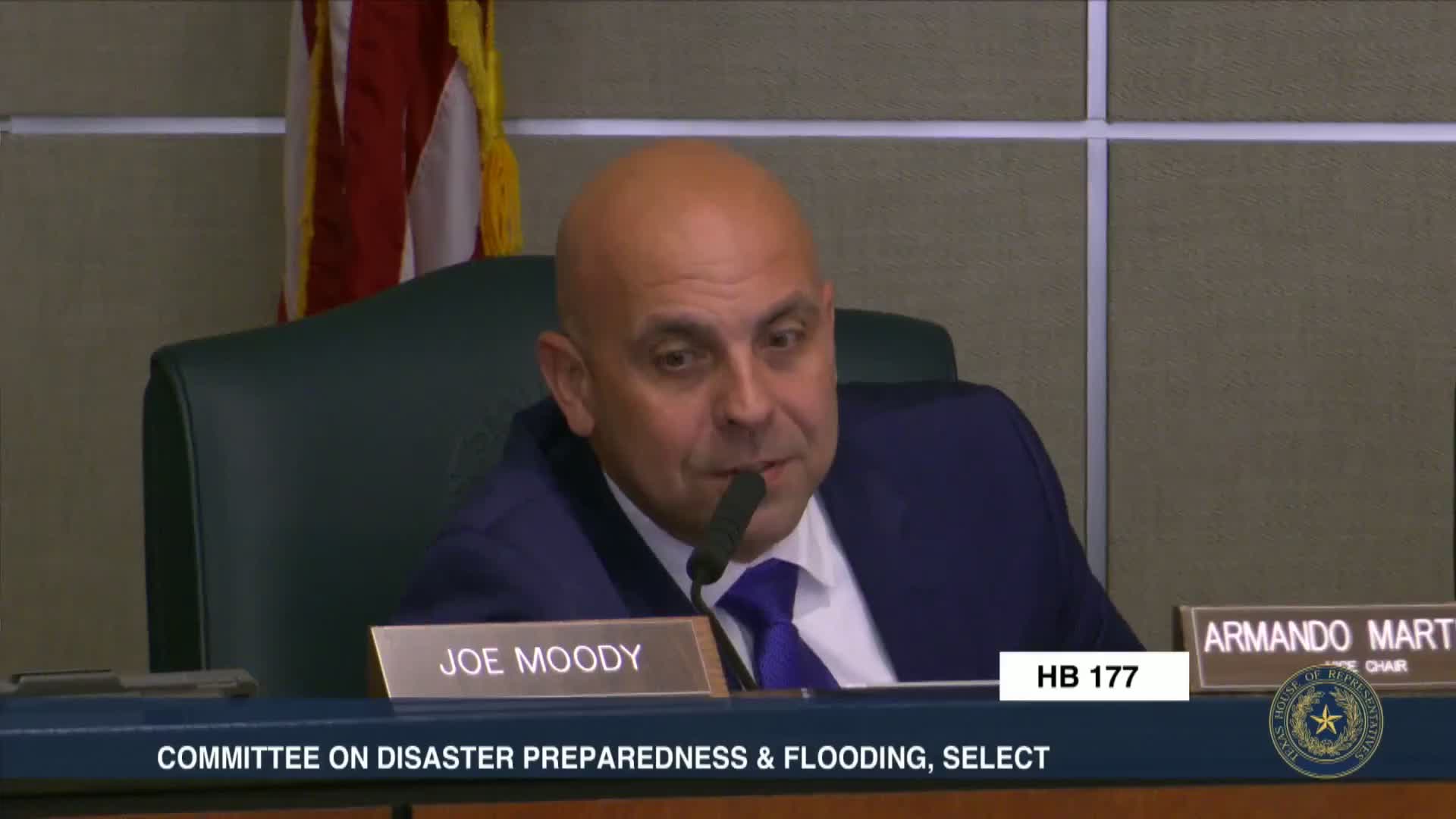
Summary
A bill to allow counties to limit impervious cover in unincorporated areas for flood mitigation drew support from county officials and environmental groups and concern from builders about existing county authorities and effects on rural property owners.
Representative Zwinger Weiner laid out a bill that would authorize counties to regulate impervious cover in unincorporated areas for the narrow purpose of flood mitigation, especially in the Hill Country where karst geology and steep runoff contribute to flash flooding. “My legislation gives counties the ability to regulate impervious cover only for the purpose of flood mitigation,” Weiner said, arguing that as development accelerates unincorporated areas are losing their ability to absorb rainfall and that upstream development is increasing downstream flood risk.
Speakers in support described rapid population growth and repeated flooding events in Hill Country counties. Hays County Commissioner Walt Smith said development “has a very direct impact on our floodways” and urged tools similar to municipalities’ authorities. Cliff Kaplan of the Hill Country Alliance cited studies showing that increasing impervious cover amplifies flood magnitude and damages, and Environment Texas noted nature-based techniques (permeable pavers, rain gardens) can dramatically reduce runoff when used at scale.
Opponents emphasized that counties already have multiple statutory tools, and warned of unintended consequences for agricultural or low-density property owners. JD Hill of the Texas Association of Builders noted existing authorities including flood-plain regulation, model subdivision rules and special districts such as municipal utility districts, asking why the counties would not use existing powers. He said: “If they have all of these powers, why are the counties not using the powers that are granted to them?”
Supporters acknowledged the bill is not one-size-fits-all and urged local discretion. County Commissioner Rick Bailey said the proposal “could be possibly a tool” but not universally appropriate. Representative Weiner and witnesses said the bill would be focused on large-scale development patterns that accelerate surface runoff rather than small rural improvements such as a private barn.
The committee left HB117 pending while sponsors and opponents negotiated language on geographic targeting, definitions of impervious cover and safeguards for rural property rights.
Ending: Sponsors said they will work to narrow applicability and add clarifying language so counties may use the tool where growth patterns demonstrably increase downstream flood risk.