
Senate advances bill lowering voter‑approved tax rate for larger cities and counties
Get AI-powered insights, summaries, and transcripts
Subscribe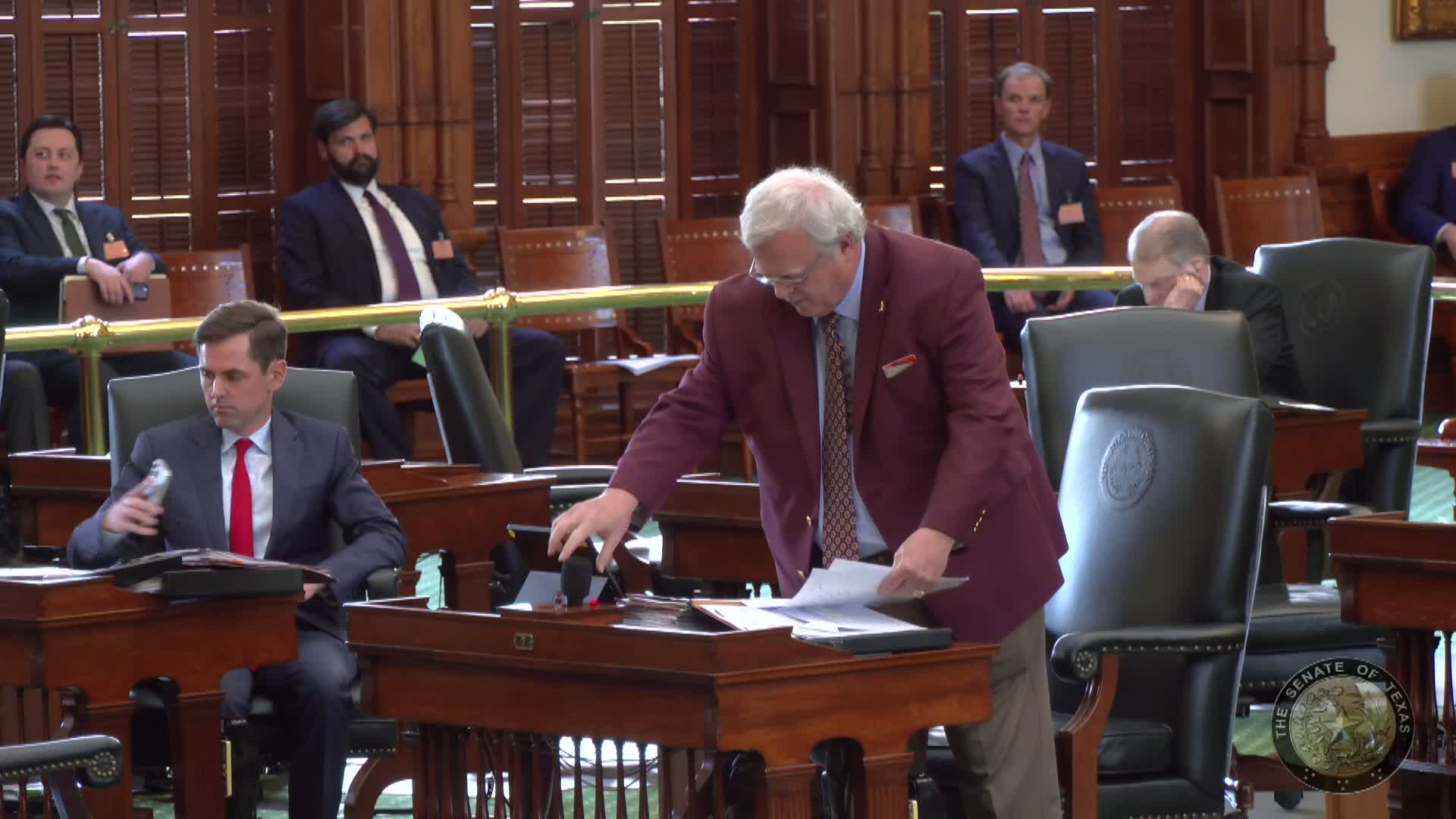
Summary
Senate Bill 10 would reduce the voter‑approved tax rate trigger from 3.5% to 2.5% for certain taxing units above population thresholds; sponsors argued the change slows property‑tax growth while opponents warned of effects on local services.
Senate Bill 10, debated at length on the Senate floor, aims to reduce the growth threshold that triggers a voter‑approval tax election for certain taxing units, lowering the ‘‘voter‑approved tax rate’’ calculation from 3.5% to 2.5% for applicable jurisdictions.
Senator Bettencourt, sponsor of SB 10, said the 2019 reforms introduced the voter‑approved rate concept to replace the old rollback formula and that the bill ‘‘simply does reduce the rollback rate from 3 and a half percent to 2 and a half percent.’’ He argued the change would slow growth in city and county tax levies that, he said, have outpaced school tax growth in recent years.
Why it matters: The voter‑approval rate determines how much a taxing jurisdiction may increase its levy without putting the excess on the ballot. Sponsors said reducing the threshold will prompt more voter ratification elections and slow automatic tax growth; critics warned the change could reduce revenue available for local services and could lead to more tax‑ratification elections rather than lower taxes.
Substantive points from floor debate - Sponsor examples: Bettencourt cited counties with proposed single‑year levy increases (El Paso County ~23.4% proposed; Williamson County ~9%; McLennan County ~13%) and said the change equates to roughly a one percentage‑point reduction in the automatic component of the voter‑approved rate. - Questions from colleagues: Senators asked about mechanics (how the voter‑approved rate is calculated, the difference between ‘‘no new revenue’’ and the voter‑approved threshold) and about whether local governments could still seek voter approval for larger increases; Bettencourt repeatedly said jurisdictions could still put increases on the ballot and that a voter‑approved measure becomes part of the levy in future years. - Recorded procedural votes: suspension of the regular order for SB 10 passed 18 ayes, 12 nays; the bill passed to engrossment on a roll call that recorded 18 ayes, 12 nays; the transcript shows SB 10 held at engrossment afterward.
Distinguishing discussion from decision - Discussion: Senators raised concerns about consequences for law enforcement budgets and other local services, the potential for more tax‑ratification elections, and whether loopholes had been closed previously (increment provisions and disaster exemptions). - Direction/clarification: Sponsor said prior loopholes (increment reuse, disaster exemptions) have been addressed by prior legislation and that SB 10 only affects the base rate calculation on growth, not new growth itself.
Ending The bill passed through the second reading and was passed to engrossment; further floor action and the final vote were not recorded in the provided transcript excerpt.