Get Full Government Meeting Transcripts, Videos, & Alerts Forever!
Get email alerts on the Cedar Ridge Development topic
No spam. Unsubscribe anytime.
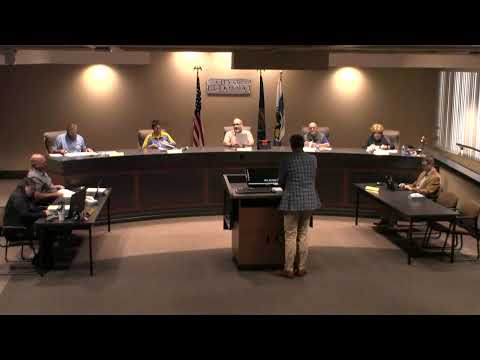
El Dorado approves CID and RHID and development agreement for Cedar Ridge Estates
Summary
The El Dorado City Commission approved a development agreement and ordinances and resolutions to create a Community Improvement District (CID) and a Residential Housing Incentive District (RHID) for the Cedar Ridge Estates subdivision, clearing the way for city-issued general-obligation bonds to fund streets, water, sanitary sewer and stormwater infrastructure.
The El Dorado City Commission approved a development agreement and ordinances and resolutions to create a Community Improvement District (CID) and a Residential Housing Incentive District (RHID) for the Cedar Ridge Estates subdivision, clearing the way for city-issued general-obligation bonds to fund streets, water, sanitary sewer and stormwater infrastructure.
The actions matter because they establish the legal and financing framework the city says it will use to pay for public infrastructure that will serve the new subdivision: the city would issue general-obligation temporary notes or bonds and use RHID increment revenues to pay debt service, with CID assessments available against unimproved lots if RHID revenues fall short.
Mitch, bond counsel from Gilmoreville, told the commission the financing plan layers two tools. "CIDs are a pretty, nifty little tool," he said, explaining that the CID assessment option lets the city levy special assessments against unimproved lots to backfill debt-service shortfalls. Mitch said the RHID would cover the vertical and horizontal infrastructure debt service and that the city would issue debt using the city's general credit to secure the lowest borrowing cost.
City staff and bond counsel presented a pro forma estimate used to size the RHID increment: roughly $139,861 per year, based on an assumption of 33 single-family homes built over the development period and a build pace of about five homes per year. Mitch cautioned that the estimate is forward-looking: "the only thing I know for sure about the financial estimate is that it's not completely accurate because it's a forward looking document," he said, noting actual increments will depend on house sizes, values and the timing of construction.
The pro forma used a developer-supplied average home value of about $255,000, and the development agreement and its attachments schedule an initial series of permit thresholds: within six months after infrastructure completion the developer is expected to secure five permits, followed by another five permits the next year and roughly five permits annually thereafter until buildout, according to summary material attached to the agreement.
Under the plan, if an individual lot has not received a certificate of occupancy after improvements are complete and the RHID revenue is insufficient to cover debt service, the CID assessment may be certified annually against that unimproved lot. If assessments remain unpaid, the city would be responsible for the general-obligation debt service and could pursue tax-sale remedies to recover unpaid assessments under the CID Act, bond counsel said.
The commission also approved ordinances and resolutions authorizing stormwater, water and sanitary sewer improvements and designating certain streets as main traffic ways, all steps that enable the later issuance of general-obligation bonds to finance the improvements. Commissioners voted 5-0 to approve the development agreement subject to creation of the CID and RHID and to pass the related ordinances and resolutions.
The commission set a public hearing for the RHID and the associated plan for Monday, Oct. 6, when the public will have an opportunity to comment on the housing incentive district and the plan for development and public facilities.
The approvals do not require the city to issue debt immediately; staff said the city may choose to issue debt, pay cash and reimburse itself, or pursue other timing options once the RIDH/CID structure is in place.