Get Full Government Meeting Transcripts, Videos, & Alerts Forever!
Get email alerts on the Gender And Public Spaces topic
No spam. Unsubscribe anytime.
Senate passes bill defining access to sex-segregated spaces; critics warn of legal and safety risks
Summary
The Texas Senate approved Senate Bill 8, which ties access to certain spaces and facilities to biological sex and creates a private right of action with civil penalties; opponents said the measure risks federal funding, privacy, and safety and could prompt litigation.
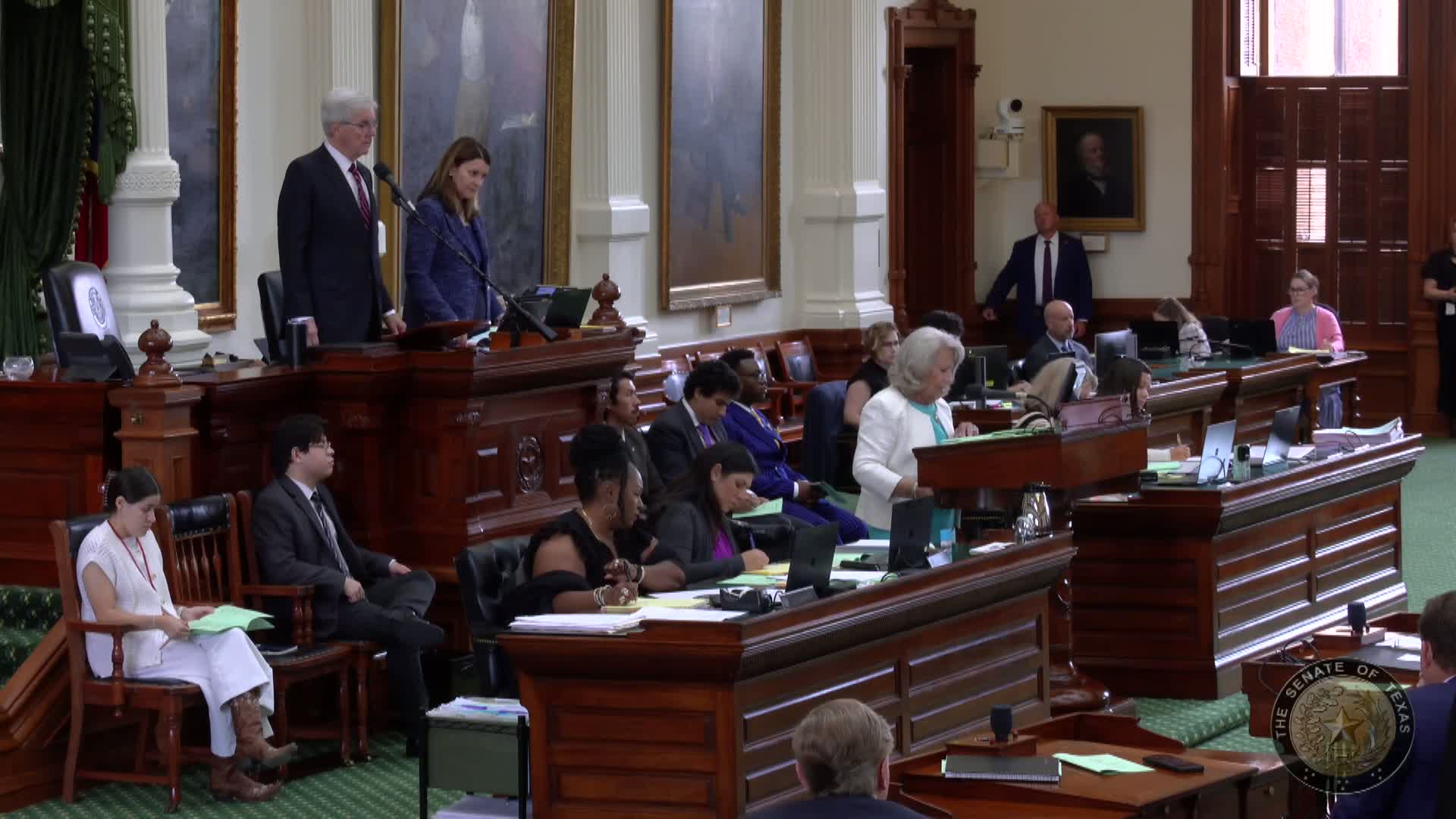
The Texas Senate passed Senate Bill 8 on third reading, voting 19-11 to approve a measure that ties access to specified spaces and facilities to a person’s biological sex and creates a private enforcement mechanism with civil penalties.
Senator Middleton moved final passage and described the bill as protecting "safety and privacy" for “the daughters of our great state.” Opponents on the floor, including Senator Zaffrani, urged a no vote, saying the bill "raises serious concerns about protecting the rights and dignity of every Texan" and warning it could produce conflicts with federal anti-discrimination laws.
Why it matters: supporters framed the bill as ensuring privacy in restrooms, shelters and other sex-segregated spaces; opponents said the legislation could harm transgender and gender-nonconforming Texans, expose state and local entities to litigation, and threaten federal funding for agencies and shelters.
Debate focused on enforcement and unintended consequences. Senator Hinojosa said the bill "seems to me that it's creating a solution for a problem that does not exist" and asked how schools or agencies would practically enforce the rule without intrusive verification. Senator Menendez warned about risks to people held in custody and to those fleeing domestic violence, noting studies and testimony about elevated risks to transgender people in carceral settings and shelters. Senator Cook called the bill "sloppy policy" and said it "targets and attacks" transgender people.
Opponents pointed to federal statutes and constitutional concerns raised on the floor: the transcript record cites the Prison Rape Elimination Act, the Eighth Amendment, and the Violence Against Women Act as legal frameworks that could be implicated by the bill’s housing and shelter provisions. Senator Zaffrani also said the bill’s private enforcement mechanism and civil penalties could chill local governments from enacting protections.
Supporters argued the measure preserves privacy and that it is necessary to protect women and girls in certain spaces. After floor debate, the Senate adopted the bill on third reading and ordered it passed.
What wasn’t decided: the bill’s implementation details and how agencies, schools or shelters would administer compliance were not specified on the floor. Several senators urged further review and highlighted the risk of lawsuits, but no amendment to change enforcement procedures was recorded during final passage.