
Committee advances bill to centralize and limit public access to certain law‑enforcement records
Get AI-powered insights, summaries, and transcripts
Subscribe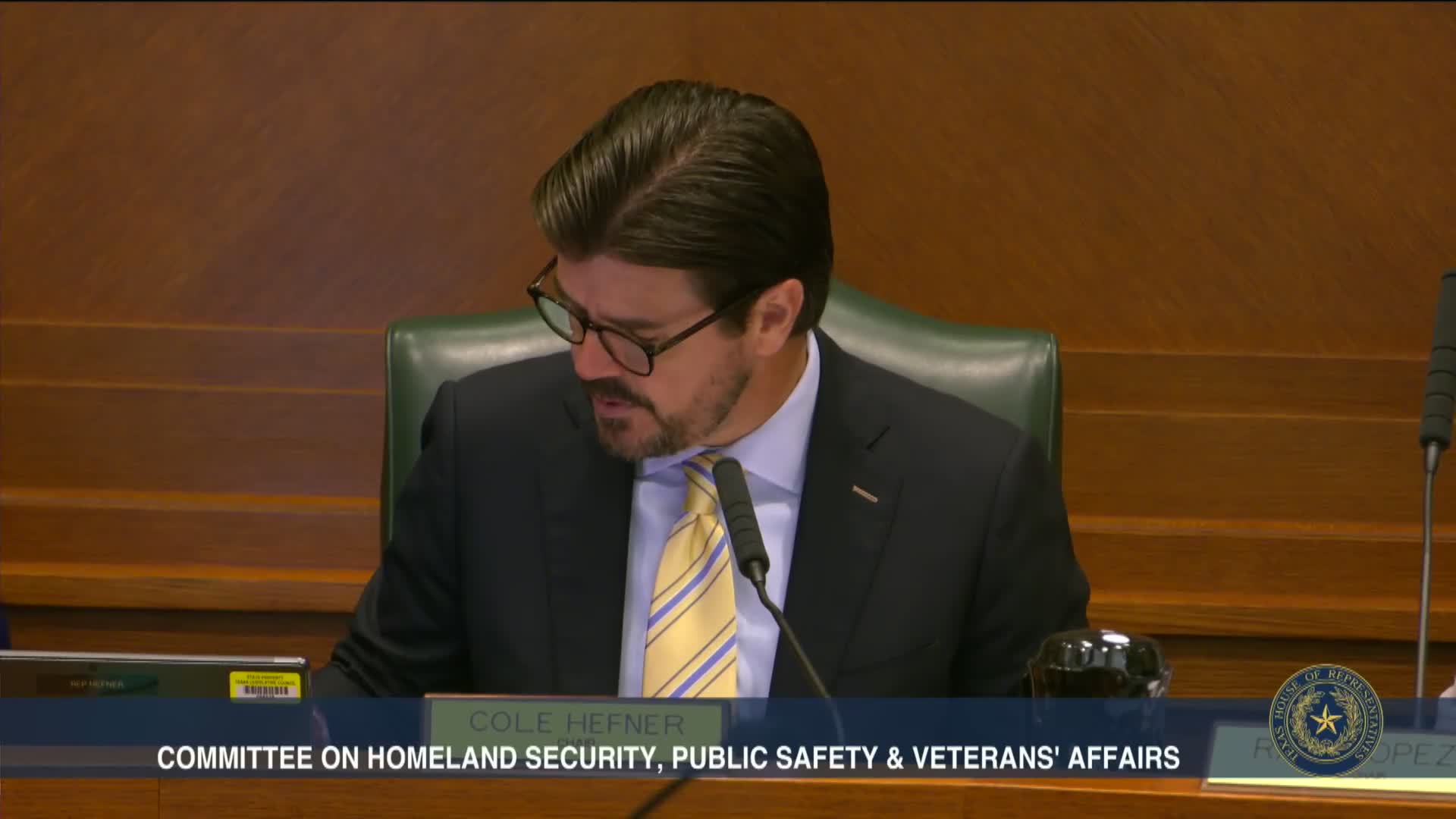
Summary
The Committee on Homeland Security & Public Safety voted to advance Senate Bill 15, which would codify a model personnel/department file structure that keeps unsubstantiated complaints and some personnel-related documents from public release while leaving discovery rights and some existing statutes intact.
The Committee on Homeland Security & Public Safety voted to report Senate Bill 15 favorably to the full House after a hearing in which supporters said the bill would standardize how agencies maintain personnel and department files and opponents said it would create new secrecy that could hide misconduct.
Senate Bill 15 would codify a model policy adopted after a Sunset Commission review that keeps substantiated misconduct, awards and routine evaluations in a public personnel file while placing unsubstantiated complaints, coaching notes and other department documents in a confidential department file. The bill’s backers say discovery rights in civil and criminal proceedings and existing statutes such as the Michael Morton Act and the Sandra Bland law still allow prosecutors and defense lawyers access to records when legally required.
Opponents warned the bill could shield misconduct in the smallest agencies and make records effectively unavailable to victims and the public. “SB 15 would require all law enforcement agencies, even those with just 1 officer, to maintain a confidential department file that includes misconduct allegations,” Lakshmi Fox testified, adding that the confidentiality “enables secrecy, especially in Texas’ smallest departments.”
Civil‑rights attorney C.J. Grisham called the measure “perhaps one of the most dangerous bills I’ve seen,” saying that plaintiffs and the public would be forced to hire lawyers and litigate for records they can now obtain through open‑records requests. “A bad police officer does care,” Grisham said, arguing that public access to unsubstantiated complaints helps lawyers assess whether a pattern of conduct exists before filing suit.
Law‑enforcement witnesses and unions said the change would protect officers from premature public shaming and allow agencies to use internal reports for early‑warning systems and performance coaching. Lieutenant James Songer, representing the Dallas Police Department, said the department supports the bill to protect attendance and performance reports that feed early‑warning systems: “Until such scenario, we would like to keep attendance and performance related reports confidential.”
Several witnesses and committee members asked whether the bill would affect body‑worn camera or dash‑cam footage. Witnesses from both sides agreed that body‑worn camera statutes are separate; the bill’s sponsor and agency witnesses said the bill is not intended to change the separate statutory regime for body‑worn cameras. Prosecutors’ representatives urged a carve‑out for district attorney access in criminal cases, saying that material relevant to criminal discovery should not be hindered. Paige Williams, for the Dallas County district attorney’s office, said prosecutors seek “a carve out for district attorney’s offices specifically for criminal cases across the board.”
Speakers urged more specificity. Public commenters and legal observers pointed to use‑of‑force reports, 911 logs, security camera recordings and sheriff’s jail records as items that should not be swept into permanent confidentiality. Robin Kirschenbaum and others testified that publicity about jail incidents and videos has led to reforms in some counties and that sealing those materials could impede accountability.
Committee members pressed for clarity about small agencies, independent investigations, and whether meet‑and‑confer contracts or local civil‑service rules would change how the new law is applied. Supporters pointed to a multi‑stakeholder TCOLE model policy developed during an interim study; opponents urged an interim study or clearer statutory definitions before codifying broad confidentiality.
After roughly ninety minutes of testimony and questioning, the committee voted to report SB 15 favorably to the full House with a tally of seven yeas and one nay. The committee record shows the motion to report the bill without amendments carried and the measure will go to the floor for further action.
The hearing produced no change to existing statutory requirements for disclosure that take precedence in criminal or discovery processes, but witnesses and members asked for clearer language to prevent unintended consequences in mass‑casualty or high‑profile cases. The bill’s next step is consideration by the full House; advocates on both sides urged additional statutory clarifications or interim work to resolve the areas of dispute before final passage.