
Senate advances bill restoring attorney general role in election prosecutions
Get AI-powered insights, summaries, and transcripts
Subscribe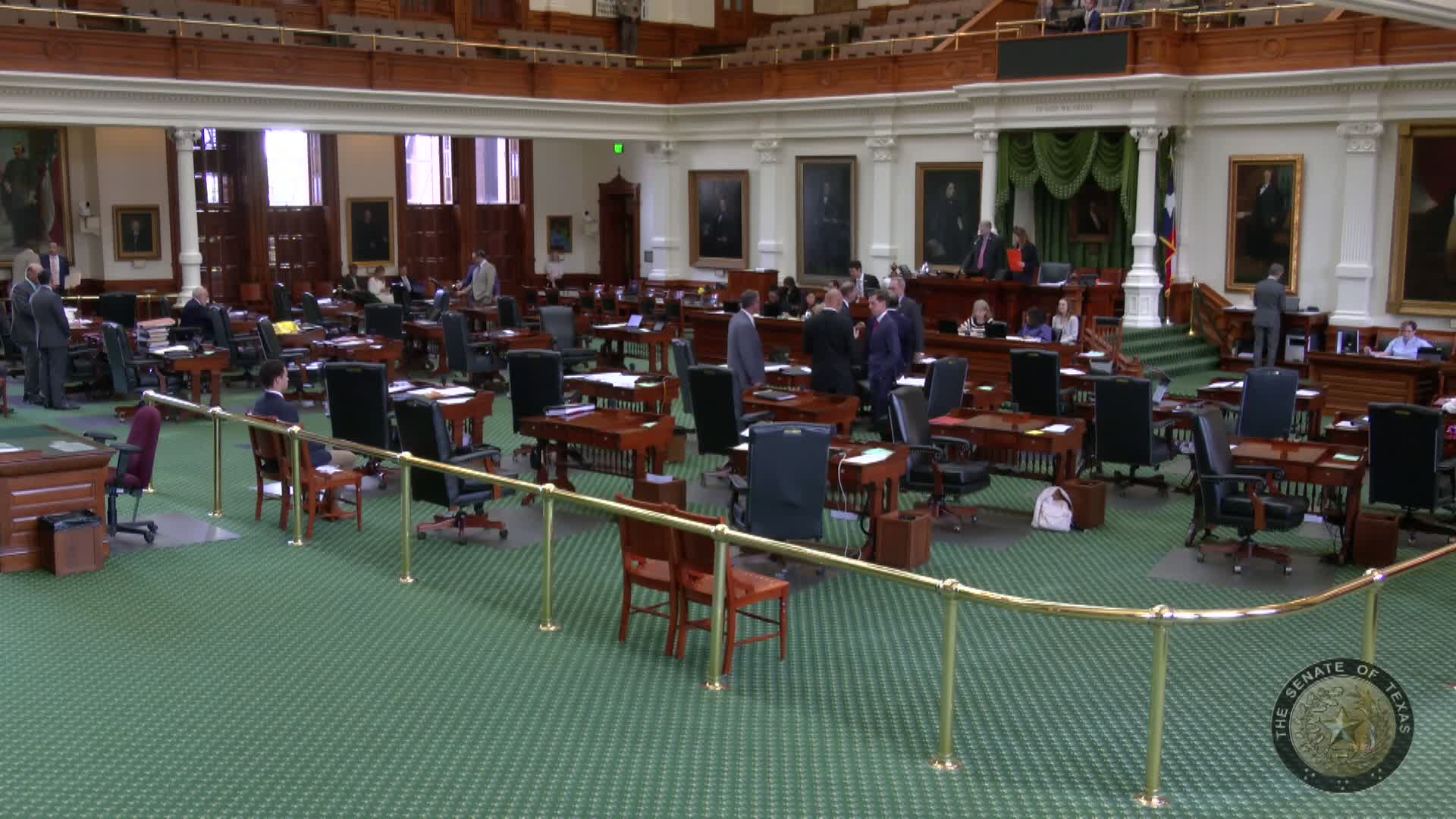
Summary
The Texas Senate approved advancing Committee Substitute Senate Bill 11 to engrossment after a lengthy floor debate that sought to restore prosecutorial authority over election crimes to the attorney general’s office, a power the court limited in 2021.
Senator Hughes secured Senate passage to engrossment on Committee Substitute Senate Bill 11 on the legislature’s special-session calendar, moving to restore the attorney general’s authority to prosecute alleged election-law offenses statewide.
The bill’s author, Senator Hughes, told colleagues the measure would “make it clear that when there's evidence that election crimes have been violated, the attorney general can be involved right away. The AG doesn't have to wait for an invitation. The AG does not have to wait for permission.”
The legislation responds to a February 2021 decision in the Stevens case by the Texas Court of Criminal Appeals that, Hughes said, constrained the long-standing practice dating to 1985 of allowing the attorney general’s office to prosecute certain election offenses. Hughes described the bill as clarifying that “the attorney general has jurisdiction to prosecute and shall represent the state in the prosecution of criminal offense[s] prescribed in the election laws of the state.”
Supporters said the change is intended to provide an alternative when local prosecutors have conflicts of interest, lack resources, or decline to pursue election-related allegations. “We want to make sure that there's a conflict or there's some reason why the local prosecutor won't prosecute these crimes,” Hughes said during floor debate.
Opponents raised constitutional and separation-of-powers concerns and repeatedly asked how the bill addresses the Stevens holding that limited the attorney general's ability to unilaterally prosecute without local consent. Senator Johnson described the Stevens holding and asked whether the bill survives that precedent; Hughes said he believed the court was wrong and that the statute’s revised language — changing certain grant phrases and referencing subchapter language in the Government Code — would provide a stronger basis for the authority.
Lawmakers also questioned what would happen if the subject of an investigation were the attorney general themself. Hughes replied that: “the attorney general, as you know, is used in statute to refer to an individual and also to refer to the office…there's a whole bunch of lawyers over there who would…handle a prosecution if this becomes law,” and that existing recusal and conflict procedures would apply.
The Senate adopted Hughes’s motion for passage to engrossment by voice and roll call. The clerk reported 17 ayes and 12 nays on the motion to advance the committee substitute.
The bill’s supporters said it restores decades of practice to give the attorney general concurrent jurisdiction in election-crime matters; critics warned it may raise separation-of-powers and oversight questions and urged caution about using statutory language rather than a constitutional amendment to address the issue. The author said a constitutional amendment remains an option for later sessions.
If enacted as written, the bill would change how election-law violations can be investigated and prosecuted in Texas, but any constitutionality disputes could be litigated in court. The measure now proceeds in the legislative process for final drafting and enrollment.