
Senate approves SB14 to standardize police personnel files; critics say bill limits public access
Get AI-powered insights, summaries, and transcripts
Subscribe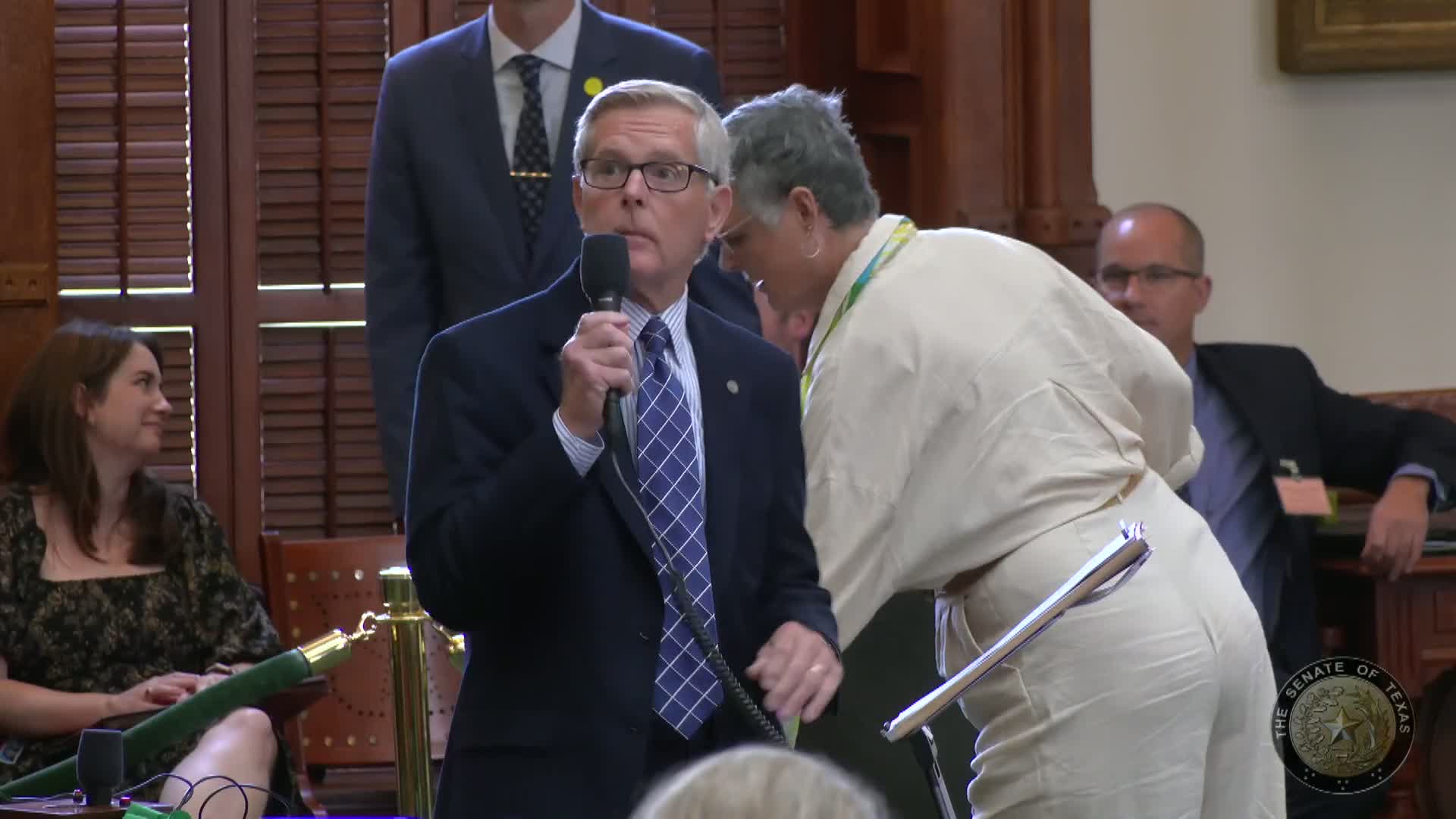
Summary
Senators passed Committee Substitute SB 14 after extended floor debate about public-records access to law enforcement personnel materials.
Senators passed Committee Substitute Senate Bill 14 after extended floor debate about public-records access to law enforcement personnel materials.
Senator King, the bill's author, said the measure implements a model personnel policy developed through the Sunset review and TCOLE's guidance and would require agencies to maintain two categories of records: a personnel file containing "substantiated misconduct complaints" that resulted in discipline, commendations and periodic evaluations (which would be subject to open-records requests), and a departmental file containing other records, including unsubstantiated complaints and background investigations, which would normally be withheld from routine public release.
"If you discipline me, fair enough, that's that information is available to the public," King said on the floor. "But if it's just an allegation that any random... upset person I've arrested... just an allegation should not be made available to the public, to my family, to the people I run with." He and other supporters said the bill prevents reputational harm from unproven allegations while preserving access where the law already requires disclosure (for example, under civil litigation or statutes such as the Michael Morton Act or Sandra Bland Act).
Opponents including Senator Miles and others argued the bill could limit transparency into officer conduct and complained that the language was broad and could allow agencies to place important materials in the departmental file rather than the public personnel file. Senator Miles said the bill "could limit the access of important information about police conduct" and warned that the public and media could be shut out of routine records that are useful for oversight.
A floor amendment offered by Senator Hinojosa would have narrowed the departmental file to contain only unfounded complaints; the amendment was rejected in a roll-call vote (9 ayes, 19 nays). The bill passed to engrossment and final passage with recorded floor tallies of 18 ayes, 10 nays on final passage.
Key clarifications on the record Senators pressed the author on what existing meet-and-confer agreements and chapter 143 local civil-service provisions would mean for disclosure. King said existing meet-and-confer agreements and chapter 143 provisions would continue to govern disclosure obligations and would not be superseded.
The bill also makes explicit that government agencies authorized by law (prosecutors, courts, TCOLE and similar entities) retain access to department files as required to carry out official duties.
What the Senate did The body suspended rules to take up the committee substitute, considered floor questions and amendments, and adopted the committee substitute before passing the bill to engrossment and on final passage. The Secretary recorded final passage as 18 ayes, 10 nays.
Why it matters The bill creates a single statutory model for personnel and departmental files across Texas law enforcement agencies and aims to standardize what is routinely released in open-records requests; critics say it reduces public access to records needed for independent oversight, while supporters say it protects officers from defamatory, unproven allegations being published without context.