
Senate committee advances bill to limit taxpayer‑funded lobbying; supporters cite free‑market, opponents warn of access gaps
Get AI-powered insights, summaries, and transcripts
Subscribe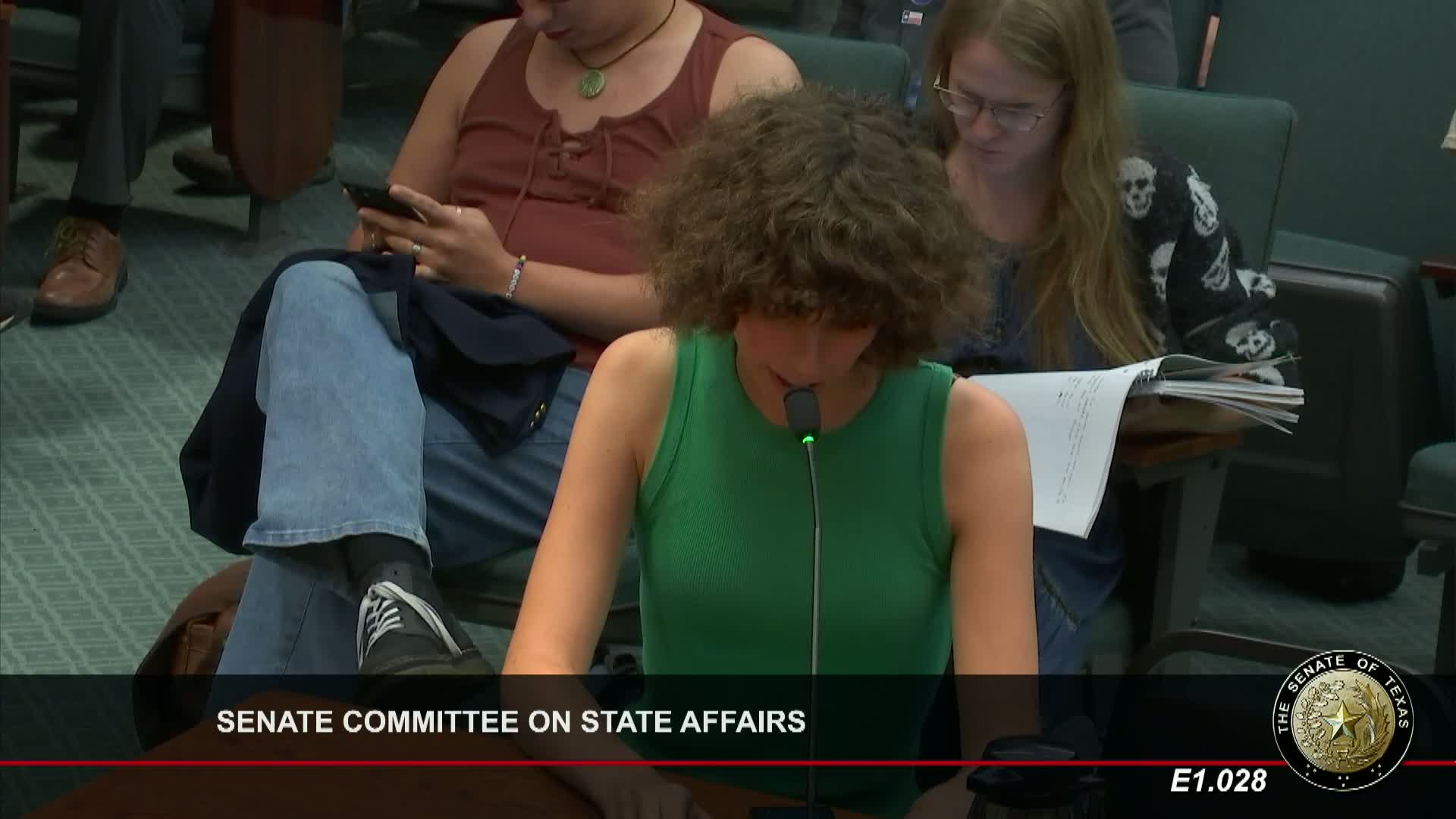
Summary
Senate Bill 13 would bar or restrict government entities from paying private lobbyists; proponents including the Republican Liberty Caucus supported the change while cities and public utilities warned it would hamper representation for remote or small jurisdictions.
Senate Bill 13, which would restrict taxpayer dollars for certain lobbying contracts by political subdivisions, was heard by the Committee on State Affairs. The measure drew support from free‑market and small‑government advocates and opposition from local governments, regional utilities and environmental groups.
Why it matters: The bill would limit the ability of cities, counties and other political subdivisions to hire private lobbyists or associations using public funds—shifting who can appear before the Legislature and how local interests are represented.
What witnesses said: Luis Figueroa of Every Texan testified in opposition, saying rural and distant communities (El Paso, Amarillo) rely on paid representation to participate in the legislative process and that banning such contracts would raise costs and reduce access for small governments. Sierra Club representative Cyrus Reid and public utilities groups warned the bill could worsen policy outcomes on complex topics like the electric grid.
Supporters included Elizabeth Miller, who said the Republican Liberty Caucus endorses a ban on taxpayer‑funded lobbying and urged passage. Mike Swanson testified in opposition, arguing the change would disadvantage public entities and that the current private sector already fields many lobbyists.
Action taken: The committee reported SB 13 favorably to the full Senate (committee roll recorded 9 ayes, 0 nays). Witnesses asked for measured approaches—public reporting, transparent procurement, or limits on certain travel or hospitality—but not wholesale loss of local representation.
Next steps: SB 13 goes to the full Senate for consideration. Municipal officials and utilities said they would press for exceptions or clearer rules to preserve representation for small or remote jurisdictions.