
Senate passes SB4 redrawing U.S. House map; author says plan is race-neutral and designed to elect more Republicans
Get AI-powered insights, summaries, and transcripts
Subscribe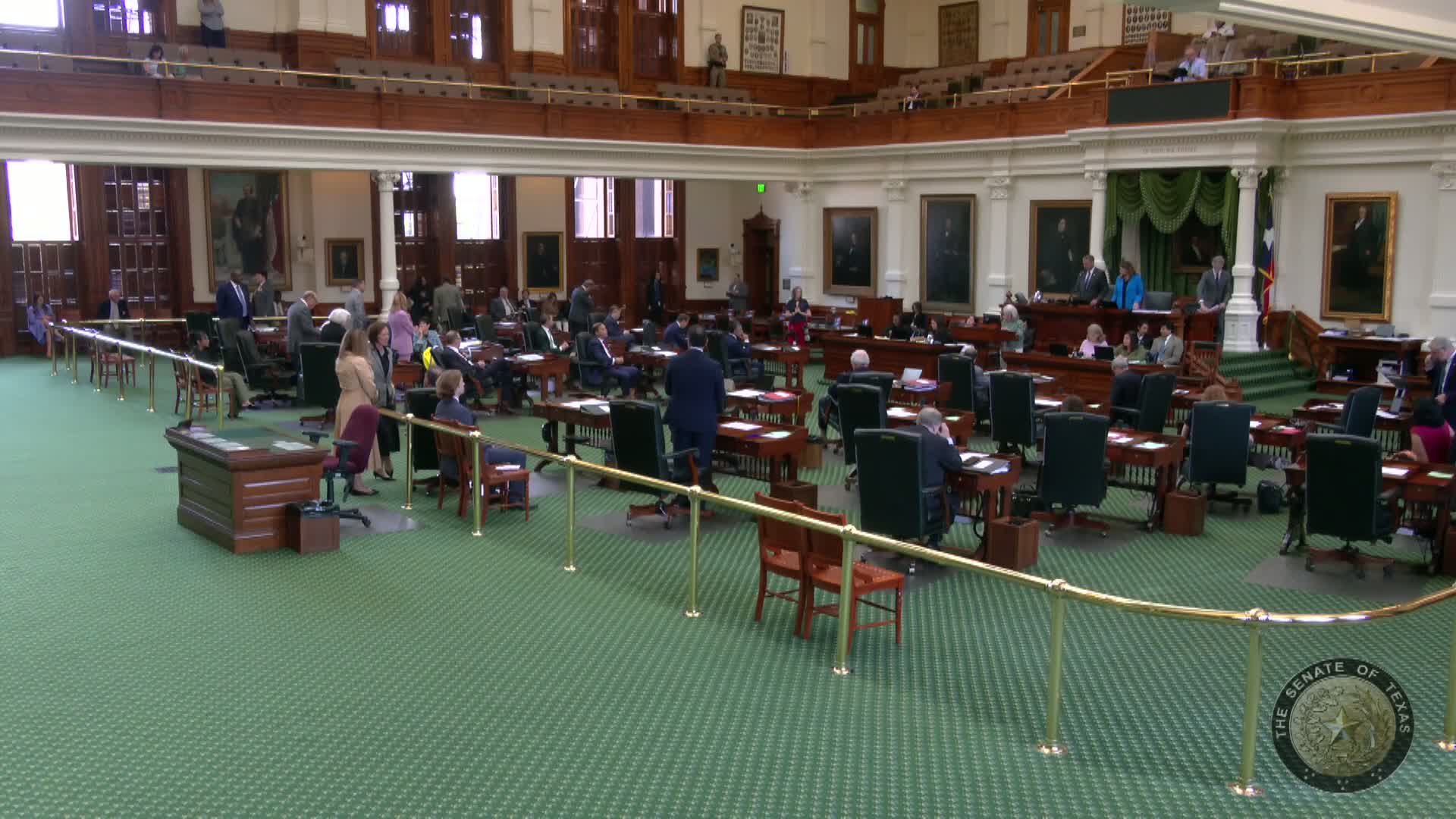
Summary
The Texas Senate approved Senate Bill 4, a new congressional map the bill—s author said was drawn from 2020 census data and based on political performance, not race. The floor debate focused on the legal standards for equal population and on public testimony received in regional hearings.
Senator King, the Senate author of SB 4, prevailed on the floor Wednesday as the Senate approved a new congressional map the bill would adopt for U.S. House elections.
SB 4, King told colleagues, "is the companion to HB 4, line for line, which passed out of the House Committee on 08/02/2025." King said the map is based on the 2020 census and was designed to meet one-person, one-vote population equality and to "elect more Republicans to the U. S. Congress." The bill passed final passage on a recorded vote of 19 ayes, 2 nays, 9 absent and was declared finally passed by the Secretary.
Why it matters: redrawing congressional districts changes who votes together and can change which party is likely to win a seat. King told senators the map was built on political performance and not on race, describing compactness as a further aim after public testimony criticized some current district shapes.
On the floor, King summarized the process that produced SB 4: the Senate used 2020 census data and held multiple regional and Capitol hearings, including invited testimony from organizations such as MALDEF, NAACP, LULAC and Asian Americans Advancing Justice, and heard from members of Congress. "Since 2020, the Senate has held 21 regional and other public hearings," he said, and during the special session the Senate committee held six hearings that produced thousands of livestream views and hundreds of witnesses.
King repeatedly defended the legal basis for the plan, telling senators that he had consulted legal counsel and that the plan "complies with all applicable law." He cited the U.S. Constitution's equal-population standard, and the floor record referenced high court decisions tied to one-person, one-vote principles. King also said the plan is "race blind" in its drafting and that, in his view, no witness had produced data proving intentional racial "packing or cracking." He said the plan makes relatively minor changes to most of the state's 38 congressional districts, with larger changes affecting five districts (CD-9, CD-28, CD-32, CD-34 and CD-35).
Opponents reserved the right to debate the map again in a future special session; Senator Zaffirini signaled she would offer a fuller closing statement in a later session.
What the Senate did: the body suspended rules to take up SB 4, laid the bill out on second reading, moved passage and later completed final passage. The Secretary recorded the final tally as 19 ayes, 2 nays, 9 absent and the bill "is finally passed." The motion history on the floor included a committee report that the Senate Select Committee on congressional redistricting reported SB 4 out with 6 yeas, 1 nay, 1 present not voting and 1 absent in committee.
Details and clarifications: King said the ideal target population per district for the plan is 766,987, based on the 2020 census. He described compactness as a traditional redistricting criterion and said the plan seeks to keep communities of interest more centralized. King also stated his second objective was performance that he expects will elect more Republicans, and he estimated the plan would change partisan trends in about five districts.
Authorities cited on the floor included Article I, Section 2 of the U.S. Constitution and the Equal Protection aspects of the 14th Amendment, and the Supreme Court decisions commonly cited for population equality. The session record also references Senate Rule 7.12(a) in procedural motions related to printing and referral.
Looking ahead: King and others noted the House has its own companion bill; several senators said they will continue to press and debate redistricting in future sessions. Legal challenges to congressional maps are common; the author emphasized the committee's reliance on counsel and an external law firm's review.