
Senate committee advances bill creating duress defense for trafficking survivors; advocates push wider protections
Get AI-powered insights, summaries, and transcripts
Subscribe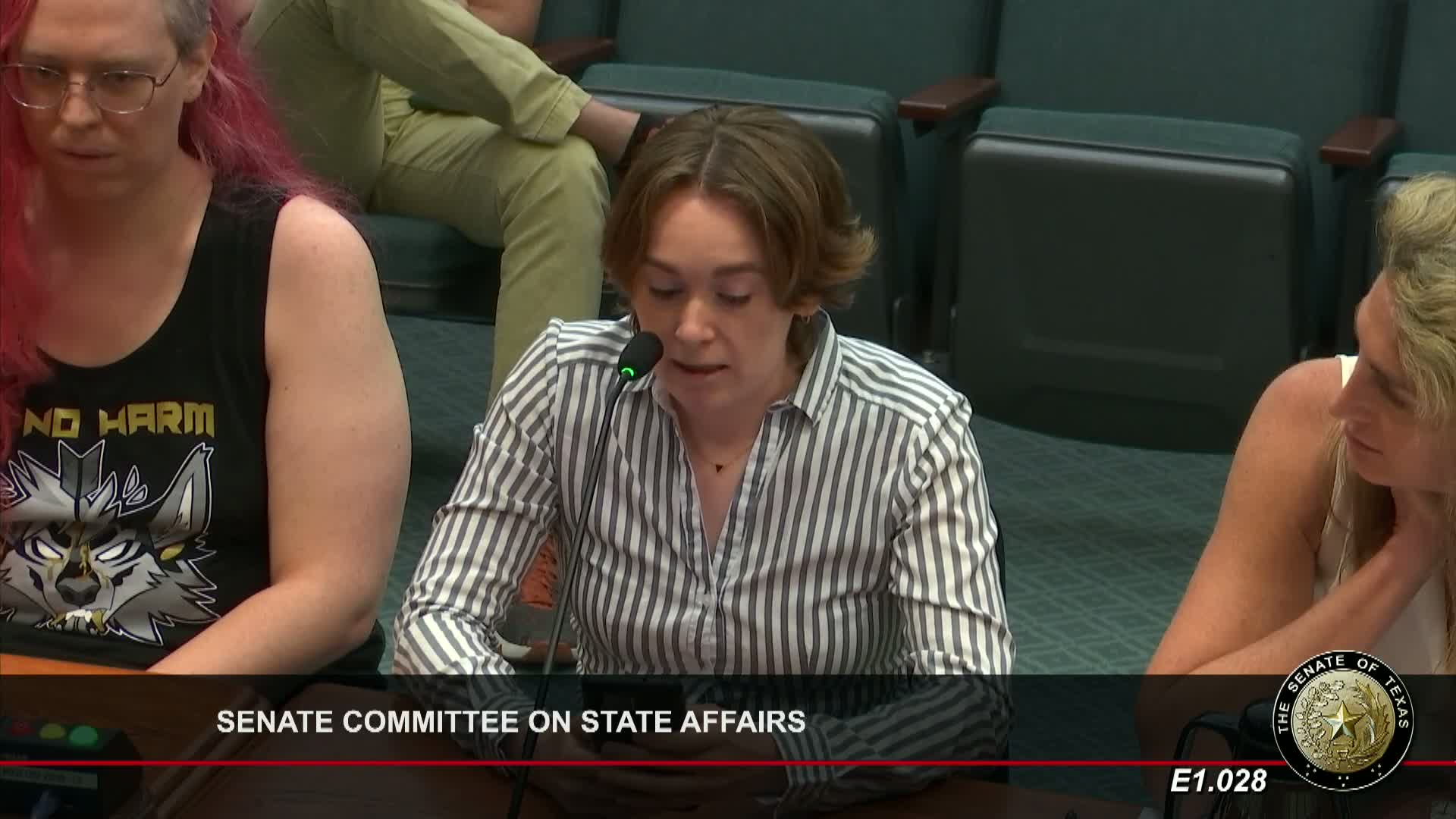
Summary
Senate Bill 11 would create an affirmative defense for people forced to commit crimes through force, fraud or coercion by human traffickers. The committee heard supporters urging broader coverage of offenses and recommended immediate application for past cases.
The Senate Committee on State Affairs heard and voted to advance Senate Bill 11, which would create an affirmative defense for criminal conduct when the defendant proves they were compelled by force, fraud or coercion as a victim of human trafficking.
Why it matters: Advocates said current Texas law limits duress to immediate threats of death or serious bodily injury and does not reflect the coercive tactics used by traffickers; SB 11 would allow survivors to use a trafficking‑specific duress defense in criminal prosecutions.
Supporters’ testimony: Senator Parker, the bill’s author, described how traffickers force victims to commit crimes and then use the criminal record to deter victims from seeking help. Alicia Castillo of the Texas Civil Rights Project testified in favor and recommended that the bill should not categorically exclude certain felony offenses (so‑called 3G offenses) from the defense. Melody Tramalo urged the bill’s immediate retroactive application for survivors already prosecuted or convicted; flight attendants and other witnesses described operational contexts where trafficking is detected and offered support for better survivor services.
Action taken: The committee reported SB 11 favorably to the full Senate in committee roll call (recorded as 9 ayes, 0 nays). Supporters requested language changes to broaden protections and to add social‑service referrals for people who establish the defense.
Next steps: The bill moves to the full Senate. Advocates asked for follow‑up provisions to ensure that survivors who successfully assert the defense have access to caseworkers, mental‑health services and help reconnecting with family as needed.