
Empirical production plant estimated to add about 200 direct jobs and $755 million in annual output to Finney County economy
Get AI-powered insights, summaries, and transcripts
Subscribe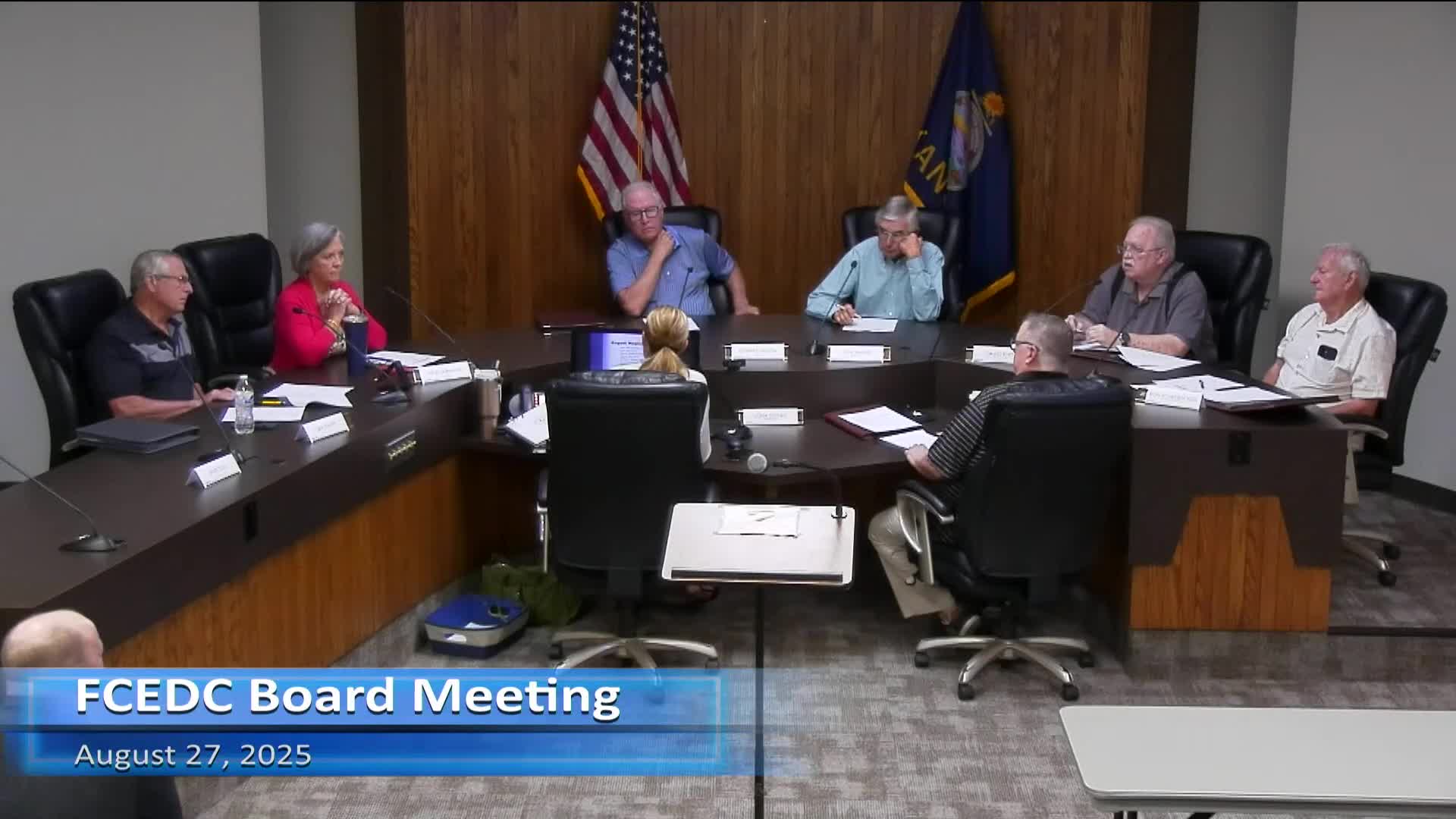
Summary
The county's director of analytics presented an ImPlan economic impact analysis showing an estimated 200 direct jobs at startup for Empirical's planned production facility, wider local job creation and major tax and infrastructure implications; county officials flagged truck parking and zoning as operational challenges.
Shannon, the county's director of analytics, said an economic-impact analysis using ImPlan estimates Empirical's planned production facility will start with about 200 direct employees and could support roughly 663 jobs across direct, indirect and induced activity, producing about $755,000,000 of annual output for Finney County.
Shannon said the analysis began with "bare bones, employment numbers of 200, with their initial cost of 60,000," an average-earnings assumption she described as conservative. She also said the study limited product assumptions to lean ground beef and related flows and did not include higher-value steak products or potential local reinvestment by the company, steps intended to avoid overstating impact.
The ImPlan summary presented by Shannon listed the top industry impacts as by-product rendering and meat processing (about $642 million), truck transportation (roughly $44 million), and incremental gains in health-care and other local services. The analysis projects about $52,000,000 in labor income, $78,000,000 in value added, and a combined tax effect that Shannon summarized as roughly $11,000,000 to the federal government, about $5,500,000 to the state, about $1,300,000 to the county and about $2,000,000 to local subcounty entities (city, community college and school districts combined).
Board members pressed staff on operational details and local impacts. One commissioner asked about truck traffic; Shannon and other staff said traffic impact studies discussed in planning work estimated "80 to a 100" trucks divided by direction depending on collection sites. Shannon noted that much of the tallow byproduct would ship by rail, while ground beef initially would go out by truck. She said collection locations include Amarillo, Liberal and other regional plants.
Officials and staff also discussed local constraints around truck parking. Shannon and a board member said countywide zoning limits truck parking at residences and that the county has had conversations with landowners about dedicated off-site truck parking to accommodate increased trucking demand. "We do have to be mindful of making sure that we have space for folks to operate that type of business," Shannon said.
Shannon cautioned that the analysis makes several assumptions: the facility would operate at about 50% of another plant's current output during the initial ramp; wholesale pricing and product mix were conservative; and the model does not include some secondary benefits such as corporate community reinvestment. She said those conservative assumptions were deliberate: "I'm trying not to overestimate the impact."
There was no formal action or vote tied to the presentation; staff said they would continue coordinating with the company and regional partners on planning and infrastructure needs.
The discussion also referenced related regional data sources and tools used in the analysis, including ImPlan and Federal Reserve Bank GDP benchmarks, and noted the county plans continued work on traffic and site logistics with partner agencies.
Ending: The presentation ended with staff and board members agreeing to continue planning conversations focused on truck parking, zoning, and infrastructure costs, and no formal decisions were taken during the meeting.