Get Full Government Meeting Transcripts, Videos, & Alerts Forever!
Get email alerts on the Energy Sustainability topic
No spam. Unsubscribe anytime.
Upper Darby officials pause full rollout of Solar for Schools grant after roof cost concerns
Summary
District administrators briefed trustees on a $5.9 million solar project award and a $4.26 million roofing bill that must be addressed before panels can be installed; board members signaled preference against immediate full implementation and asked staff to return with options.
Upper Darby School District administrators told the Finance and Operations Committee on Aug. 26 that the district had secured state grants for solar arrays at six schools but faces significant roofing costs before panels can be installed.
Marvin Lee, the district’s director of operations, said the district “received approximately $2,400,000 in grant” funding and that updated proposals put the average total project cost at about $5,900,000. He told the committee that, “as long as the school district spends more than 5% of the project cost by July 2026, we will be able to receive the full [federal investment] credit.” Lee added the roofing estimate is about $4,260,000 to bring roofs to a 20-year warranty level aligned with the panels’ expected life.
The financing picture matters because the federal investment tax credit (ITC) has a timing requirement tied to spending; administrators said meeting the 5% spend deadline will be logistically challenging but possible. Lee said the solar-panel net cost after subsidies is roughly $940,000 with a simple payback of about 3.1 years, but that “it sounds really good until we talk about the roofing cost.”
Why it matters: the state grant program covered the solar equipment but did not include comprehensive funding for major roof structural upgrades. Trustees and staff noted the district’s limited capital reserves and competing priorities, including an ongoing middle-school construction project and the newly acquired Delaware County Memorial Hospital property.
During discussion, board members and administrators raised three implementation options: do nothing; proceed with full installation at all six awarded sites; or pursue a partial implementation (selecting some schools and phasing others). Administrators described partial implementation examples such as excluding the school with the highest roofing expense or selecting the building that would generate the most electricity.
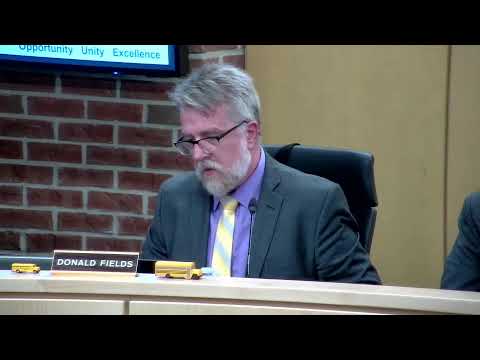
Board response: Committee co-chair Craig Fields and other trustees asked detailed questions about timing, the risk the federal credit could change, and whether design or procurement costs count toward the 5% threshold. Administrators said they were seeking accounting and tax-firm guidance on those details. The operations director and business office said they had issued an RFP, received nine proposals, and were reviewing them.
Nonbinding guidance: At the committee’s close, members were asked for nonbinding direction. By a show of hands, seven trustees signaled against immediate implementation of the grant-funded work as presented; two trustees indicated support for full implementation. Committee members who opposed immediate full rollout cited capital-reserve depletion risks and other pending capital projects. Trustees who favored proceeding argued the grant opportunity may not recur and that long-term energy savings could justify the cost.
Next steps: Administrators said they would return with more specific recommendation(s) for a partial implementation if the board preferred that route, and with additional clarifications about the federal spending threshold, which costs count toward that threshold, and estimated maintenance and warranty terms.
Maintenance and timeline details: Administration estimated annual maintenance for the installed panels would be roughly $2,000–$7,000 per building (about $17,000 per year for the six-site portfolio). They said roofing work would likely require contractors on campus during the school year and could take one to two months per roof depending on scope. The district noted that some roofs can be repaired to extend life but the $4.26 million estimate reflects structural upgrades to support given wind-loading standards and a 20-year warranty.
The committee did not take a binding vote; trustees asked staff to return with refined options, cost breakdowns and legal/accounting guidance on the federal tax-credit timing and eligible expenditures.