Get Full Government Meeting Transcripts, Videos, & Alerts Forever!
Get email alerts on the Public Transit topic
No spam. Unsubscribe anytime.
Ellensburg council adopts 2025–2030 transit plan, accepts 2024 ridership report
Summary
The Ellensburg City Council unanimously adopted the city’s 2025–2030 Transit Development Plan and accepted the 2024 annual report, citing stronger on‑time performance, ADA improvements and continued reliance on regional partnerships and grant funding.
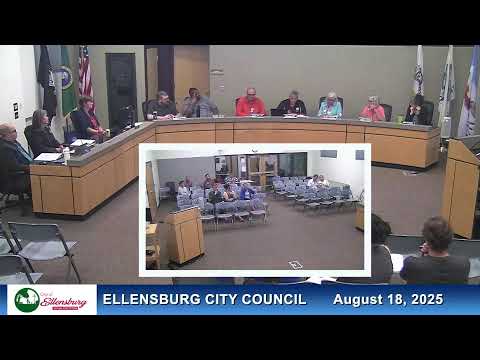
The Ellensburg City Council voted to adopt the city’s 2025–2030 Transit Development Plan and accepted the Ellensburg Central Transit 2024 annual report during its Aug. 18 meeting.
The move formalizes a six‑year strategy required by Washington state and highlights accomplishments including record 2024 ridership, a push to make bus stops ADA compliant and new rider‑facing technology. “Washington State requires that all public transit agencies submit a 6 year transit development plan annually,” said Betsy Dunbar, Ellensburg’s transit manager. “I'm happy to report that our plan includes all of those required items.”
The plan bundles local operating and capital goals because inclusion is required to qualify for state and federal grants, Dunbar said. The city stressed regional coordination with providers including HopeSource, Grant Transit, Special Mobility Services and People for People to reduce transportation barriers for residents.
Dunbar outlined service details in the plan: fixed‑route hours roughly 6:55 a.m. to 8:15 p.m., paratransit for riders who cannot access fixed routes, and a contracted medical shuttle to reduce reliance on ambulances. She also pointed to technology investments that provide real‑time bus predictions and on‑time performance tracking, which the city says raised on‑time performance from roughly 70–75% to about 95% since staff began using the new tools.
Public commenters praised the system but raised questions about particulars. Jennifer Pattinson, a Kittitas County resident, asked whether the budgeted $88,000 through 2030 for bus‑shelter artwork could be reduced by using standard glass shelters; she said artwork might carry upkeep costs. Betsy Dunbar replied that the artwork is done by local artists, that the artists receive a modest stipend and that the structural glass cost was expected to be similar to a plain installation. “I think it really adds to the community and sets us apart,” Dunbar said.
Council members also discussed financing assumptions in the plan. One councilmember noted the plan’s caveats about capital and operating projections and said staff should treat the numbers as flexible pending federal and state funding availability. The council approved the plan and report by voice vote.
City staff said the transit plan will be used to pursue grant opportunities, guide ADA upgrades (17 ADA projects are slated this year with a goal of making all stops compliant), and continue coordination with regional partners.
The council also linked long‑term transit funding to a voter measure: sustaining service and future stability depend on public approval of a dedicated transit funding ballot measure, staff said.
The council adopted the transit development plan and accepted the 2024 report, instructing staff to continue implementation and to pursue grant opportunities as described in the plan.