
Committee approves revised state municipal agreement after bridge cost jump to about $4 million
Get AI-powered insights, summaries, and transcripts
Subscribe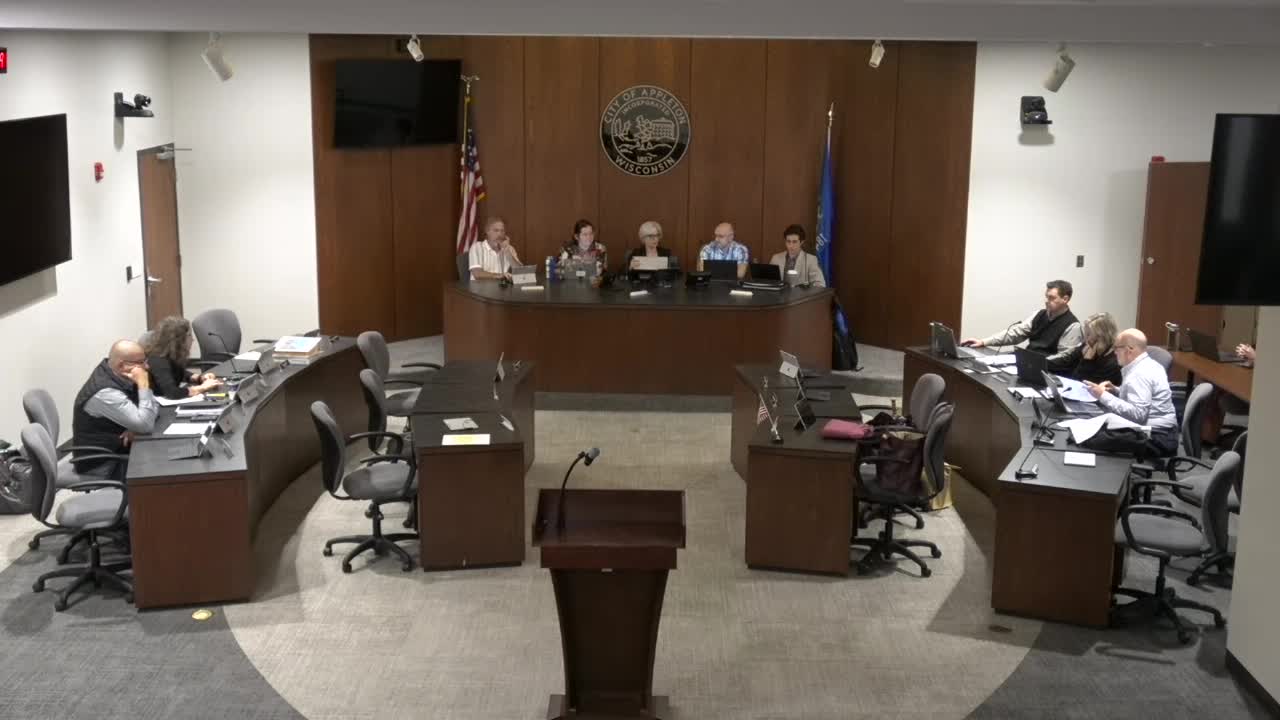
Summary
The committee approved the first revision to the State Municipal Agreement for the Old Oneida Street bridge after updated cost estimates rose from about $2.5 million to roughly $4 million; local share will rise and was budgeted across 2025 and 2026.
The Municipal Services Committee on Oct. 6 approved the first revision to the State Municipal Agreement (SMA) for design and construction of the Old Oneida Street bridge over the South Tower (Power) Canal after updated cost estimates increased substantially. The committee voted 5-0 to approve the revised SMA.
Deputy Director Neuberger told the committee the original project estimate developed under a Wisconsin Department of Transportation-approved process in 2020 was about $2.5 million. "So the DOT has a fairly lengthy process ... the original cost estimate that was used to develop, the original SMA and the associated funding," Neuberger said, adding that an updated cost estimate increased the total project estimate to about $4,000,000.
Neuberger said the state bridge program allows for up to 80% funding, and at the time the original SMA anticipated roughly $2.0 million in state funds with the city providing about $500,000. The DOT denied the city's request to increase the state's cap after inflation-driven cost growth; as a result, the state share remains roughly $2.0 million while the city's local cost share grows to a little more than $2.0 million.
Neuberger told the committee that the city accounted for the larger local share in budgeting: the 2025 approved budget included $1,300,000 for Old Oneida Street in the bridge capital improvement plan, and the 2026 budget request adds $850,000 to cover the remainder of the local cost share identified in the revised SMA. Alder Crod asked whether that local share would be bonded; Neuberger replied that 90% of the budgeted local funds would come from stormwater utility capital funds and 10% would hit a borrowed fund (fund 42.4).
Committee members asked whether the cost jump (from about $2.5 million to about $4.0 million) was typical. Neuberger said the large increase reflected industry-wide inflation during 2020–2024 and that estimates have begun to flatten toward more typical year-over-year differences.
The committee approved the revised SMA 5-0. Neuberger said the project was moved in the state's schedule to a later construction year to reflect the city's need to supplement local funding.