
Physical therapists and chiropractors press California to let certified practitioners treat animals with less restrictive supervision
Get AI-powered insights, summaries, and transcripts
Subscribe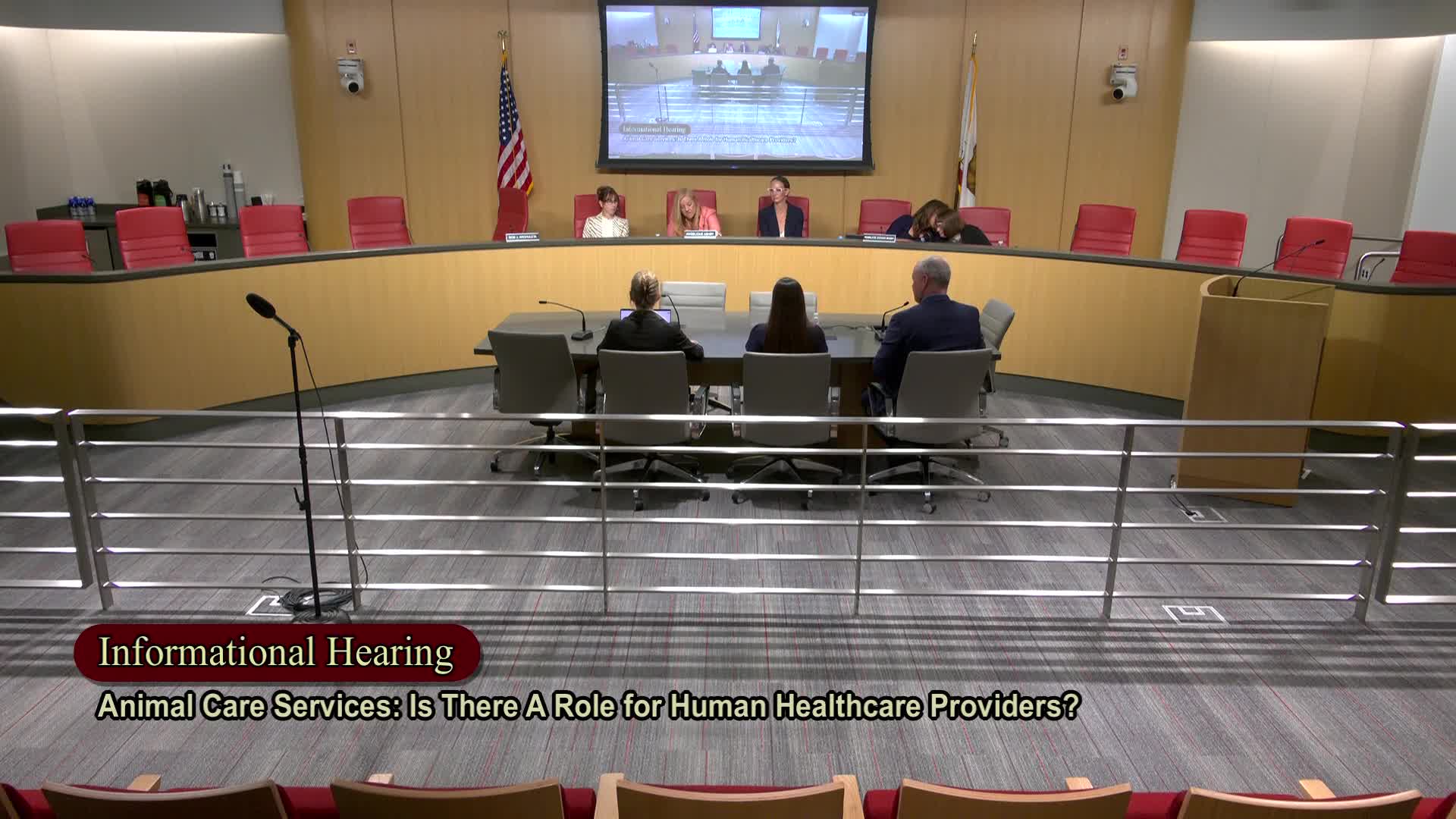
Summary
Certified physical therapists and animal chiropractors urged the Senate committee to loosen on‑site supervision and premises rules, saying those requirements restrict clinics, raise costs and lengthen wait lists; they proposed species‑specific certification and collaborative referral models as safer alternatives.
Practicing physical therapists and certified animal chiropractors told senators current California rules create barriers to care, particularly in rural areas and for working animals. Several witnesses described long wait lists, multi‑hour drives for clients and clinics that cannot open without a registered veterinary premise or an on‑site veterinarian.
Karen Atlas, president of the Animal Physical Therapy Coalition, said allied training for PTs is doctoral level and that animal‑specific certification programs provide the species instruction needed to treat animals. “Training is rigorous and available to California licensed PTs,” she said, urging legislators to allow veterinarians to refer to certified PTs and to permit indirect supervision for stable outpatients while reserving direct supervision for acute or higher‑risk cases.
Chiropractors testified that the American Veterinary Chiropractic Association’s certification and re‑certification processes impose minimum hours, practical testing and continuing education and that malpractice carriers do not list claims against certified animal chiropractors in states with direct access. Several chiropractors described difficulty finding veterinarians willing to host them in clinic space and described enforcement letters that shut down practices when advertising or premises questions arose; they asked the Legislature to consider a direct‑access model limited to certified practitioners and regulated by the chiropractic board.
Practitioners said premise and supervision rules increase consumer cost because clinics must pay veterinary exam fees in addition to allied‑provider fees, and they argued those costs push owners toward untrained providers. Several allied practitioners recommended statutory recognition of certification programs, clear complaint posting procedures for consumers, permitted mobile practices and the ability for PTs to supervise trained aids as a way to expand capacity.
Ending: Practitioners asked the Legislature to draft targeted statutory language that recognizes accredited certification programs and permits flexible supervision regimes tied to patient risk and training, while leaving veterinarians as diagnostic gatekeepers for higher‑risk presentations.