
Kentucky and Nevada describe contrasting licensing paths for allied animal health providers
Get AI-powered insights, summaries, and transcripts
Subscribe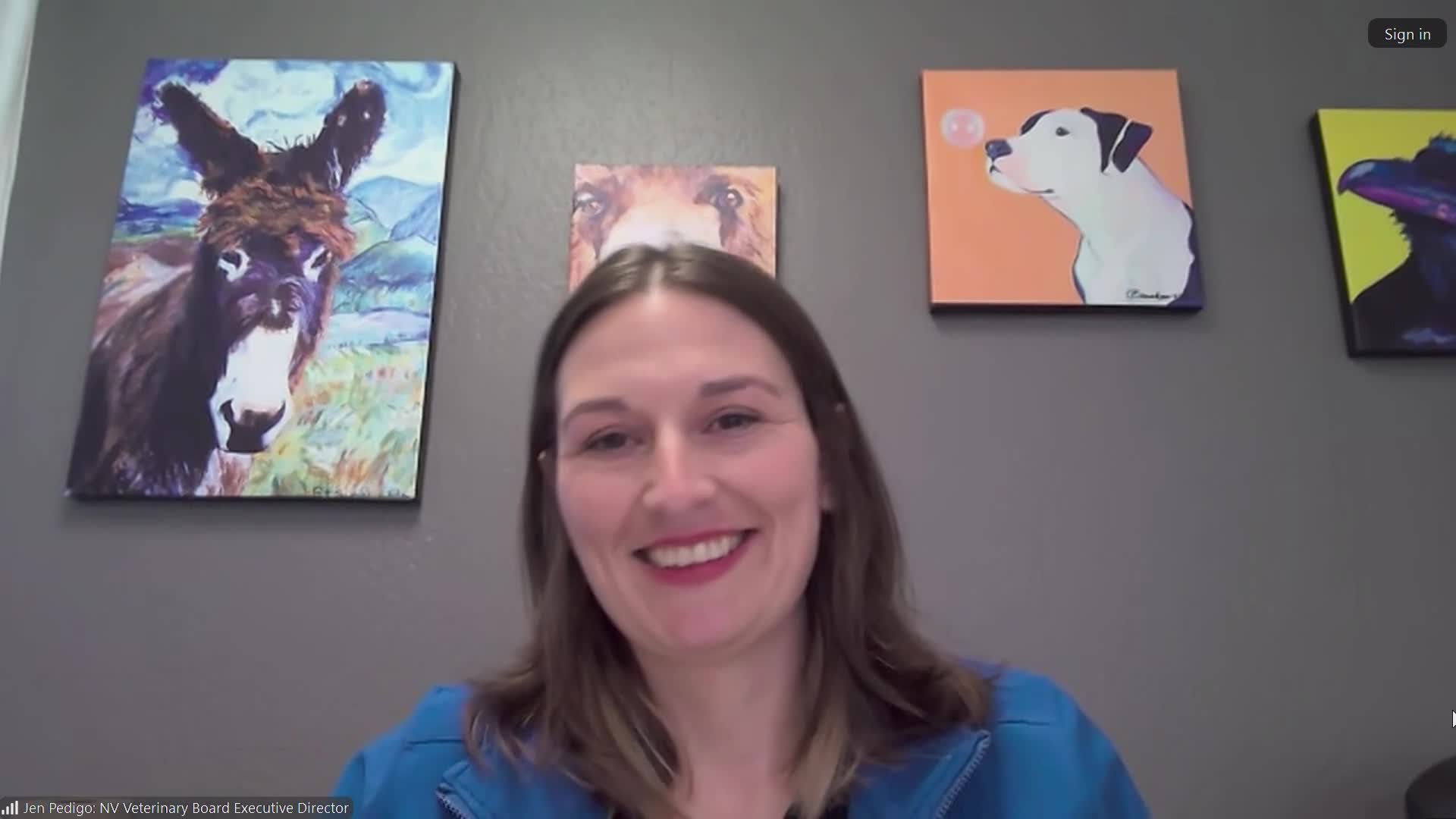
Summary
Kentucky and Nevada officials described active but different licensing approaches that allow nonveterinarian allied practitioners to provide limited animal care under defined conditions.
Kentucky and Nevada officials told California legislators they have active programs to let nonveterinarian practitioners provide limited animal care, but their approaches differ on governance and training requirements. Kentucky described an allied animal health professional (AAHP) framework overseen by the Kentucky Board of Veterinary Examiners; Nevada described dual licensing and regulations that allocate responsibilities across boards.
Michelle Shane, executive director of the Kentucky board, said Kentucky’s post‑2020 practice‑act modernization created a statutory AAHP pathway with board‑defined education, narrow scopes of practice and title protections. Kentucky licenses animal chiropractors and equine dental providers with strict limits — no surgery, no prescription authority, no medical imaging — and has an advisory committee to weigh in on AAHP issues.
Jennifer Pedego, executive director of the Nevada Board of Veterinary Medical Examiners, said Nevada licenses three allied categories: animal chiropractors, animal physical therapists and equine dental providers. She described dual‑licensure models in which a practitioner maintains a human‑health license (for example, chiropractic or physical‑therapy) and a separate animal license; allied licenses are supported by regulations that set renewals and continuing education requirements.
Both states require an operating veterinary‑client‑patient relationship (VCPR) as the legal door for many allied services. In Kentucky, certain legacy “grandfather” or legacy‑pathway provisions were allowed despite board recommendations; Shane said veterinarians and other boards urged stricter training requirements. In Nevada, Pedego described a requirement that animal physical therapists obtain 100 hours of coursework and 125 hours of supervised clinical work because no separate certifying body exists for that occupation in Nevada.
Neither witness said those systems were perfect, but both emphasized that education, continuing education and written medical‑record exchange requirements underpin their approaches. Both states also described joint enforcement arrangements when conduct crosses professional borders: disciplinary questions can involve both the veterinary board and the allied provider’s human‑health board.
Ending: Kentucky and Nevada officials told the California committee that other states’ experiences offer models, but emphasized differences in statutory language and enforcement structures mean California should consider local choices and transitional rules if it acts.