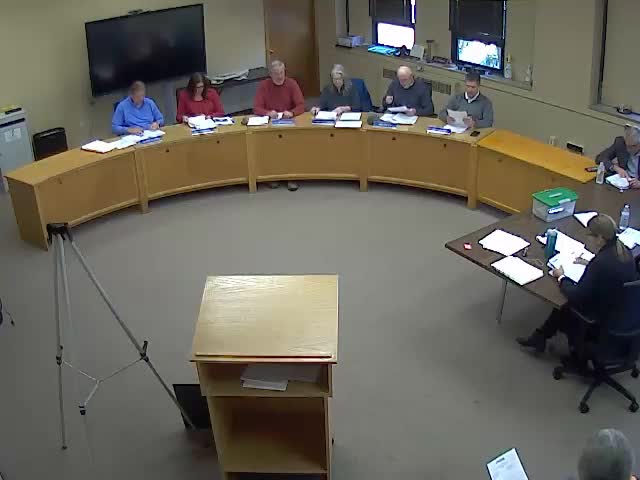
Plan commission approves Fox Meadowview 144-unit apartment complex with conditions
Loading...
Summary
The Kenosha City Plan Commission approved a conditional use permit, certified survey map, and related comprehensive plan and zoning amendments for the Fox Meadowview Apartments (144 units) with conditions including neighborhood outreach and a remediation plan for contaminated fill.
The Kenosha City Plan Commission on Oct. 9 approved a conditional use permit and related land-use actions for Fox Meadowview Apartments, a proposed 144-unit complex at the northeast corner of Fiftieth Street and 50 Second Avenue in District 10. The commission approved the conditional use permit, a three‑lot certified survey map, a comprehensive plan land‑use amendment and a zoning ordinance amendment in a single vote after a public hearing.
The approvals clear the way for a six‑building development with 144 apartments (six buildings of 24 units each), on‑site amenities and roadway dedication through the site; staff recommended approval with conditions. The project includes a mix of one‑, two‑ and three‑bedroom units, on‑site management and a clubhouse. The applicant and staff said the site requires a remediation plan because it was previously filled with off‑site material.
Commission staff told the panel the current proposal maintains the same total unit count as a 2019 approval but shifts to six buildings rather than eight; the change and the planned dedication of a public right‑of‑way altered how density is calculated and prompted related map and plan amendments. Staff recommended conditions including a neighborhood meeting, more variation in building facades and roofs, and submission of a remedial action plan for review and DNR coordination.
Developer representative SR Mills summarized the approach to remediation and site constraints and said the team has conducted about 15 borings and developed a remedial strategy. "It's predominantly methane...we do vapor mitigation on all of the buildings," Mills said, describing mitigation beneath foundations and capping or removal of hot spots. Staff confirmed the city will require a full remedial action plan and DNR review before final approvals.
Project details included a unit mix of 78 two‑bedroom, 42 one‑bedroom and 24 three‑bedroom units; a parking requirement quoted by staff of two spaces per unit (2:1, which equates to 288 stalls); and 10 garages per building on the first floor. Mills said the team plans for a May 2026 construction start, with an approximate 12‑month interval to deliver the first building and a 17‑month schedule to complete the full project.
On affordability and financing, Mills said the project will use tax credits and a land‑use restriction agreement. He described that agreement as a deed restriction monitored for a set period (discussed in the hearing as an initial 15‑year term and noted in discussion that monitoring or syndication often extends affordability beyond that term). Mills said some rents will be offered at affordable levels, and that the deed restriction and tax credit structure will set the required income limits; staff and the commission did not announce exact long‑term affordability mechanics beyond that description.
A neighborhood resident, Anthony Kennedy, spoke in support, saying the parcel is frequently used as an illegal dumping site and that development would improve the block. No speakers during public comment opposed the project. Commissioners asked for clarification about remediation, parking and refuse locations, rooflines, exterior materials and the neighborhood meeting requirement; the developer agreed to work with staff on material variation and to hold a neighborhood meeting. Staff maintained the recommendation of approval subject to the outlined conditions.
After discussion the commission voted to approve all four items together (the conditional use permit, the three‑lot certified survey map, the comprehensive plan amendment and the zoning ordinance amendment). The motion included the staff conditions (neighborhood meeting, additional façade/roofline variation, and submittal of a remedial action plan for DNR review). The vote was taken by voice; the motion carried and the city plan commission closed the public hearing and approved the items.
Details that remain to be finalized include the remedial action plan review and DNR sign‑off, the timing and attendance of the neighborhood meeting, final exterior materials and the precise structure of the affordability deed restrictions to be recorded with the project. The developer and staff said they will return for follow‑up hearings as required by the city process.