
Belknap County staff report roughly $1.7 million net surplus in mid‑year budget review
Get AI-powered insights, summaries, and transcripts
Subscribe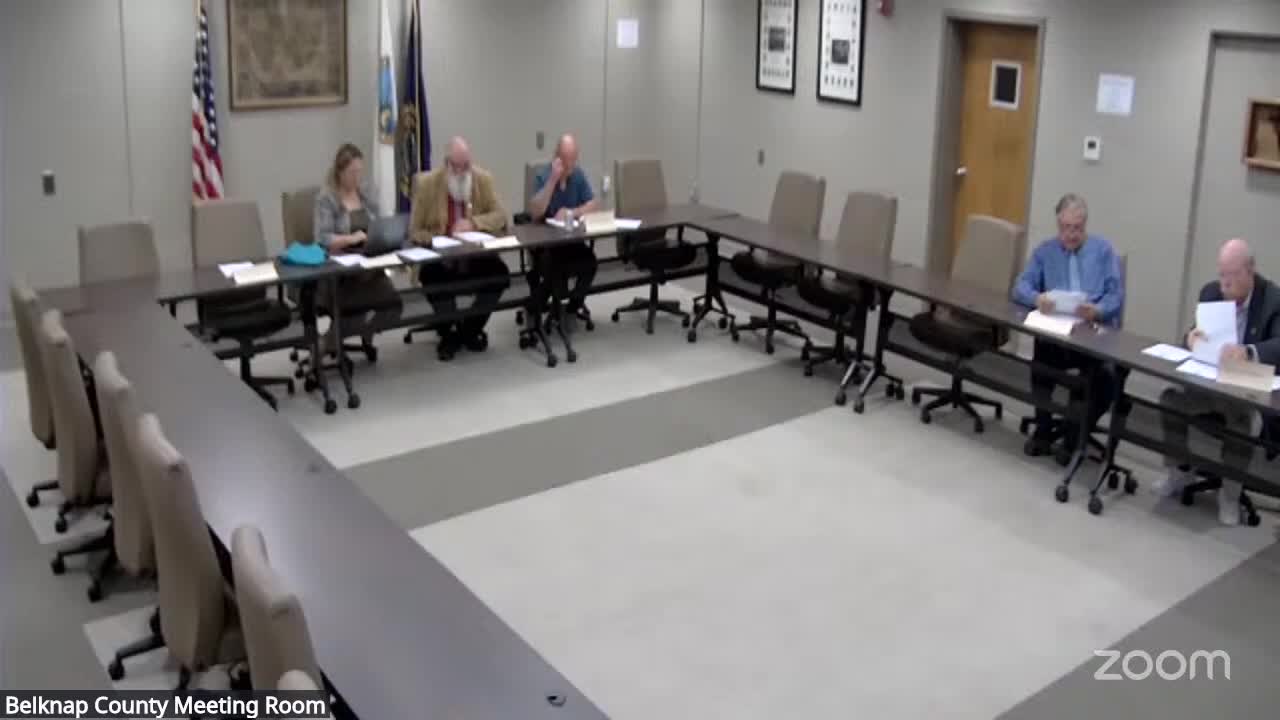
Summary
County staff told the Belknap County Executive Committee that year‑to‑date revenues and spending trends point to a combined surplus of roughly $1.7 million heading into next year, driven by higher state payments to Health & Human Services, ProShare receipts at the nursing home, and lower-than‑expected personnel costs in several departments.
Belknap County staff reported to the Belknap County Executive Committee that year‑to‑date revenue and expenditure trends point to a combined surplus of roughly $1.7 million that could be added to next year’s fund balance.
A county staff member presenting the mid‑year review told the committee, “I have provided you with a summary of the budget. You’re here to review the status up to the 2025 budget versus actual expenditures.” The presenter walked the committee through department‑level variances in revenues and expenses and answered members’ questions.
The presenter said countywide revenues are ahead of the mid‑year plan in several areas. Health and Human Services received a larger than usual payment from the state of New Hampshire, which the presenter said produced a “significant surplus” and contributed to the general fund projecting about $473,000 in excess revenue. The nursing home is also projecting a surplus, largely because of stronger ProShare receipts, Medicaid collections and a higher share of private‑pay residents; the presenter said nursing home revenue was expected to exceed budget by more than $500,000.
On the expense side, staff said savings in some personnel and benefit lines contributed to surpluses. The corrections department is projecting a net surplus of about $149,000 driven largely by unfilled positions, although medical service costs there are higher than budgeted. The sheriff’s office was projecting roughly a $30,000 surplus related to wages, benefits and potential tower rental income. Nursing services at the nursing home showed a substantial projected surplus (presenter cited roughly $462,000) attributed to reduced use of travel nurses and other personnel and benefit changes.
Not all lines were positive. The presenter said corrections revenue was behind budget by about $9,500, and the nursing home faces program‑level deficits: dietary services were projected to be about $125,000 over budget after recent vendor turnover, physicians and pharmacy lines showed a roughly $17,000–$18,000 deficit, and rehabilitation services were described as in a deficit position related to personnel changes. Housekeeping and laundry were expected to be near or slightly under budget.
The presenter also flagged volatility in county maintenance and repair costs — those lines have swung “way up and way down” during the year due to unplanned repairs, producing a small projected deficit (presenter cited about $1,600 as of two days before the meeting). The presenter noted other technical savings, such as lower Microsoft Office licensing costs and a successful information technology risk assessment that shifted one project to a lower‑cost funding source.
Committee members asked for clarifications about spending pace; one committee member asked what percentage of the annual budget it would be appropriate to have spent at this point in the year, and the presenter said about 73 percent was the benchmark. Committee members also asked whether filling vacancies in corrections would eliminate the projected surplus; the presenter said the surplus projection assumed the positions would be filled soon, and if they were not filled the surplus would increase.
Outside agencies and grant disbursements were discussed briefly. The presenter said some recipients have not yet submitted invoices for allocated funds (for example, CASA had not requested disbursement as of the meeting), and the county pays outside agencies when invoices are received rather than sending full amounts up front. The presenter noted an operating cash balance of about $5.5 million that was not reflected in the mid‑year packet.
The presentation concluded with staff projecting the combined effect of the revenue and expenditure variances — the presenter estimated roughly $1.7 million would be added to next year’s fund balance if current trends hold. Committee members raised routine questions and no formal budget amendment or adoption was made at the meeting; staff said the figures will continue to be monitored and adjustments to next year’s proposed budget will be considered as needed.
Two brief formal actions on routine business were recorded during the session: a motion to approve the executive minutes from August 5, 2025 (motion made and seconded; committee voted in favor by voice vote, details not specified), and a motion to adjourn that carried. The meeting shifted no material budget authority and did not adopt new budget appropriations during this review.
The committee asked staff to continue monitoring high‑volatility lines (maintenance, fuel, medical services and dietary staffing) and to report back as figures update through the rest of the fiscal year.