
California Department of Insurance briefs Tuolumne supervisors on wildfire insurance access; residents press for stronger action
Get AI-powered insights, summaries, and transcripts
Subscribe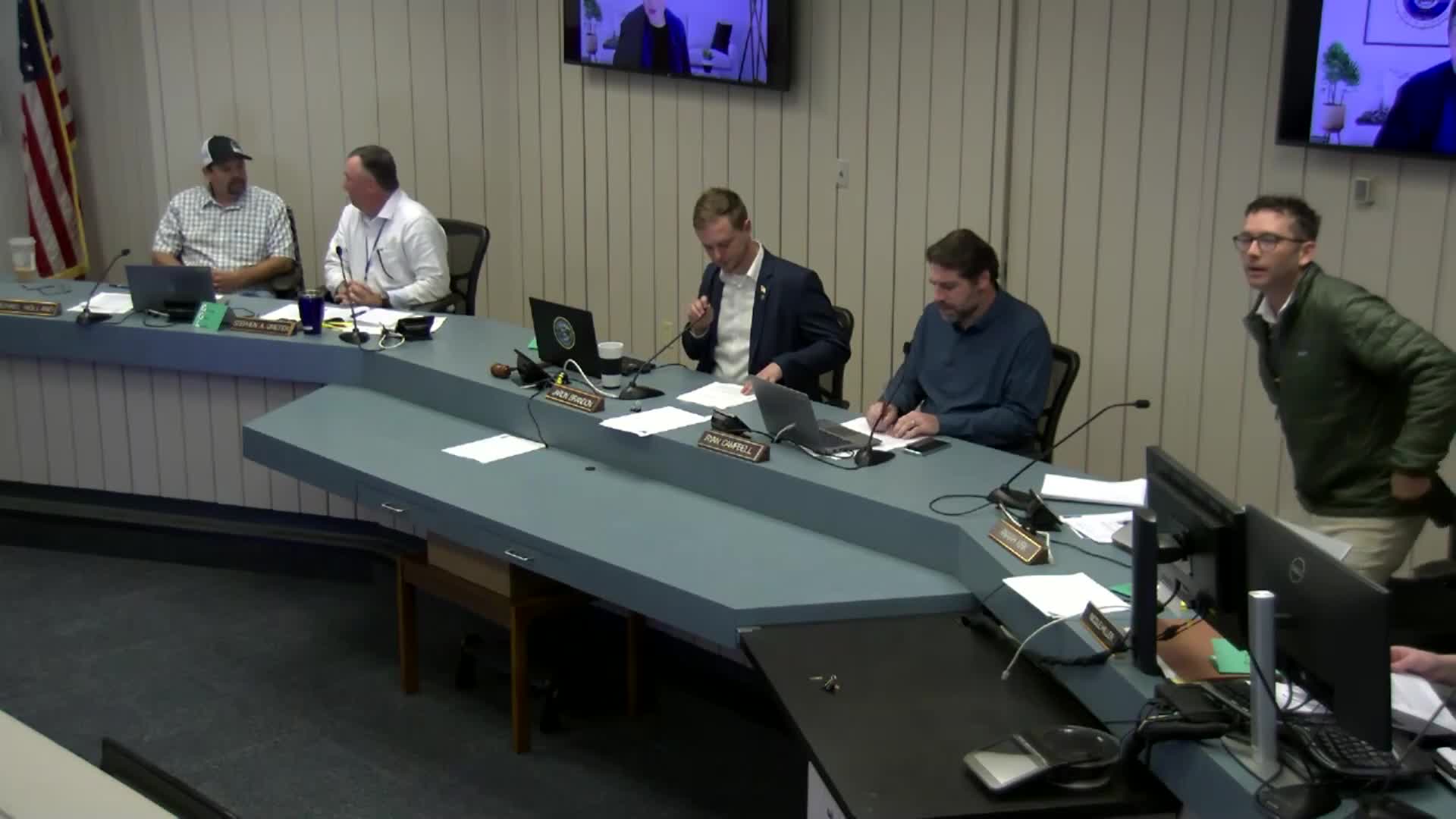
Summary
A deputy commissioner from the California Department of Insurance described moratoria, contents‑coverage rules, and risk‑model changes intended to expand insurer access in wildfire areas. Supervisors and residents urged more aggressive, county‑specific support, financing tools and public release of risk models.
A deputy commissioner from the California Department of Insurance told the Tuolumne County Board of Supervisors on Oct. 7 that the agency has been working to expand insurers’ access to wildfire‑exposed markets and to ensure consumers receive timely claim handling, replacement cost and additional living expense coverage after fires.
Julia Juarez, Deputy Commissioner for Community Relations and Outreach, summarized consumer protections that apply after declared state emergencies: insurers must honor renewals and may not non‑renew policies for at least one year for impacted areas, additional living expenses are payable while a home is uninhabitable, and insurers must reasonably investigate smoke damage. She said the Department of Insurance (DOI) can intervene with insurers, including the California FAIR Plan, if claim handling appears delayed or inadequate.
Juarez also described regulatory steps taken since 2018, including permitting catastrophe‑risk models that insurance companies may now use to price wildfire risk, and a commissioner‑led task force examining smoke‑damage guidance. She said the DOI is encouraging insurers to expand writing in distressed wildfire markets and outlined legislative and grant tools that are under consideration to support mitigation and content recovery. "Insurance companies must properly and promptly investigate every claim on smoke damage," Juarez said.
The presentation prompted lengthy questions from supervisors and public speakers, who described Tuolumne County’s unusually high per‑capita FAIR Plan participation, extensive local fuels‑reduction work, and examples in which homeowners spent significant amounts on home hardening while seeing only small insurance savings. Several supervisors and residents pressed the DOI to provide county‑specific attention and capital tools — for example PACE‑style financing, community investment or grants to fund fuel reduction and home hardening — and asked whether mitigation and community measures are reflected in insurers’ risk models.
Juarez said insurers’ models vary and that the DOI reviewed them before allowing their use in California; she also said the department is funding and developing public catastrophe tools (a Cal Poly partnership) and will follow up with the board and county staff to provide more detail and presentations on programs such as COIN and other financing options.
Public comment was often pointed. One resident asked that the DOI commissioner be held accountable; another urged DOI staff to meet in Tuolumne County for a site visit. Supervisors pressed for concrete, funded programs to underwrite community‑scale mitigation because they said the county lacks the capital to implement necessary fuels and home‑hardening work that would materially lower insurance risk.
Juarez gave county staff DOI contact information and encouraged residents with claim issues to call the DOI consumer hotline for assistance. She also said DOI consumer alerts and guidance on smoke damage and additional living expense rules are available on the agency website.