Get Full Government Meeting Transcripts, Videos, & Alerts Forever!
Get email alerts on the Municipal Advisory Councils topic
No spam. Unsubscribe anytime.
Western Region Town Hall tells Lake County supervisors about levee sediment, roadside dumping and school-safety work
Summary
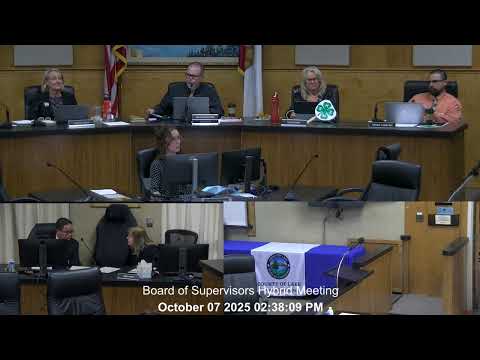
Representatives of the Western Region Town Hall told the Lake County Board of Supervisors that volunteers and county code enforcement have reduced dozens of roadside dump sites, but that long-term problems remain at Pyle Road and in Upper Lake’s levee system.
Representatives of the Western Region Town Hall told the Lake County Board of Supervisors that volunteers and county code enforcement have reduced dozens of roadside dump sites, but that long-term problems remain at Pyle Road and in Upper Lake’s levee system.
“The Pyle Road Cleanup Subcommittee has been working on actively cleaning up the area around Pyle Road for about 2 years,” said Dave Hendrick, a Pyle Road subcommittee member. He told supervisors that county code compliance and the COPTER program have helped remove vehicles and trash, and that about 39 dump sites have been “mostly cleaned up.” He warned that some squatters have moved onto nearby reservation land, where county code enforcement and the sheriff say they have limited authority.
The presentation’s nut graf: members of the municipal advisory council stressed volunteers’ continued role in monitoring public-safety and public-works problems while asking the county for clearer communication and coordination on maintenance, code enforcement and permitting. “Municipal advisory council members serve at their own expense from a desire to increase participation by local communities in the affairs of governance,” said Tim Kiara, a Western Region Town Hall member.
Upper Lake residents and volunteers also raised gravel and vegetation entrainment inside levees. “Sediment and gravel washed down from the Mendocino National Forest Mountains is trapped between the levees, which is a forever maintenance problem,” said Julia Carrera, Upper Lake subcommittee lead, describing the Army Corps of Engineers’ Middle Creek diversion project and subsequent local maintenance history. Carrera said the county contracted Coleman Construction for recent sediment removal at the Clover Alley confluence but that large vegetation and trees in the active channel remain and that, in committee members’ view, the county has not attempted major removal to restore original design capacity in more than 60 years.
John Laboito, a farmer who said his property straddles the levees and diversion structure, also told the board he has observed “a loss of institutional knowledge” at the county’s water-resources and watershed protection staff after at least five department directors in recent years and urged regular, ongoing meetings between residents and county staff to review permits, funding and maintenance priorities.
The council also described school-traffic safety work in Upper Lake. “CHP drive-bys are in place at drop off and pickup times at Upper Lake Elementary,” said Thomas Aceves, Western Region Town Hall chairman, and committee members said they are pursuing crosswalk enforcement, a requested stop sign at Middle Creek and Second Street, and speed-calming measures.
Presenters praised recent county and volunteer outcomes including free dump days and COPTER-targeted code enforcement that removed trash and vehicles. “The trash dump days … accepted over 1,400,000 tons of trash on the North Shore,” Aceves said, thanking county staff. At the same time, presenters asked for timelier responses from county departments to public information requests and invitations to speak at municipal advisory council meetings.
Supervisors thanked the presenters. Supervisor Sabatier said she had heard positive feedback about COPTER and praised the cleanup work; Supervisor Hahn called the Pyle Road cleanup map “impressive.” Several supervisors encouraged further coordination on the Middle Creek restoration effort.
Public comment during the presentation included calls for continued county follow-up. Laboito repeated the committee’s request for a small subcommittee to meet regularly with water-resources staff; he said recent sediment removal “doesn't begin to address the major problem that we see.”
The presentation concluded with the council announcing a planned joint series of town-hall meetings for District 3 municipal advisory councils to be launched in the fourth quarter.
Ending note: board members asked staff to follow up on drainage and cleanup responsibilities, and to keep the supervisors informed about opportunities to work with the Western Region Town Hall on levee maintenance, code enforcement and school-safety projects.