Get Full Government Meeting Transcripts, Videos, & Alerts Forever!
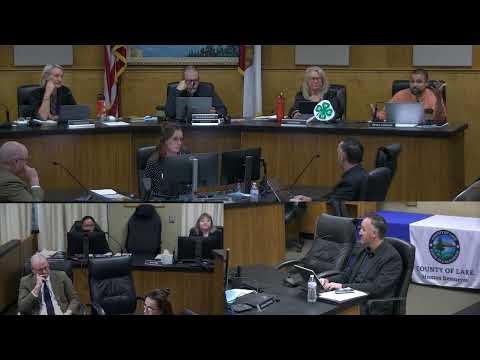
Lake County supervisors debate joining Sonoma Clean Power JPA, agree to tighten geozone setback language
Summary
Supervisors discussed a draft joint powers agreement and geozone enabling documents from Sonoma Clean Power, heard technical and public testimony on geothermal economic benefits and risks, and reached informal consensus to add language protecting county land‑use review and existing setback rules to the geozone resolution.
Lake County supervisors spent a lengthy October 7 meeting discussing whether the county should join a Sonoma Clean Power joint powers agreement (JPA) and become a participant in a proposed geothermal “geozone,” hearing presentations from county staff, technical analysis on geothermal economics, and more than an hour of public comment.
The discussion focused on three decisions: whether the county should join Sonoma Clean Power as a community choice aggregator (CCA) offering an alternative to PG&E for customers; whether the county should join Sonoma Clean Power’s proposed geozone for geothermal development; and what protections or development‑agreement language Lake County needs before committing. No formal vote was taken; the board reached informal consensus to direct staff to add language to the geozone resolution clarifying that county review under Lake County Code Chapter 21 (the county zoning ordinance) would apply and to include language protecting the county’s existing setback standards.
County staff framed the record. “The memo attached to your agenda today includes observations made by county council on review of the Sonoma Clean Power joint powers agreement and some responsive comments received,” said Matthew Rothstein, chief deputy county administrative officer. Benjamin Rickleman, deputy county administrative officer focused on economic development, presented potential economic benefits of geothermal development, including technician pay ranges and local tax revenue: “A lot of technician positions kinda range from the mid 60 thousands all the way up to a 110, 120,000,” Rickleman said, and noted that a recent Calpine incremental project added roughly 25 megawatts and produced measurable county revenue.
Staff also summarized permitting and legal context discussed at the September 30 workshop. Rickleman said AB 205 (the transcript reference) allows geothermal projects over 50 megawatts to use the state…
Already have an account? Log in
Subscribe to keep reading
Unlock the rest of this article — and every article on Citizen Portal.
- Unlimited articles
- AI-powered breakdowns of topics, speakers, decisions, and budgets
- Instant alerts when your location has a new meeting
- Follow topics and more locations
- 1,000 AI Insights / month, plus AI Chat