Get Full Government Meeting Transcripts, Videos, & Alerts Forever!
Get email alerts on the Council Process topic
No spam. Unsubscribe anytime.
Governance committee previews draft council policy flowchart to coordinate staff access and policy development
Summary
Council operations staff previewed a draft policy process flowchart on Oct. 6 that would add a resource-request or staff-authorization step to coordinate council-initiated policy work with city administration. Councilors raised concerns about potential bottlenecks, political influence perceptions and the need to study other cities’ approaches.
Council operations staff on Oct. 6 presented a draft policy-process flowchart to the Governance Committee designed to clarify how council-initiated policy ideas move from concept to ordinance or resolution. Aubrey Chen, Council Aide, and Craig Cook, Council Policy Analyst, said the flowchart aims to balance technical staff expertise, administrative capacity and public engagement while preserving councilors’ ability to originate proposals.
The presenters described a common problem under Portland’s new form of government: city staff report to the city administrator and mayor rather than individual councilors, and council offices sometimes lack a clear, predictable path to request staff time or technical review. Craig Cook summarized the primary proposal as "the implementation of a resource request or staff authorization step," a mechanism to signal to city administration that a council office seeks subject-matter expertise and to coordinate prioritization.
Why it matters: Councilors frequently request technical analyses or draft language from bureaus and the City Attorney’s Office. Committee members said clearer processes could reduce delays and confusion about who should do the work and how requests are prioritized, but several councilors warned that an added step should not create new bottlenecks or reduce a councillor’s ability to pursue urgent, district-specific matters.
The draft flowchart outlines a high-level sequence: issue identification; policy research and drafting (a phase staff said currently varies by office); technical review (City Attorney, council clerk, budget office and city administration); referral to committee under existing council rules; and council vote. Council operations recommended that councilors be able to bring an idea to council operations for coordination with the administration before—or during—research and drafting. The mechanics would be negotiated with the city administrator and staff.
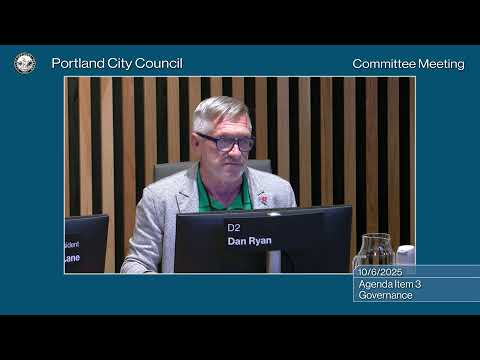
Committee members raised several cautions and requests. Vice Chair Ryan said the city should "not create more bottlenecks" and that the council should study best practices from other cities; staff confirmed they reviewed other models, including Minneapolis and ICMA guidance. Councilor Dunphy and others stressed the need for transparency about prioritization—how staff decide which requests to handle first—and for mechanisms that do not diminish an individual councilor’s ability to pursue issues important to their district.
The slide deck also flagged a political concern: some council staff expressed a perception that administrative delays have been used to influence policy outcomes. Council operations said part of the flowchart’s purpose is to make such interactions more transparent and to propose working norms and communication practices that respect both council-originated ideas and staff time.
Next steps: Council operations will continue drafting handbook content and asked the Governance Committee for feedback on the level of specificity it should provide. Staff said they expect to present a draft handbook to the committee in 2025 and will negotiate the staff-authorization process with the incoming city administrator to reach mutual agreement.
Ending: Committee members and staff agreed to continue refining the flowchart and to compare models from other cities; councilors asked council operations to circulate additional examples and to return for further review at the committee’s next meeting.