Get Full Government Meeting Transcripts, Videos, & Alerts Forever!
Council committee presses city and event hosts to fix accessibility gaps before 2026 events
Summary
Councilmember Kendra Brooks convened the Committee on People with Disabilities and Special Needs to review whether the city and event hosts are on track to make 2026 celebrations accessible to people with disabilities.
Councilmember Kendra Brooks convened the Committee on People with Disabilities and Special Needs for a public hearing on Resolution 250753, asking whether Philadelphia is prepared to accommodate people with disabilities during the city’s slate of 2026 events.
Brooks opened by noting the scale of the year ahead and the stakes for residents: the city is preparing for “millions of visitors” and an estimated $2,500,000,000 in economic impact, while “one in four Americans” have some form of disability, she said, and asked bluntly: “Is our city prepared to welcome the 1 in 4 Americans who have some type of disabilities?”
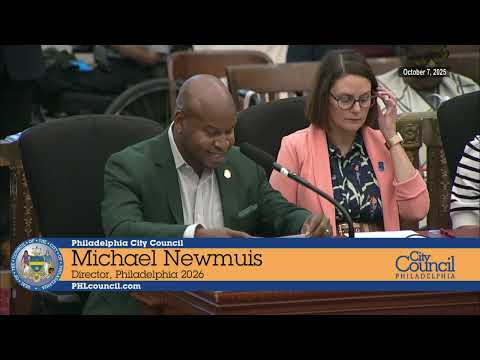
The hearing gathered city officials who outlined planning work, plus disability advocates who said current practices are insufficient and enforcement is erratic. Michael Neumas, Philadelphia 2026 director, described the city’s aim to spread celebrations across neighborhoods and provide training and resources for block parties and community partners, but deferred operational enforcement questions to the Office of Special Events. “We fully expect that that event will meet the standard that has already been laid out,” he told the committee about contracted New Year’s and other large events, and said the administration would provide follow‑up materials in writing.
Adrienne Moore, executive director of the Office for People with Disabilities, said her office treats “accessibility is not an afterthought” and pointed to guidance her office published for event planners, training for city employees, and cooperation with vendors and partners. Moore cited federal statutes in framing the office’s work: the Americans with Disabilities Act of 1990 and the Rehabilitation Act of 1973. She said the office has provided an event best‑practice guide and requires ADA compliance language in city contracts and permitting, and…
Already have an account? Log in
Subscribe to keep reading
Unlock the rest of this article — and every article on Citizen Portal.
- Unlimited articles
- AI-powered breakdowns of topics, speakers, decisions, and budgets
- Instant alerts when your location has a new meeting
- Follow topics and more locations
- 1,000 AI Insights / month, plus AI Chat