Lifetime Citizen Portal Access — AI Briefings, Alerts & Unlimited Follows
Town, ferry operator review July 4 crowding, ticketing analytics and parking at Galilee
Loading...
Summary
New Shoreham officials and representatives of the interstate ferry operator reviewed July 4 crowding, ticketing analytics and coordination with police, discussed parking constraints and remote-shuttle ideas, and asked staff for follow-up on accessibility and rate-setting questions.
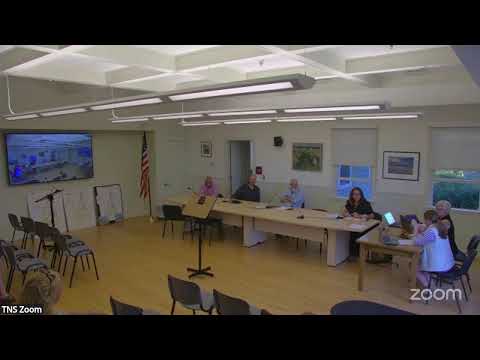
At a Oct. 7 New Shoreham Town Council meeting, council members heard a report from representatives of the interstate ferry operator about July 4 crowding, passenger analytics and coordination with law enforcement aimed at reducing public-safety problems.
The discussion centered on steps the company and public safety partners took this year and what might be done in future years. Mike Macquarie, the ferry company lawyer, introduced company staff including Megan Moran and Bill (identified in the meeting as the company’s security officer) and said the company relies on Bill to coordinate with the police department. Moran described ticketing analytics the operator used to plan for July 4: a spike in single-ticket bookings a week or two before the holiday, and ZIP-code data showing many passengers came from Rhode Island’s south county. Moran said that data helped the company and police anticipate a younger, mostly local crowd and direct messaging and enforcement resources accordingly.
The company used multiple outreach tactics, the council was told. That included website and social media messages about heavy travel 5–7 days before the holiday, signage on board prohibiting public drinking, text messages to passengers who had purchased tickets for specific sailings, and staffed “coolers” on morning freight-deck trips. The operator coordinated staffing with the chief of police and with state troopers; Lieutenant Parati of the state police and Chief Dean were mentioned as law-enforcement contacts in planning and deployment.
Council members raised parade-day timing as a specific operational concern. Chief Dean (not present at the meeting) had asked the council to consider whether a particular high-speed trip that arrived during the parade could be retimed to avoid unloading vehicles amid parade traffic. Company staff said they had adjusted some departure times in prior years by a few minutes to lessen overlaps with town events.
Parking and remote-shuttle options were a substantial line of discussion. Company staff and council members said Galilee lots commonly fill by mid-morning during busy summer days; private and state-run lots use dynamic pricing and some are leased to private operators. Council members and company staff discussed possible remote parking with shuttle or van service and said the state Department of Environmental Management (DEM) and other stakeholders have been part of earlier conversations. The council noted remote parking would need careful scheduling so passengers arrive for specific sailings and do not overwhelm waiting areas.
The council asked several operational and policy questions the operator could not answer on the spot. Those included clarifying how ridership triggers communication with the police department (staff said presales and occupancy data prompt outreach when sailings approach sellout), and whether vehicles could be traded for additional passenger capacity on certain sailings (the operator said that option is not currently used). Council members also pressed for a future tutorial on how fares and vehicle-to-passenger pricing are set, including the role of the Public Utilities Commission; staff agreed to arrange a winter briefing.
Council members asked about accessibility. Staff said only one vessel in the fleet has a wheelchair lift; reservation staff identify mobility needs and advise passengers to arrive early. The crew will use the lift and stowed seating as needed, but staff cautioned that high vehicle loads can make late boarding with mobility devices infeasible. The council asked the operator to clarify accessibility procedures in public materials.
A commonly raised customer complaint — a charge for collapsible wagons or “grandma carts” — was addressed: company staff said that fee applies on the high-speed ferry, not the traditional vessel.
No formal votes or motions were taken on these items at the meeting. Council members directed staff to continue coordination with the operator and law enforcement, to pursue a rate-setting briefing with the operator and the PUC, and to ask the operator to provide clearer public guidance about accessibility and the single-vessel lift.
The session closed with no new mandates; the council and operator agreed to continue planning and outreach ahead of next season.