Get Full Government Meeting Transcripts, Videos, & Alerts Forever!
Get email alerts on the Open Meetings Legal topic
No spam. Unsubscribe anytime.
Legal counsel urges consistency on civil penalties; board affirms use of administrative law judges and receives Open Meetings refresher
Summary
Joe Wharton, legal counsel, presented 18 new cases and recommended aligning a civil penalty recommendation with prior board precedent; members approved the legal report and affirmed using administrative law judges for contested hearings.
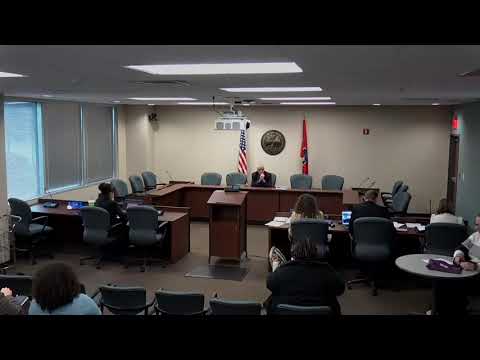
Joe Wharton, legal counsel to the Collection Service Board, presented the quarterly legal report at the board’s Oct. 8, 2025 meeting and read complaint numbers into the record.
Wharton told the board there were 18 new cases on the report and one case being re-presented to seek civil penalties. “I recommended a civil penalty in the amount of $500 for the surety bond violation,” Wharton said, then noted that, based on the board’s precedent, the board has historically assessed a much smaller penalty and suggested lowering the recommended amount to mirror past practice. “We’ve always assessed a penalty of $2.50,” he said, and asked the board to consider consistency with prior decisions.
Wharton read a list of complaint numbers into the record and clarified the board’s prior direction for consent-order cases: if a licensee does not enter a consent order, the board’s practice is to file the matter to be heard before an administrative law judge rather than have the board hear the case. “If needed to go to formal trial, be filed in front of the judge alone,” he said. Board members said they had no objection and the legal report was approved by roll-call vote.
Separately, the board was told that its rulemaking package is now official and that the rules went into effect on Sept. 24, 2025.
Wharton also presented the board’s annual refresher on Tennessee public-records law and the Open Meetings Act and reviewed the U.S. Supreme Court decision in North Carolina Board of Dental Examiners v. Federal Trade Commission as an example of the limits of board action without active state supervision. He emphasized that the Open Meetings Act is construed broadly, advised caution about deliberate communications between board members outside a public meeting, and recommended disclosure of relevant contacts. A board member disclosed recent federal-industry communications with another member; Wharton advised disclosure and limiting such communications where possible.
The board approved the legal report by roll-call vote and had no public comments; the meeting adjourned.