
Smurfit advisory group focuses on what it agrees on: transparency, outreach and next steps as RI moves forward
Get AI-powered insights, summaries, and transcripts
Subscribe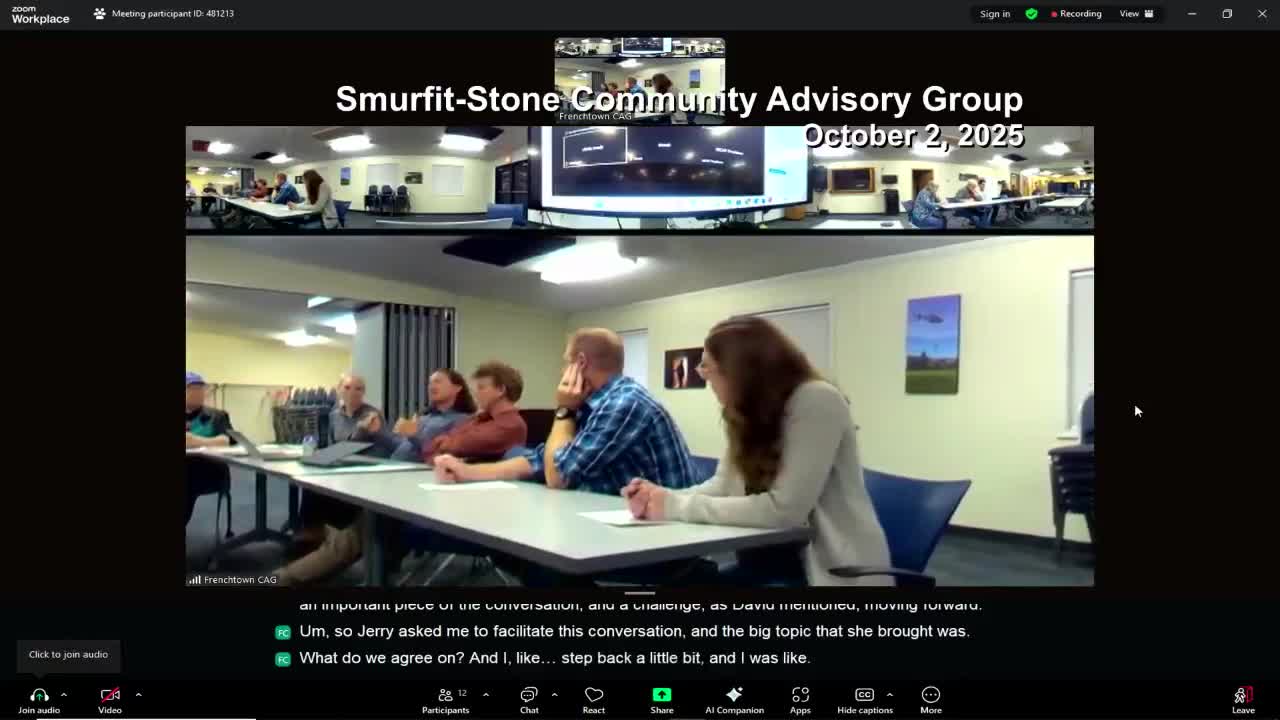
Summary
At its Oct. 2 meeting the Smurfit Community Advisory Group (KAG) discussed shared priorities — clearer communication, more transparent data handling, maintaining community engagement during the long Superfund process, and preparing to use the remedial investigation (RI) and feasibility-study (FS) phases to press for outcomes the group wants.
Members of the Smurfit Community Advisory Group spent most of the meeting clarifying the group’s role, agreeing on shared priorities for cleanup outcomes, and debating how to keep the public engaged through a lengthy Superfund process.
The KAG meeting facilitator, Brian Chapman, opened a structured conversation about “what we agree on” after describing a recent site visit with EPA and other partners. He read the definition of a community advisory group from earlier guidance, emphasizing the KAG’s role as a forum for exchange between local residents and agencies.
Why it matters: The group has met for years and has repeatedly provided formal comments on sampling and risk assessments. As EPA moves toward publishing the remedial investigation and a feasibility study, KAG members said they want clearer channels to evaluate whether the RI dataset supports the full range of cleanup options and to ensure that tribes, trustees and the public can review data and raise targeted technical questions.
Key themes from the meeting included:
- Transparency and data access. Chris Stark (CSKT) urged that “throwing away data and not allowing the trustees of all people to come look at these sites…that’s gotta stop,” and several participants said historical data and sampling records need to be put on the table.
- Communication and outreach. Student and community groups present (including a campus group proposing posters and newsletters) asked how closely to follow KAG messaging. Jerry Dallas and the admin team said they would follow up and bring a co‑facilitation plan to a later meeting.
- Keeping the public engaged. Multiple speakers noted the difficulty of sustaining attention across years of technical work. The group discussed reducing meeting frequency in favor of targeted briefings and traveling meetings for downstream communities.
- Shared cleanup goals. Trustees and local agencies emphasized restoration of the floodplain, returning land to community use and protecting fish and wildlife habitat. "We would like to see a risk-based cleanup that gets as close to baseline condition under the rules of Superfund as possible," a natural-resource trustee said.
Decisions and next steps noted in the meeting record: the group agreed to prioritize improved communications, to identify specific technical questions to bring to the RI dataset once the RI is published, and to schedule follow-up work on outreach materials with student groups. No formal votes were recorded.
The meeting closed with a call to keep the KAG on the agenda as RI materials are finalized so members can review data summaries, identify gaps and press for remedies that align with community restoration goals.