
Carpinteria city manager: reserves shrinking, council shown options to avoid staff or service cuts
Get AI-powered insights, summaries, and transcripts
Subscribe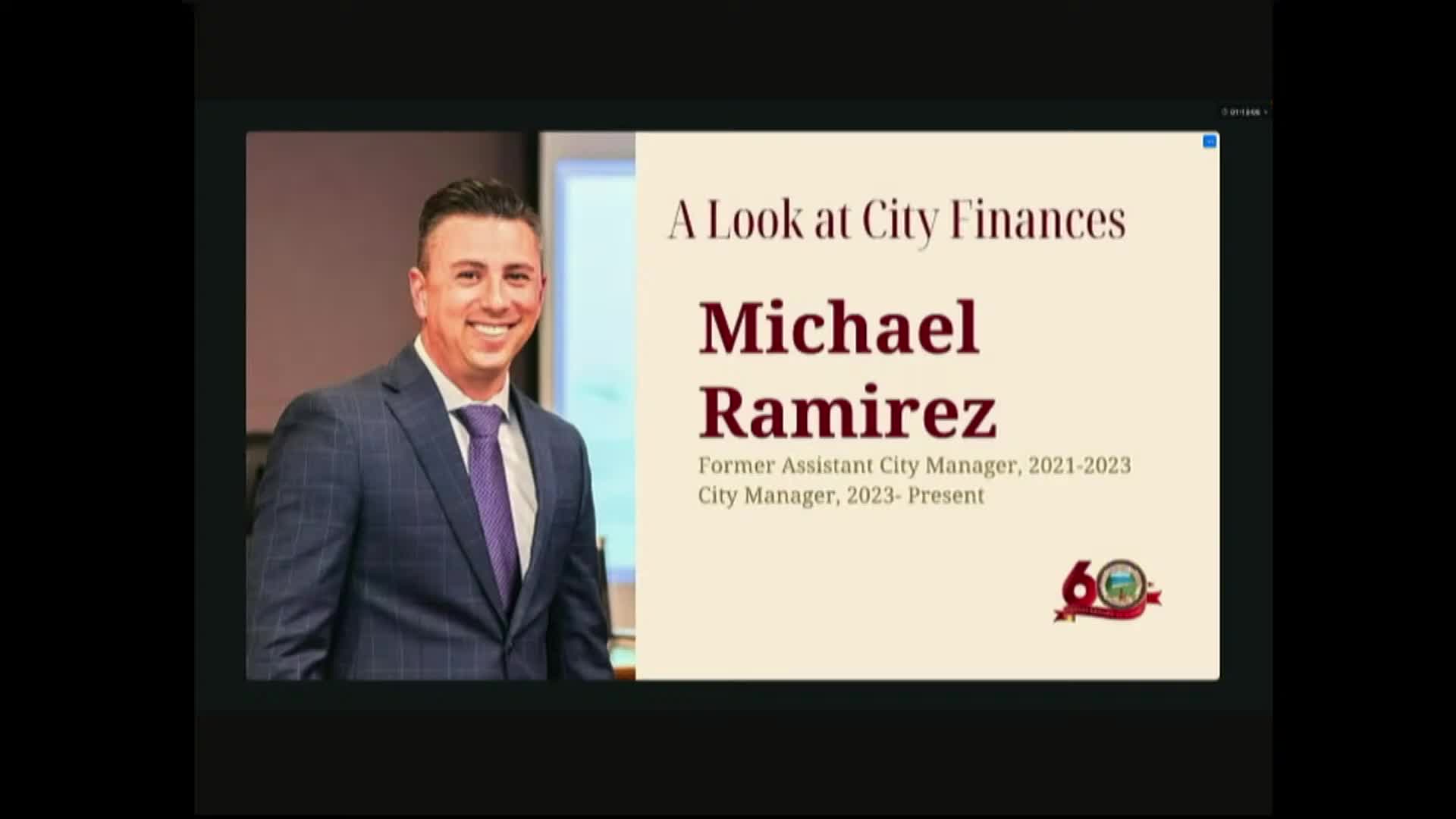
Summary
City Manager Michael Ramirez told residents at the State of the City that Carpinteria’s available fund balance is declining and could force staff or service reductions by fiscal year 2028 if the city does not adopt new revenue or cost-saving measures.
City Manager Michael Ramirez warned residents at Carpinteria’s State of the City that the city’s available fund balance is declining and that, if trends continue, officials may need to consider staff or service reductions by fiscal year 2028.
Ramirez said the city’s ongoing revenues include property tax, sales tax (including Measure X) and transient occupancy tax, but expenses are rising faster than revenues. “If we do nothing, we are gonna have to start making some serious … reduction in service or reduction in staff,” Ramirez said.
Why this matters: Ramirez told attendees that the city has used reserve funds for planned capital projects — including a recent $6.5 million pavement project — and that delays raise project costs. He said the city’s reserve policy calls for maintaining 40% in reserves to cover emergencies, but projected spending and rising contract costs threaten the fund balance if new steps are not taken.
Ramirez presented a set of options the council is weighing: cost reductions without cutting service (bringing work in-house where feasible), cost reductions that reduce service levels, relying on development and reassessments to raise property tax receipts, and new revenue streams (assessments, sales-tax measures or business-tax changes). He said staff recently moved street-sweeping in-house, saving roughly $200,000 a year, and that the city is updating its master fee schedule to recover more full costs for permits and services.
Ramirez gave figures to illustrate the pressure: sales tax was described as about 33% of general-fund revenue and property tax about 31%; the sheriff’s contract accounts for roughly 40% of general-fund expenditures. He noted recent increases in public-safety contract costs — roughly 7% last year and more than 5% this year — while general revenues have grown much slower.
Ramirez described the city’s capital and maintenance challenge: investments in parks, streets and other infrastructure largely came during mid-20th-century growth; many assets are aging and require more maintenance now that they are maturing at the same time. He said the city has maintained “strong reserves” and a policy target to hold about 40% but cautioned that ongoing trajectories for expenses and revenues could exhaust available balances in coming fiscal years.
Ramirez answered questions about specific charges and programs, saying the city is pursuing predictable, annual CPI-based adjustments to fees to avoid large, sudden increases. He also said some assessment districts established decades ago have not kept pace with rising costs, and the council may ask voters to consider increases to specific assessments to preserve services such as park and landscape maintenance.
Ending: Ramirez urged public engagement as the council considers how to mix service levels, cost-savings and new revenues. He said staff will return to the council with options and more detailed fiscal analysis; residents will see materials online and can comment to council when specific proposals are scheduled for hearings.