Get Full Government Meeting Transcripts, Videos, & Alerts Forever!
Get email alerts on the Emergency Management topic
No spam. Unsubscribe anytime.
Larimer County emergency management buys portable kits to speed disaster call centers
Summary
Larimer County emergency management said it purchased compact, wheeled call-center kits using low-cost PC "sticks" and foldable monitors after lessons learned during the Alexander Mountain Fire to reduce activation time and cost and to support regional partners.
Larimer County emergency management officials said they have purchased compact, portable call-center kits intended to speed activation of disaster call centers and reduce costs after testing the approach during the Alexander Mountain Fire.
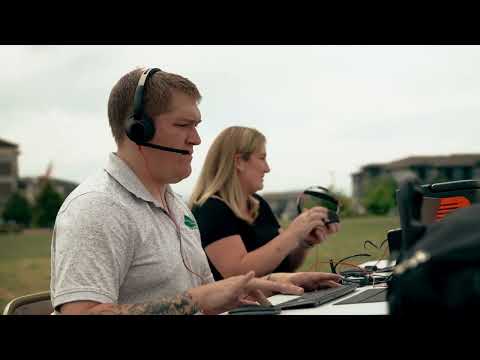
County emergency management staff said the new kits pack foldable monitors, Bluetooth keyboards and mice, and pocket-size PC "sticks" that plug into monitors and run off local power and Wi-Fi. Staff member 2, an emergency management official for Larimer County, said the county purchased the devices with its budget and that cost savings were a major factor: "Big component of going with something smaller and more compact was the cost effectiveness of it. We could not afford every 3 years to spend about $12,500 on 8 laptops when we could buy the PC stick for a $150."
The county developed the kits after experience in the Alexander Mountain Fire, when staff set up a call center to handle damage-assessment calls so the joint information center could focus on other public inquiries. Staff member 1, an emergency management official, said the previous system required waiting for laptops, monitors and peripherals to be driven to a secured facility—a trip he described as "already a 30 plus minute drive"—which created "a long pause between when we need to activate a call center and when we can actually have that call center activated."
To reduce that delay, staff said they designed a wheeled case that holds foldable monitors and peripherals and uses low‑cost PC sticks instead of transporting multiple expensive laptops. Staff member 2 described the technical setup: the components "all plug in together, and as long as we have WiFi and power, we're able to stand it up with those 4 different devices." Staff member 1 added that the kits can be deployed beyond the county EOC: "The capabilities we have now allow us to take this capability anywhere. And again, that can be to support agencies like CSU or it could be with our own events. So, yeah, we can set up this call center in our EOC, in anybody else's EOC, anywhere in the field or in a field."
County officials said the approach increases regional capability and can support partners including Colorado State University, the City of Fort Collins and the Town of Estes Park. No formal vote or ordinance was recorded in the meeting transcript; staff described the procurement as bought with county budget funds and framed the change as an operational improvement rather than a policy decision.
The county characterized the kits as a lower-cost, faster alternative for standing up information and damage-assessment call centers during fires, floods and other emergencies; staff emphasized speed, portability and regional support as the primary benefits.